
When Noisy Neighbours Are Killing Your Focus (and Your Sleep)
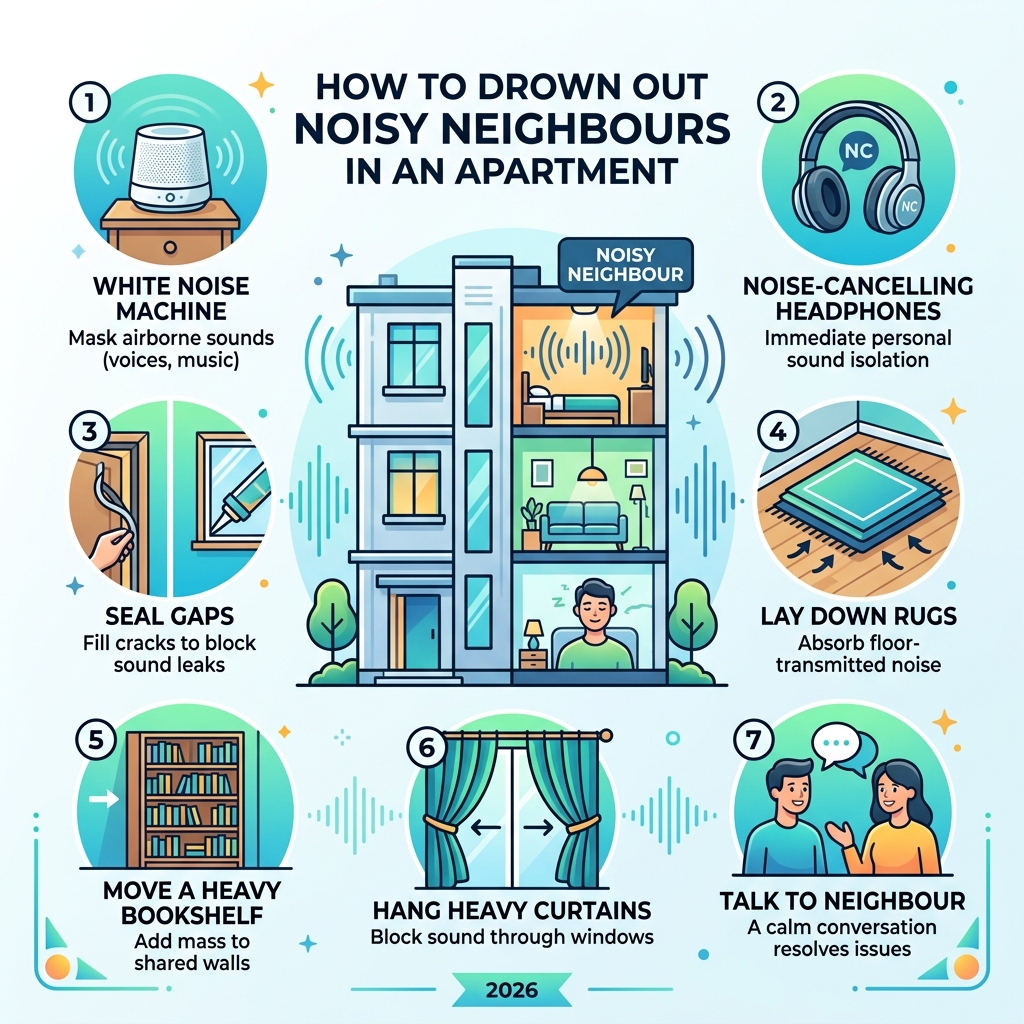
How to drown out noisy neighbours fast — here are the most effective methods:
- Use a white noise machine to mask airborne sounds like music and voices
- Put on noise-cancelling headphones for immediate, personal sound isolation
- Seal gaps around doors and windows — a gap as small as 1% can leak 30% of sound
- Lay down thick rugs with a felt pad underneath to absorb floor-transmitted noise
- Push a heavy bookshelf filled with books against the shared wall
- Hang heavy curtains made from dense fabric like velvet over windows
- Talk to your neighbour calmly — one in three noise issues resolve with a simple conversation
Noise is exhausting. Whether it’s bass thumping through your wall at midnight or footsteps pounding above your head during a video call, neighbour noise doesn’t just annoy you — it chips away at your concentration, your sleep, and your stress levels.
The World Health Organisation recommends bedroom noise stay below 30 decibels. Most noisy neighbour situations blow well past that.
The good news? You don’t need to move out or spend a fortune to get relief. There are practical fixes — from free furniture rearrangements to affordable acoustic products — that can make a real difference today.
This guide walks you through everything, from quick wins you can do right now to smarter long-term strategies.
Immediate Solutions: How to Drown Out Noisy Neighbours Right Now
When the party next door starts just as you’re tucking in for the night, you don’t have time to install drywall. You need a “right now” solution. We often categorize noise into two types: airborne noise (voices, music, TV) and impact noise (footsteps, thuds, moving furniture). Understanding this helps us choose the right weapon for the job.
The quickest way to regain your sanity is through sound masking. Unlike soundproofing, which tries to stop sound from entering a room, masking introduces a soothing, consistent background sound that makes the intrusive noise less noticeable to your brain.
If you are just starting your journey toward a quieter home, we recommend checking out A Beginner’s Guide to Basic Soundproofing for a solid foundation. For those who can’t pick up a hammer, our guide on Easy Fixes: Soundproofing Without Construction is a lifesaver.
Using White Noise and Tech to Drown Out Noisy Neighbours
White noise machines are the undisputed champions of immediate relief. A high-quality machine, like the LectroFan EVO, offers non-looping sounds that prevent your brain from picking up on repetitive patterns (which can be just as annoying as the neighbour!).
But did you know there are different “colors” of noise?
- White Noise: Higher-pitched, like a radio between stations. Great for masking voices or bird chirping.
- Brown Noise: Much deeper and bass-heavy, like a low roar or distant thunder. This is the secret weapon for masking low-frequency rumbles, such as a neighbour’s snoring or a car idling outside.
If the noise is particularly aggressive, we suggest pairing a sound machine with noise-cancelling headphones. Modern active noise-cancelling (ANC) technology works by “listening” to external sounds and producing an opposing sound wave to cancel them out. For sleeping, specialized sleep earbuds or headband-style headphones are much more comfortable for side-sleepers.
If you’re specifically battling a neighbour’s sound system, you’ll find more tailored advice in this guide on How to Stop Neighbor’s Loud Music from Bothering You.
Quick Environmental Adjustments
If you don’t have a dedicated white noise machine, don’t panic. You likely have tools in your home right now that can help.
A simple box fan or a bathroom exhaust fan can provide enough “air rush” to blur the edges of a conversation coming through a thin wall. We also recommend using smartphone apps that play “pink noise” or nature sounds like heavy rain. Sometimes, fighting fire with fire—or in this case, noise with noise—works. Playing your own calming ambient music can provide a “sound blanket” that makes the external thuds feel further away.
For more psychological tips on managing the frustration that comes with these disturbances, How to Stop Worrying About Noisy Neighbours: 11 Best Ways offers excellent perspective.
Renter-Friendly Soundproofing for Walls and Floors
Being a renter adds a layer of difficulty. You can’t exactly tear down the walls to add Rockwool insulation. However, we have found that adding “mass” and “absorption” to your surfaces can drastically change the acoustics of your unit.
Empty rooms echo. When sound hits a hard, bare wall, it bounces back and forth, making even small noises sound amplified. By adding soft materials, we can soak up that energy. For a deep dive into living in close quarters, see our Quiet Living: Soundproofing for Apartments and our comprehensive Renters Guide: Soundproofing for Renters.
Sealing the Gaps in Doors and Windows
Sound is like water; if there is a hole, it will pour through. This is known as the “1% rule.” Research shows that a gap as small as 1% of the surface area of a barrier can leak up to 30% of the sound. If that gap is 5%, a staggering 90% of the noise will get through.
The most common culprits are the gaps under your front door or around old window frames. We suggest:
- Weatherstripping: Use adhesive foam or rubber strips to seal the perimeter of doors and windows.
- Neoprene Seals: These are denser than standard foam and provide a much better sound barrier for doorjambs.
- Door Sweeps: A heavy-duty rubber or brush sweep at the bottom of the door can block hallway noise (and drafts!).
For a step-by-step walkthrough, read How to Soundproof a Door Gap Effectively. If your windows are the problem, you might consider Transforming Spaces with Soundproof Window Inserts which pop in and out without permanent damage.
Soft Surfaces and Floor Coverage
If you have an “active” neighbour living below you, or if you’re the one worried about making noise, rugs are your best friend. However, not all rugs are created equal.
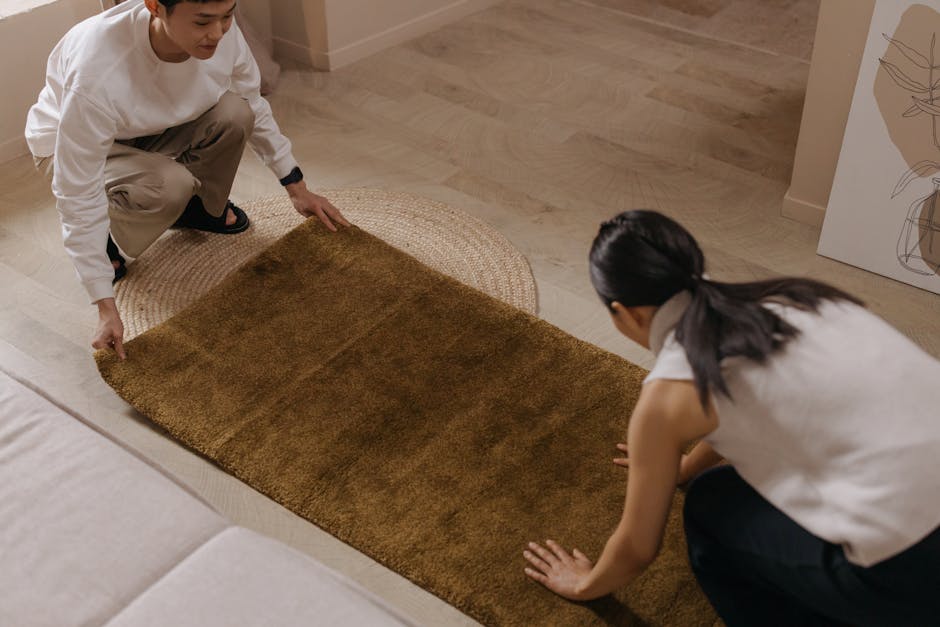
A standard high-pile rug only provides about a 2% reduction in sound on its own. To really drown out noisy neighbours, you need to look at the KPSI (knots per square inch). A rug with 100+ KPSI is good, but 300+ is great.
The real magic happens in the padding. We recommend:
- Felt Rug Pads: These are incredibly dense and excellent at absorbing the sound of speech and music.
- Memory Foam Pads: Great for comfort and reducing the “thud” of footsteps (impact noise).
You can find more budget-friendly tips in our article on Soundproofing with Rugs and Carpets: A Cheap Alternative and Looking into Soundproof Mats for Floors.
Strategic Decor: Using Furniture to Block Sound
One of the most effective—and stylish—ways to quiet a room is through “maximalist” decorating. Minimalist rooms with bare floors and sparse furniture are acoustic nightmares. By filling your space, you create obstacles for sound waves.
| Furniture Item | Sound Absorption Level | Best Use Case |
|---|---|---|
| Heavy Bookshelf | High | Shared walls / Airborne noise |
| Large Sofa | Medium | Reducing room echo |
| Velvet Curtains | Medium-High | Window noise / High frequencies |
| Acoustic Wall Art | Medium | Echo reduction / Aesthetics |
We’ve explored this in our guide on Budget-Friendly Ways to Soundproof a Wall and our tips for Creating a Silent Sanctuary: Budget-Friendly Soundproofing for Your Room.
Furniture Rearrangement: A Free Way to Drown Out Noisy Neighbours
Sometimes the best solution is simply moving your stuff. If your bed is currently pushed up against a wall that connects to your neighbour’s living room, you are essentially using your headboard as a tuning fork for their TV.
- Move the Bed: Try to place your bed against an external wall or a wall that connects to a quieter part of your own home.
- The Bookshelf Buffer: A heavy bookshelf filled with books is one of the best DIY sound barriers. Hardwood bookshelves are better at blocking sound, while softwood shelves are better at absorbing it. For the best results, line the back of the bookshelf with a layer of mass-loaded vinyl or foam before pushing it against the shared wall.
If the noise is coming from above, we have some DIY Ideas for Soundproofing Your Ceiling that don’t involve major construction.
Heavy Fabrics and Wall Hangings
Don’t underestimate the power of fabric. For windows, standard blinds do nothing for noise. You want heavy blackout curtains, ideally weighing between 12-18 oz per yard.
To make them effective:
- 100% Fullness: If your window is 50 inches wide, buy 100 inches of curtain so the folds stay deep.
- Proper Mounting: Mount the rod 3-4 inches away from the wall to create a pocket of dead air.
You can even hang tapestries or “sound blankets” on the walls. We have a great guide on The Art of Soundproofing with Blankets and even how to go about Crafting DIY Soundproof Curtains yourself.
Psychological Coping and Stress Management
Sometimes, even after we’ve sealed the gaps and hung the curtains, a little bit of noise still gets through. This is where the psychological aspect comes in. Our brains are wired to alert us to “unwanted” sounds, which triggers a stress response.
The WHO suggests that for a good night’s sleep, background noise should ideally be under 30 A-weighted decibels. If you’re struggling to hit that, focus on what you can control:
- Aromatherapy: Scents like lavender or a light rose water spray can help signal to your brain that it’s time to relax, regardless of the noise.
- Meditation: Practicing mindfulness can actually lower your sensitivity to noise over time by training your brain not to react to every “thump” as a threat.
- Sleep Hygiene: Keeping a consistent routine helps your body fall asleep faster, making you less likely to be kept awake by minor disturbances.
Understanding the physics can also lower your anxiety. When you know why you’re hearing what you’re hearing, it feels less like a personal attack. Check out Understanding Noise: How Noise Travels Through Walls for a clearer picture of the science behind the sound.
When to Escalate: Communication and Legal Steps
We always recommend starting with the “soft approach.” Believe it or not, many neighbours simply have no idea how thin the walls are. They aren’t trying to be jerks; they’re just living their lives.
- The Polite Chat: Approach them when you are calm, not in the heat of the moment. Use “I” statements: “I’ve been having a hard time sleeping lately because the sound travels quite a bit through our shared wall. Would you mind lowering the volume after 10 PM?”
- Keep a Noise Diary: If the noise persists, start a log. Note the date, time, type of noise, and how it affected you. This is vital evidence if you need to involve authorities.
- Contact the Landlord: If you’re a renter, your lease likely has a “quiet enjoyment” clause.
- Local Council/Authorities: In many regions, there are strict laws about noise levels between 11 PM and 7 AM.
For more detailed advice on the legal side, the HomeOwners Alliance and HowStuffWorks provide excellent frameworks for handling disputes without escalating conflict.
Common Soundproofing Mistakes to Avoid
In our experience, people often waste money on solutions that simply don’t work. The biggest myth? Egg cartons. Egg cartons are made of thin cardboard; they do not block sound, and they barely even reduce echo. They are, however, a fantastic fire hazard.
Another common mistake is confusing acoustic treatment with soundproofing.
- Acoustic Foam (the “egg crate” foam): This is for improving the sound inside a room (reducing echo). It will not stop your neighbour’s music from coming through the wall.
- Soundproofing: This requires mass (like Mass Loaded Vinyl) and decoupling (breaking the physical connection between surfaces).
We’ve debunked more of these in Avoid These Common Soundproofing Mistakes and Soundproofing Myths Explained.
Frequently Asked Questions about Neighbor Noise
What is the most effective way to block impact noise like footsteps?
Impact noise is the hardest to stop because it travels through the structure of the building. The most effective way is to “decouple” the ceiling or floor, but for a renter, the best fix is a combination of thick rugs with high-quality pads and using brown noise machines to mask the low-frequency thuds.
Can plants actually help reduce noise from neighbors?
Yes, but you need a lot of them! Plants with thick, waxy leaves or rough bark are best. While a single fern won’t do much, a “green wall” or a row of tall, dense hedges in a garden can act as a natural sound diffuser, breaking up sound waves before they hit your windows.
Is it better to use white noise or brown noise for snoring?
Brown noise is generally better for snoring. Snoring is a low-frequency sound, and the deeper, bassier tones of brown noise do a much better job of masking those rumbles than the higher-pitched hiss of traditional white noise.
Conclusion
At Finance No Vax, we believe that your home should be your sanctuary. Dealing with noisy neighbours is one of the most stressful parts of modern living, but as we’ve shown, you aren’t powerless. Whether you choose to rearrange your furniture, invest in a high-quality sound machine, or finally have that polite conversation with the person next door, every step you take brings you closer to peace.
The ROI on soundproofing isn’t just about property value—it’s about your mental health and well-being. Don’t let the drama next door dictate your life. Start your journey to a quieter home today and reclaim the silence you deserve.
