
Why Curtains to Reduce Noise Are the Simplest Upgrade for a Quieter Home
Curtains to reduce noise can cut incoming sound by anywhere from 5 to 21 decibels, depending on the fabric weight, number of layers, and how well they’re installed.
Here’s a quick summary of what you need to know:
| Factor | What It Means for You |
|---|---|
| Noise reduction range | 5–21 dB for most curtains; up to 36 dB for professional-grade drapes |
| Best materials | Heavy, dense fabrics (velvet, heavyweight linen, multi-layer constructions) |
| Key features | Multiple layers, floor-to-ceiling length, minimal gaps at edges |
| What they can’t do | Completely eliminate low-frequency rumble like heavy truck traffic |
| Best used with | Window seals, acoustic blinds, or double-glazed windows |
Over 90% of outside noise enters a building through windows and doors. That makes your window treatment one of the most impactful places to start — and one of the cheapest compared to full renovation work.
If you work from home, you already know the problem. A truck rumbles past. A neighbor fires up a lawnmower. Suddenly your focus is gone. Noise isn’t just annoying — it drives up stress and chips away at productivity hour by hour.
The good news? You don’t need to tear out your windows or soundproof your walls. The right curtains can make a real, measurable difference — and in April 2026, there are more high-performance options available than ever before.
This guide breaks down exactly how noise-reducing curtains work, what to look for, and how to get the most out of them.
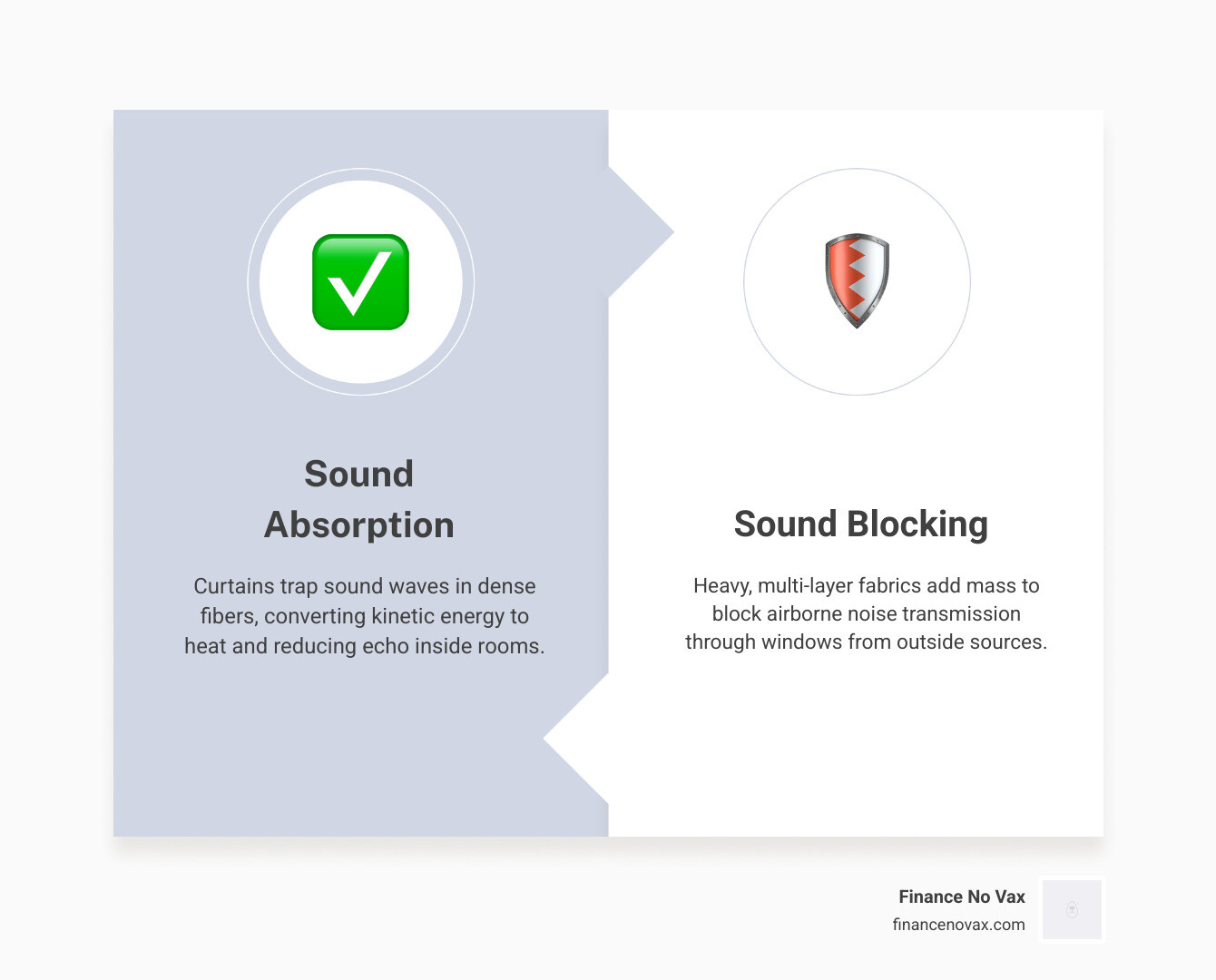
Know your curtains to reduce noise terms:
The Science of Sound: How Curtains to Reduce Noise Actually Work
To understand how a piece of fabric can quiet a room, we first need to look at what sound actually is: energy traveling in waves. When those waves hit a standard, thin curtain, they pass through it like wind through a screen door. However, curtains to reduce noise are engineered to disrupt this process using two main principles: sound absorption and the “mass principle.”
Absorption and Mass
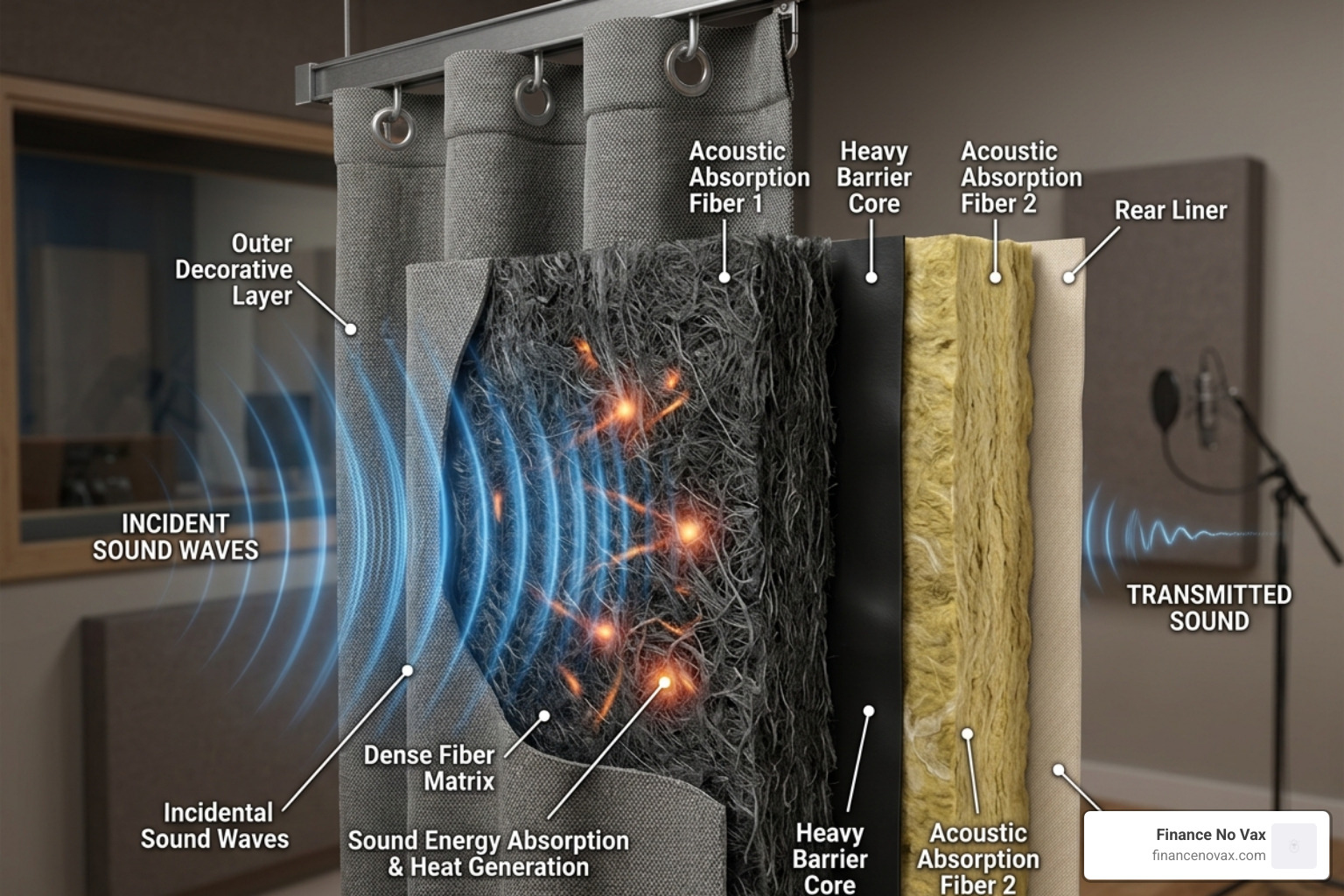
When sound waves strike a thick, dense material, the fibers of the fabric vibrate. This microscopic movement converts the kinetic energy of the sound wave into a tiny amount of heat. This is sound absorption. The heavier and more porous the material, the more energy it can “soak up.”
The mass principle is even simpler: the heavier an object is, the harder it is for sound waves to move it. By using fabrics with high weights—sometimes up to 32oz or more—these curtains act as a physical barrier that reflects some sound back outside while deadening the rest.
Airborne vs. Structure-Borne Noise
Most of the noise we deal with is “airborne”—think voices, sirens, or birds. Because 90% of airborne noise enters through windows, a heavy curtain is highly effective. However, curtains are less effective against “structure-borne” noise, like the vibration of a heavy truck vibrating the ground and your walls.
By managing reverberation (the “echo” inside your room), these drapes also improve the overall acoustic quality of your home. If you’ve ever noticed how a room sounds quieter once you put down a rug, you’ve experienced this in action. For a deeper dive into creating a quiet sanctuary, check out How To Find Peace With Noise Cancelling Window Treatments.
Essential Materials and Features for Acoustic Performance
Not all “heavy” curtains are created equal. In acoustic window treatments, the magic is usually found in the layers. By April 2026, the industry standard for high-performance drapes has moved toward a 3-layer or 4-layer construction.
The Anatomy of a Soundproof Drape
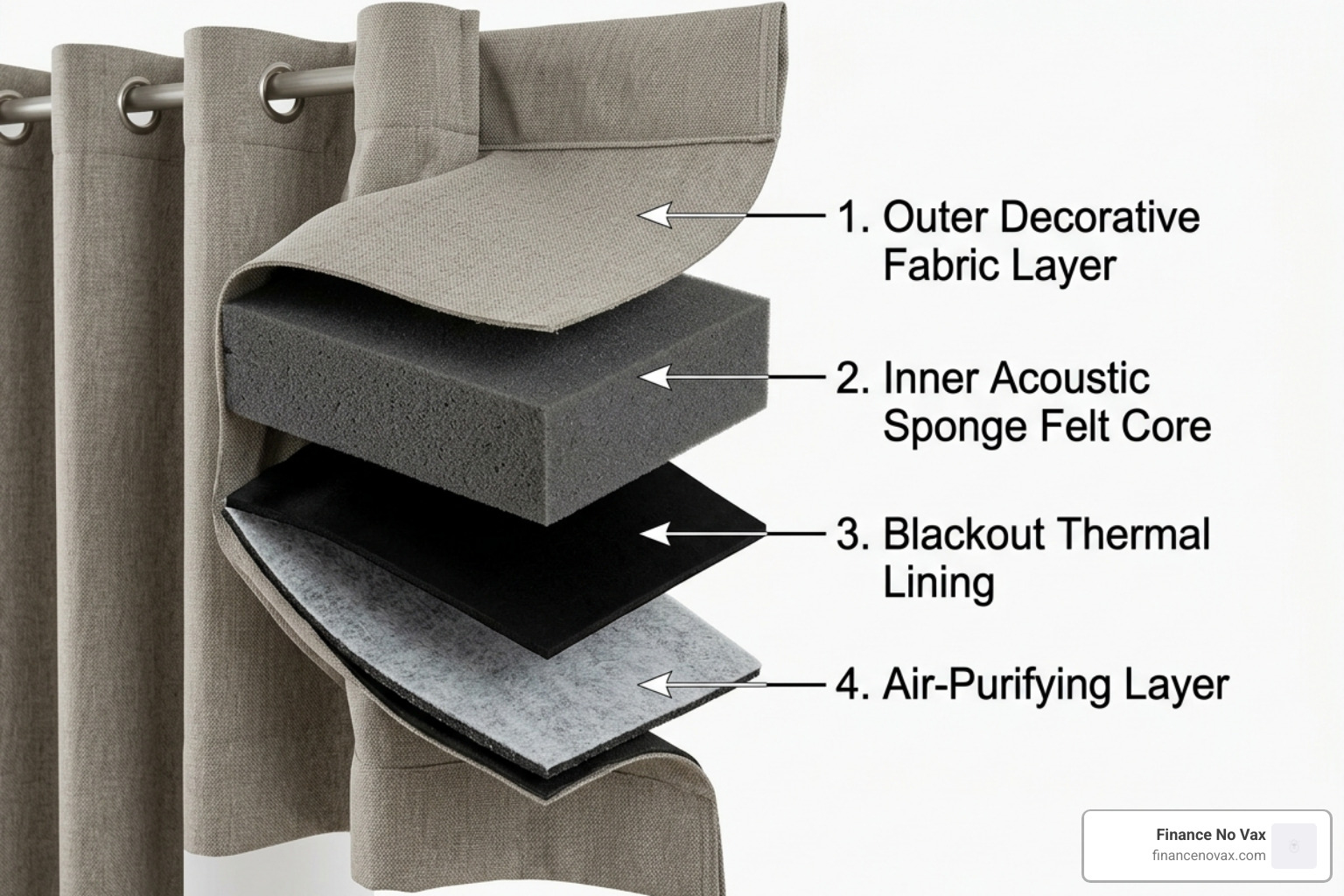
A typical high-performance curtain might include:
- Face Fabric: Often a decorative layer like velvet or heavyweight linen (look for weights around 280-995g/㎡).
- Acoustic Core: This is often a specialized sound-absorbing sponge felt. This material is similar to what you might find in high-grade protective masks, designed to trap air and dampen vibrations.
- Blackout/Thermal Layer: A dense layer that prevents light leaks and provides thermal insulation.
- Air-Purifying or Anti-Dust Layer: Some modern curtains even include specialized layers to improve indoor air quality.
Material Weight and Density
Weight is the most critical factor. For example, some professional-grade curtains use 32oz materials, while others utilize heavy-duty polyester or flax linen. High-density velvet is a perennial favorite because its “pile” (the fuzzy surface) creates a massive amount of surface area to catch and absorb sound waves.
Choosing the Right Curtains to Reduce Noise for Your Home
When we select curtains, we have to balance performance with style. You don’t want your living room to look like a recording studio (unless that’s your vibe!).
- Linen-Look Aesthetics: Perfect for modern, airy rooms. Heavyweight linen (around 280 gms) provides a dense, texturized feel that is much more effective than standard airy linen.
- Velvet Textures: These are the heavy hitters. With weights often exceeding 900g/㎡, velvet curtains can turn a sharp siren into a distant murmur.
- Custom Sizing: This isn’t just about looks. Custom-sized curtains ensure that the fabric extends far enough past the window frame to create a seal.
When browsing, look for decibel (dB) ratings. While a standard curtain might offer a 2-5 dB reduction, a specialized acoustic curtain can offer between 15 and 21 dB. For more tips on selecting the right fit for your space, see Silence Your Apartment With These Top Window Solutions.
Installation Strategies for Maximum Sound Dampening
You could buy the most expensive curtains to reduce noise in the world, but if you hang them poorly, they won’t work. Sound is like water; it will find any “hole” or gap to leak through.
The “Seal” Approach
To maximize noise reduction, we recommend the following strategies:
- 1.5x to 2x Fullness: Never buy a curtain that is the exact width of your window. You need extra fabric to create “folds” or “waves.” A 2x fold ratio can significantly increase noise isolation (sometimes by as much as 36 dB in professional setups) because the folds trap more sound.
- Floor-to-Ceiling and Wall-to-Wall: If possible, cover the entire wall. This eliminates the gaps at the top, bottom, and sides where noise loves to sneak in.
- Overlapping the Frame: At a minimum, extend the curtain rod 4 to 12 inches beyond the window frame on each side.
- Floor Puddling: Letting the curtains “puddle” about 1-3 inches on the floor creates a physical seal at the bottom of the window, preventing sound from bouncing off the floor and under the drape.
Professional Installation of Curtains to Reduce Noise
Because these curtains are significantly heavier than standard drapes (a single panel can weigh over 6 pounds), your hardware needs to be up to the task.
- Heavy-Duty Rods: Forget tension rods. You need a sturdy rod anchored into wall studs or secured with heavy-duty drywall anchors.
- Header Styles: For the best noise seal, consider Rod Pocket or Back Tab headers. These styles keep the fabric closer to the wall and rod, minimizing the “light and sound gap” at the top. Grommets are popular but can allow small amounts of sound to leak through the eyelet holes.
- Combination Treatments: For the ultimate “silent home,” combine your curtains with noise reduction window treatments like cellular blinds or window seals.
Real-World Performance: Decibels and Frequency Reduction
How much of a difference will you actually hear? It depends on the frequency of the noise. High-pitched sounds (like a neighbor’s whistling or a bird) are much easier to block than low-pitched sounds (like the deep rumble of a bus).
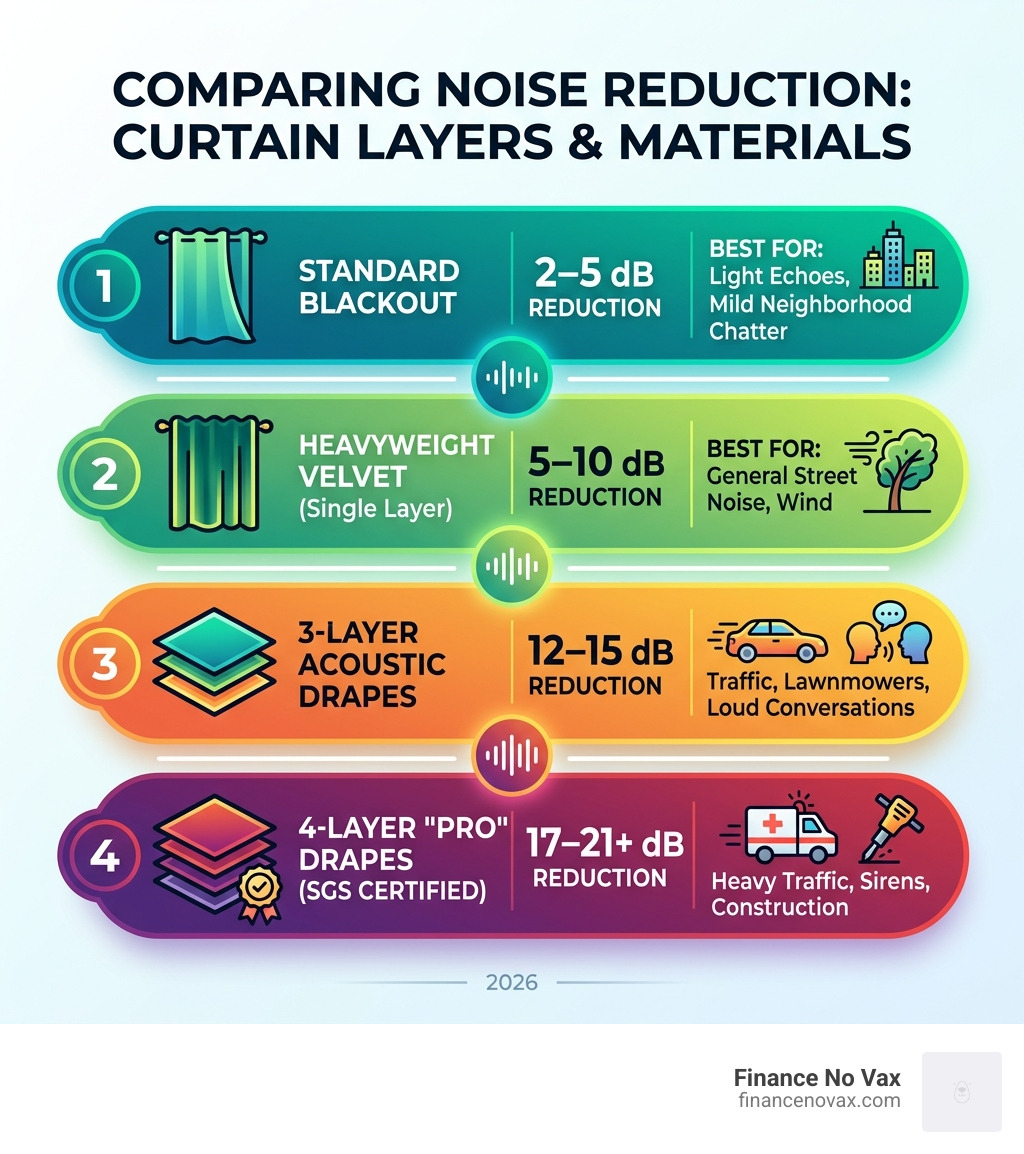
| Curtain Type | Expected dB Reduction | Best For |
|---|---|---|
| Standard Blackout | 2–5 dB | Light echoes, mild neighborhood chatter |
| Heavyweight Velvet (Single Layer) | 5–10 dB | General street noise, wind |
| 3-Layer Acoustic Drapes | 12–15 dB | Traffic, lawnmowers, loud conversations |
| 4-Layer “Pro” Drapes (SGS Certified) | 17–21+ dB | Heavy traffic, sirens, construction |
Understanding the Numbers
A 10 dB reduction is perceived by the human ear as roughly a 50% decrease in loudness. So, if a high-quality curtain offers a 15-21 dB reduction, you are looking at a massive improvement in your quality of life.
Many professional-grade drapes are tested according to ASTM E90 standards, which is the laboratory measurement for how well a material blocks airborne sound. Some premium options have even shown isolation up to 36 dB at specific frequencies.
Beyond sound, these heavy drapes are thermal powerhouses. They can create a temperature difference of 9 to 12 degrees Fahrenheit, helping you save on energy bills while you enjoy the silence.
Frequently Asked Questions about Soundproof Drapes
Do these curtains completely block highway traffic noise?
We want to be honest with you: no curtain can turn a home next to a freeway into a recording studio. While curtains to reduce noise are incredibly effective at muffling the “sharpness” of traffic—sirens, honking, and engine revs—the deep, low-frequency rumble of a highway travels through the ground and the very structure of your home. To tackle that, you would need a combination of mass-loaded vinyl in your walls and triple-pane windows. However, these curtains will certainly turn that “roar” into a much more manageable “distant hum.”
Are noise-reducing curtains machine washable?
This depends entirely on the construction.
- Multi-layer curtains with detachable liners: These are the most convenient. You can often detach the heavy sound-absorbing felt liner and machine wash the outer decorative fabric on a gentle cycle.
- Bonded layers: Many high-performance curtains are dry clean only. Washing them can damage the internal acoustic membranes or cause the layers to shrink at different rates, ruining the drape.
- Maintenance: For most, a gentle vacuuming with a brush attachment once a month is all you need to keep dust at bay.
Can I use these with existing automated roller blinds?
Yes! In fact, layering is one of the best ways to stop noise. If you have automated blinds like the Ikea FYRTUR, adding a heavy set of acoustic drapes over the top creates an “air gap” between the blind and the curtain. This “dead air” space acts as an extra layer of insulation.
Some DIY enthusiasts even swap the fabric in their automated rollers for denser materials, though you must be careful not to exceed the weight limit of the blind’s motor. A safer bet is to use the automated blind for light control and the curtains for sound control.
Conclusion
Creating an acoustic sanctuary in April 2026 doesn’t require a construction crew. By choosing curtains to reduce noise with the right mass, density, and layered technology, we can reclaim our peace of mind. Whether it’s the 21 dB reduction of a 4-layer velvet drape or the elegant sound-dampening of heavyweight linen, the right window treatment is an investment in your health.
Less noise means better sleep, lower stress levels, and a significant boost in daily productivity. If you’re ready to stop hearing the world and start hearing yourself think, it’s time to hang some heavy metal—or rather, heavy fabric.
Find your quiet today and transform your home into the sanctuary you deserve.
