
Quick Fix Noise Blockers to Save Your Sanity and Your Lease
When Apartment Noise Becomes a Real Problem (And What to Actually Do About It)
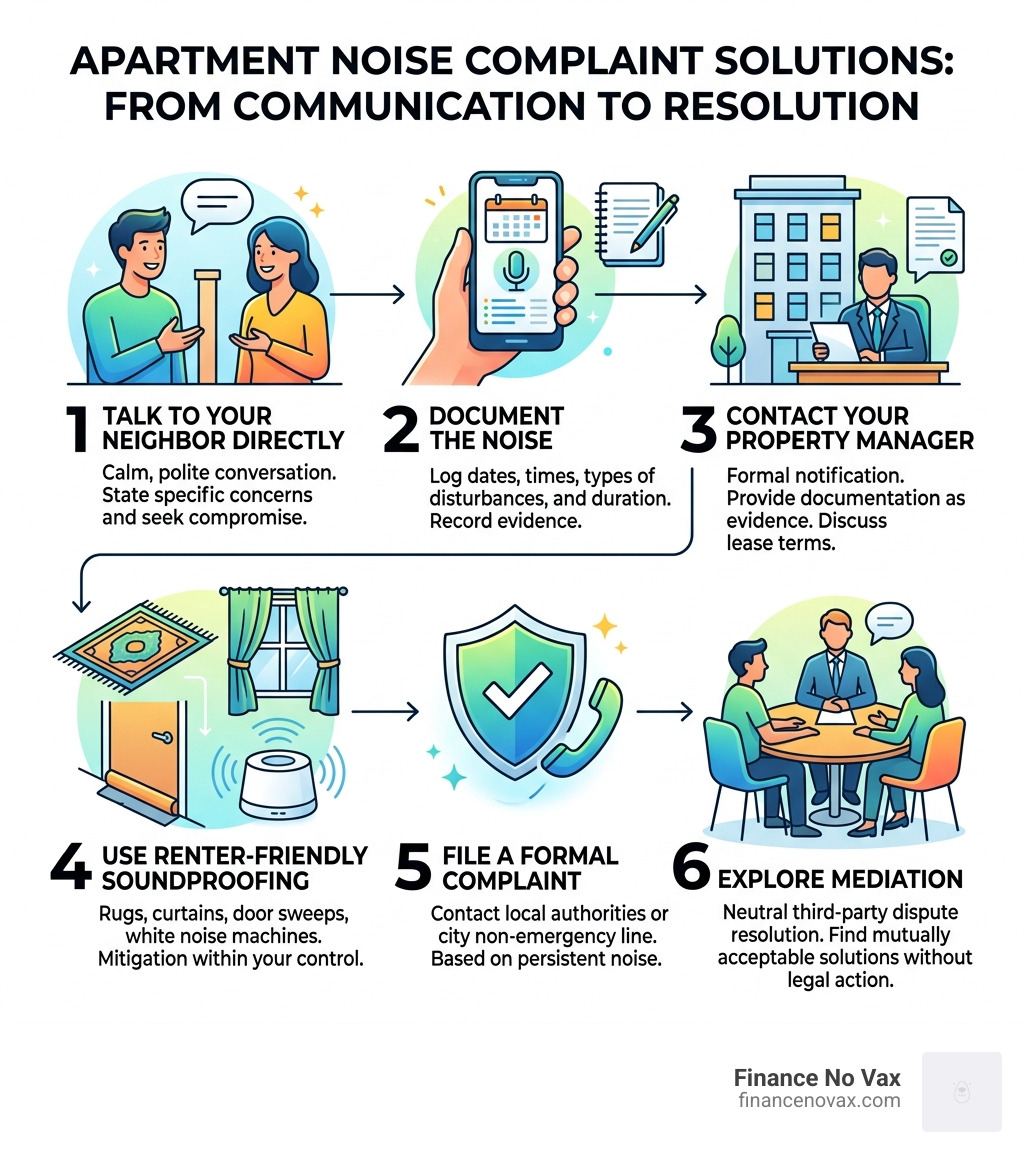
Apartment noise complaint solutions range from quick DIY fixes to formal legal steps, depending on how severe the problem is. Here’s a fast overview:
- Talk to your neighbor directly – calm, polite, and specific about the issue
- Document the noise – log dates, times, and types of disturbances
- Contact your property manager – bring your documentation as evidence
- Use renter-friendly soundproofing – rugs, curtains, door sweeps, white noise machines
- File a formal complaint – with local authorities or via your city’s non-emergency line
- Explore mediation – a neutral third party can resolve disputes without legal action
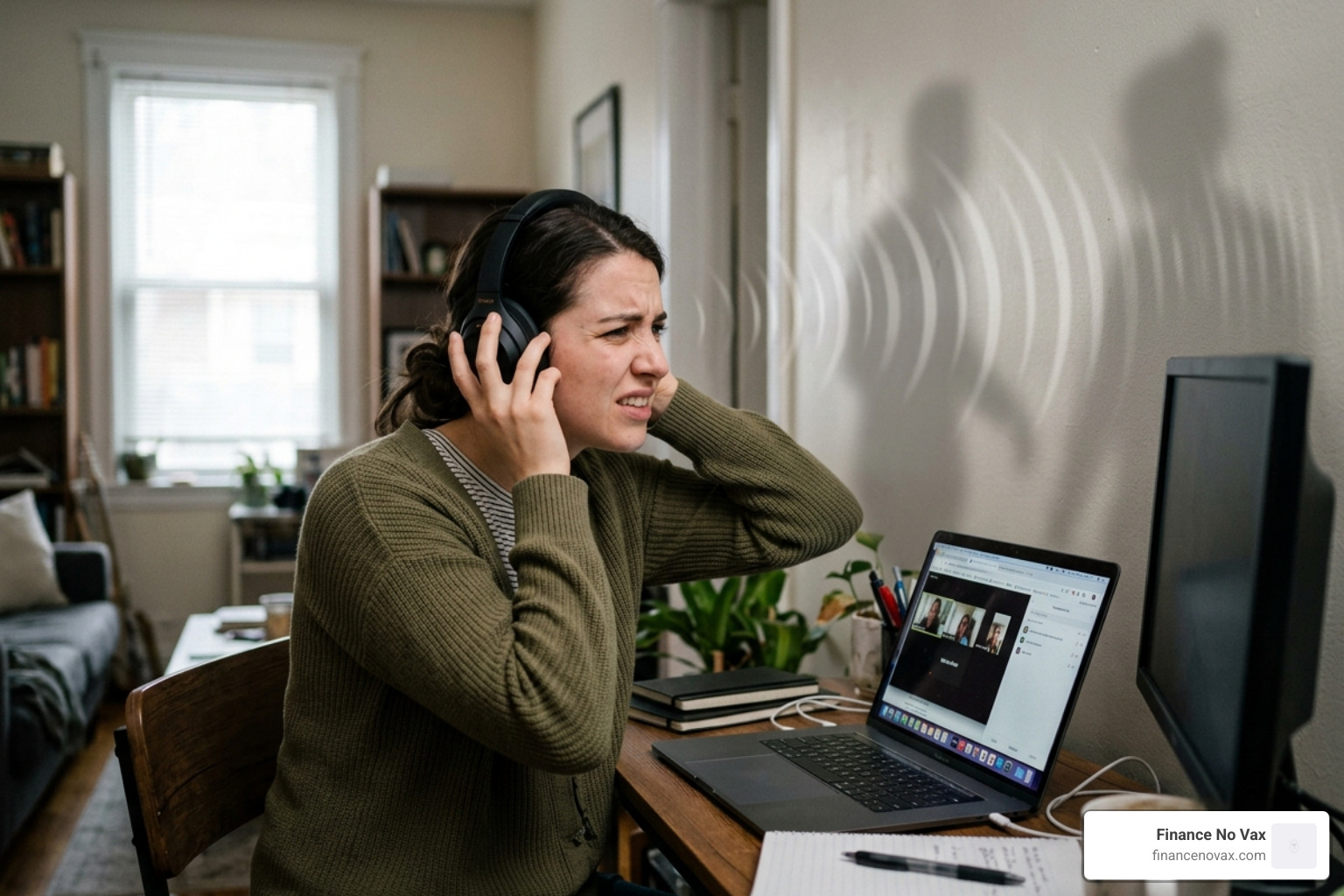
If you work from home, apartment noise isn’t just annoying — it’s a productivity killer. A dog barking through the wall during a Zoom call. Bass thumping from next door at 11 p.m. Footsteps from upstairs that sound like someone rolling furniture across the floor at 6:30 a.m.
You’re not alone. One of the most common complaints among apartment renters is being able to hear sound from neighbors — and most buildings weren’t designed with remote workers in mind.
The good news? Most noise disputes don’t require lawyers or moving trucks. With the right approach — starting with communication and backing it up with documentation — the majority of issues can be resolved without drama.
This guide covers everything: your legal rights, how to talk to neighbors, how to build a complaint that management can’t ignore, and the best renter-friendly soundproofing options that won’t cost you your security deposit.
Apartment noise complaint solutions terms made easy:
- construction site noise barriers
- sound proof room divider for home office
- temporary acoustic barrier
Understanding Your Right to Quiet Enjoyment and Excessive Noise
Before we dive into the deep end of apartment noise complaint solutions, we need to understand the legal ground we’re standing on. It’s April 2026, and while building technology has improved, the “Covenant of Quiet Enjoyment” remains a cornerstone of tenant law.
What is the “Right to Quiet Enjoyment”?
Essentially, this is a clause—either explicitly stated in your lease or implied by state law—that guarantees you the right to live in your home without unreasonable interference. When your neighbor’s 2 a.m. drum solo makes your walls vibrate, that right is being violated. However, this doesn’t mean total silence. It means freedom from unreasonable disturbances.
Normal Living vs. Excessive Noise
To solve a noise issue, we first have to identify if it’s actually “actionable.”
- Normal Living Noise: This includes occasional footsteps, the sound of a vacuum during the day, or a muffled TV in the afternoon. These are the “sounds of life” that come with shared-wall living.
- Excessive Noise: This is noise that is loud, frequent, and occurs during “quiet hours” (usually 10 p.m. to 7 a.m.). Think of repeated late-night parties, constant dog barking, or shouting matches.
According to The Renter’s Guide to Proving a Noise Problem Without Losing Your Cool, the key to a successful complaint is proving the noise is a pattern, not a one-off event.
STC Ratings and Habitability
If you can hear your neighbor breathing, the problem might not be the neighbor—it might be the building. STC (Sound Transmission Class) ratings measure how well a wall or floor blocks sound. A rating of 60 or higher is the gold standard. If your building has thin walls, you might need to look into our Ultimate Apartment Soundproofing Guide to help bridge the gap that the architecture left behind.
Step-by-Step Apartment Noise Complaint Solutions
When the noise crosses the line, we recommend a “ladder of escalation.” You don’t want to call the police for a first offense; that’s a great way to start a neighbor war.
1. The Friendly Approach
Most people aren’t trying to be jerks; they simply don’t realize how thin the walls are. Start with a calm, face-to-face conversation.
- Use “I” statements: “I’ve been having a hard time sleeping because of the music at night,” sounds much better than “You are being way too loud.”
- Suggest a compromise: If they’re a musician, maybe they can practice between 5 p.m. and 7 p.m. instead of midnight.
- Invite them in: Sometimes, letting a neighbor hear the noise from your side of the wall is the ultimate eye-opener.
For more on this, 5 Tips for Dealing with Neighbor Noise | HowStuffWorks suggests that a small act of kindness, like bringing a small treat when you talk to them, can lower defenses immediately.
2. The Paper Trail (Documentation)
If the talking doesn’t work, you need data. A “noise log” is your best friend. Record:
- Date and time of the noise.
- The type of noise (bass, screaming, thumping).
- How long it lasted.
- How it affected you (e.g., “Woke me up,” “Could not hear my client on Zoom”).
This documentation turns a “he-said, she-said” argument into a factual report. You can also use 7 Clever Hacks To Block Out Your Noisy Neighbors to manage the stress while you build your case.
3. Mediation
If direct talk fails but you don’t want to get the landlord involved yet, consider a professional mediator. Many cities offer free community mediation services where a neutral third party helps both neighbors reach a written agreement.
When to Involve Management for Apartment Noise Complaint Solutions
If you’ve tried being the “nice neighbor” and the thumping continues, it’s time to involve the professionals. Property managers have a legal obligation to ensure all tenants follow the lease rules, which almost always include a “noise and nuisance” clause.
How to report to management:
- Be Professional: Don’t send an angry 2 a.m. email. Wait until the morning and present your noise log.
- Reference the Lease: Point out specific sections of the lease being violated.
- Use Certified Mail: If the property manager is unresponsive, send a formal letter via certified mail. This creates a legal record that they received your complaint.
According to Effective Strategies to Resolve Noise Issues in Apartment Communities, management should investigate the claim by talking to other neighbors. If they find the complaint valid, they can issue warnings or fines. If you’re struggling with specific issues like Dont Let The Upstairs Neighbors Ruin Your Zoom Calls, make sure to emphasize how the noise is affecting your livelihood.
Legal and Local Ordinance Apartment Noise Complaint Solutions
Sometimes, the landlord is as useless as a screen door on a submarine. In these cases, you may need to look at local laws.
- Noise Ordinances: Most cities have strict decibel limits. For example, many jurisdictions state that noise shouldn’t exceed 50 decibels between 11 p.m. and 7 a.m.
- Non-Emergency Line: If a party is out of control, call the non-emergency police line. This creates a public record of the disturbance.
- Legal Aid: If the noise is so bad it makes your apartment uninhabitable and the landlord refuses to act, you might have grounds for a “constructive eviction” or a rent reduction. Consult a tenant rights attorney before withholding rent, though!
Check out How to Handle Apartment Noise Complaints for more on the legalities of breaking a lease due to noise. If the music is the main culprit, see these Proven Methods To Block Out Your Neighbours Loud Music.
Renter-Friendly Soundproofing and DIY Noise Blockers
While you wait for management to act, you need to protect your sanity. You don’t need to rip out the drywall to see an improvement.
Floor and Ceiling Solutions
If you have “lead-footed” neighbors above you, impact noise is your enemy.
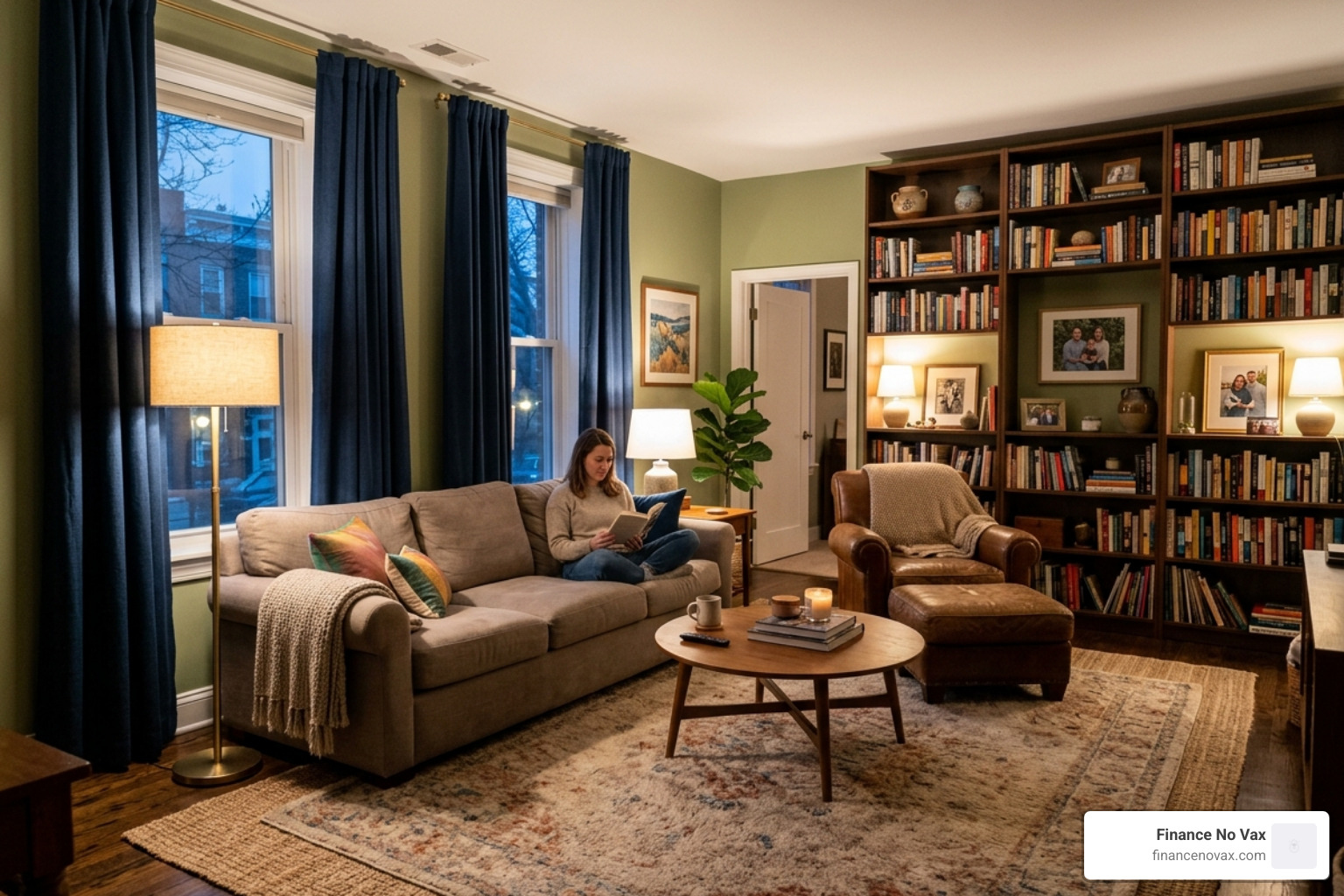
- Area Rugs: A thick rug with a high-quality felt pad can absorb a surprising amount of sound.
- Furniture Placement: Large, heavy bookshelves filled with books against a shared wall act as a fantastic sound barrier.
- Floor Materials: Check out From Mats To Underlay Top Apartment Floor Soundproofing Materials for options that sit on top of your existing floor.
Window and Door Solutions
Sound leaks through gaps like water.
- Door Sweeps: A simple neoprene door sweep can block the noise coming from the hallway.
- Weather Stripping: Use adhesive foam tape to seal gaps around your front door.
- Soundproof Curtains: These are extra-thick, dense curtains designed to dampen outside traffic noise. See our guide on Silence Your Apartment With These Top Window Solutions.
- Plexiglass Inserts: For serious noise, Plexiglass Soundproof Windows For Renters Who Hate Noise can block up to 70% of incoming sound.
Acoustic Panels
You can find Cheap And Chic Affordable Soundproof Panels For Your Apartment that look like art but function as sound absorbers, reducing the echo and “ping-pong” effect of noise in your unit.
How Landlords and Property Managers Resolve Disputes
If you happen to be on the management side of the desk, handling apartment noise complaint solutions requires a balanced hand.
Prevention is Better Than Cure
Smart landlords stop noise issues before they start:
- Tenant Vetting: Checking references can sometimes flag “party house” tendencies.
- Lease Clauses: Include a “Noisy Tenants Clause” that clearly defines quiet hours and the consequences of violations.
- Building Design: During renovations, adding acoustic mats or resilient channels can prevent 90% of future complaints. How to Stop Noise Complaints Before They Happen highlights that proactive soundproofing is a major selling point for high-end units.
The Resolution Process
When a complaint comes in, we recommend:
- Graciously accepting the complaint: Show the tenant you take their peace seriously.
- Corroborating the claim: Check with other neighbors or visit the hallway during the reported noise times.
- Issuing a “Notice to Cease”: A formal warning that references the lease.
- Eviction as a Last Resort: If a tenant repeatedly breaches the noise clause, management has the right to terminate the lease to protect the community. For those dealing with thumping specifically, here is Stop The Thumping How To Reduce Floor Noise In Your Apartment.
Frequently Asked Questions about Apartment Noise Complaint Solutions
What is the difference between normal and excessive noise?
Normal noise is the “background” of living in a community—a door closing, a muffled conversation, or the hum of an appliance. Excessive noise is disruptive, often occurs during late hours, and prevents you from using your space for its intended purpose (like sleeping). As How to Deal (and Not Deal) with Noisy Neighbors points out, if you can record the noise clearly from your bedroom with the door closed, it’s likely excessive.
How do I effectively document a noise disturbance?
Keep a digital or paper log. Include:
- Timestamp: Exact start and end times.
- Audio/Video: Use your phone to record the noise from inside your apartment to show how it sounds to you.
- Impact: Note if you were woken up or if your floor was vibrating.
- Witnesses: If you have a guest over who also hears it, have them sign your log. For more tips on drowning out the noise while you document, see Peace At Last Drowning Out The Folks Next Door.
When should I call the police for apartment noise?
Police should be your absolute last resort. Only call them if:
- You suspect illegal activity (like a violent fight or drug use).
- The noise is a massive, out-of-control party that management isn’t handling.
- You feel unsafe approaching the neighbor. Always use the non-emergency line unless there is an immediate threat to life. For long-term peace, check out Drown Out The Drama And Reclaim Your Peace.
Conclusion
Living in an apartment shouldn’t feel like living in a drum kit. By using a combination of direct communication, meticulous documentation, and smart DIY soundproofing, you can reclaim your home. Apartment noise complaint solutions work best when you stay calm, professional, and persistent.
At Finance No Vax, we believe that your home should be your sanctuary. Whether it’s April 2026 or years down the line, the principles of community harmony remain the same: respect your neighbors, protect your rights, and don’t be afraid to put down a thick rug!
For more ways to upgrade your living space, explore our More DIY noise solutions. Stay quiet, stay sane, and enjoy your peace!
