
Why People Are Choosing to Make Soundproof Panels at Home
If you want to make soundproof panels without spending a fortune, here’s the short answer:
- Build a wooden frame from 1×4 pine boards or furring strips
- Insert acoustic insulation (Rockwool or fiberglass) into the frame
- Wrap the panel in acoustically transparent fabric and staple it tight
- Mount it on your wall with D-rings or Z-clips, leaving a 1-2 inch air gap
That’s it. Each panel costs around $20-$25 to build — roughly half the price of buying one pre-made.
Working from home sounds great until your neighbor’s dog, street traffic, or a noisy HVAC system follows you into every video call and focus session. Hard walls bounce sound around the room, turning background noise into a constant distraction.
The good news? You don’t need to hire a contractor or gut your walls. DIY acoustic panels are simple to build, affordable, and genuinely effective at reducing the echo and noise that kills concentration.
This guide walks you through everything — materials, tools, step-by-step construction, placement, and cost — so you can build panels that actually work for your home office or workspace.
Understanding Sound Absorption vs. Soundproofing
Before we pick up a saw, we need to clear up a very common misunderstanding. In acoustics, “soundproofing” and “sound absorption” are two different beasts. When people say they want to make soundproof panels, they usually mean they want to stop echoes and make the room sound “tighter.”
Blocking Transmission (Soundproofing)
True soundproofing is about blocking sound from entering or leaving a room. This requires adding massive amounts of weight to the walls to stop vibrations. Materials like Mass Loaded Vinyl are used during construction to create a dense barrier. If you can hear your neighbor’s TV through the wall, you need soundproofing. You can learn more about the physics of this in our guide on How Does Soundproofing Work.
Absorbing Reflections (Acoustic Treatment)
The DIY panels we are building today are technically “acoustic absorption panels.” Instead of blocking sound from passing through the wall, they “soak up” sound waves that are bouncing around inside the room. This reduces reverb and echo. If your voice sounds like you’re in a cave during Zoom calls, you need absorption. For a deeper dive into these differences, check out Soundproofing vs Acoustic Treatment A Comparison.
To measure how well a panel performs, we look at the Noise Reduction Coefficient (NRC). An NRC of 0 means the material reflects all sound (like a mirror), while an NRC of 1.0 means it absorbs 100% of the sound that hits it. High-quality DIY panels often achieve an NRC near or even above 1.0 for certain frequencies!
Essential Materials and Tools to Make Soundproof Panels
Building your own treatment is a rewarding weekend project. To get professional results, you need the right “ingredients.” Here is a breakdown of the materials you’ll need to make soundproof panels that look as good as they sound.
| Material | Best For | Pros | Cons |
|---|---|---|---|
| Rockwool (Mineral Wool) | Professional Studios | Excellent absorption, fire-resistant | Can be itchy/dusty to handle |
| Fiberglass (OC 703) | High-End Home Theaters | Rigid, easy to frame, lightweight | More expensive, requires PPE |
| Acoustic Foam | Budget/Light Use | Very cheap, easy to hang | Poor low-frequency absorption |
The Core Components
- Frame: 1×4 Pine boards are the gold standard for a 3.5-inch thick panel. If you are on a strict budget, furring strips are a lighter, cheaper alternative.
- Insulation Core: This is the engine of the panel. You can explore different options in our guide on Different Types of Soundproof Insulation and Their Benefits.
- Fabric: You need something “acoustically transparent.” (More on this below).
- Hardware: Wood glue, 2-inch screws, and a heavy-duty staple gun.
The Tool Kit
You don’t need a full woodshop, but a few basics will make the job easier:
- Mitre Saw or Hand Saw: For cutting the frame boards to length.
- Power Drill: For pre-drilling pilot holes (prevents the wood from splitting).
- Serrated Knife: To trim the insulation core.
- PPE: Safety glasses, a dust mask, and gloves are non-negotiable when handling mineral wool or fiberglass.
Choosing the Best Core to Make Soundproof Panels
The “core” is what actually does the work. While Acoustic Foam vs Panels is a common debate, the research is clear: dense insulation beats foam every time.
We recommend Rockwool Safe’n’Sound or Owens Corning 703. Look for an insulation density between 4-8 lbs/cubic foot. This density provides the perfect balance—it’s porous enough for sound waves to enter but dense enough to convert that sound energy into tiny amounts of heat through friction. You can find these at most local hardware stores or specialized Materials suppliers.
Selecting Fabric to Make Soundproof Panels
The fabric’s job is to look pretty while staying out of the way of the sound waves. If the fabric is too thick (like vinyl or heavy leather), the sound will bounce off the fabric before it ever hits the insulation.
The Breathability Test: Hold the fabric to your mouth and try to blow through it. If you feel your breath on the other side, it’s acoustically transparent.
- Duck Canvas: Durable and comes in many colors.
- Burlap: Very cheap and breathable, though a bit “rustic” looking.
- Polyester: Great for a modern, sleek look.
If you are looking for more creative ideas, check out our list of DIY Acoustic Foam Alternatives for Soundproofing.
Step-by-Step Instructions for Building Your Panels
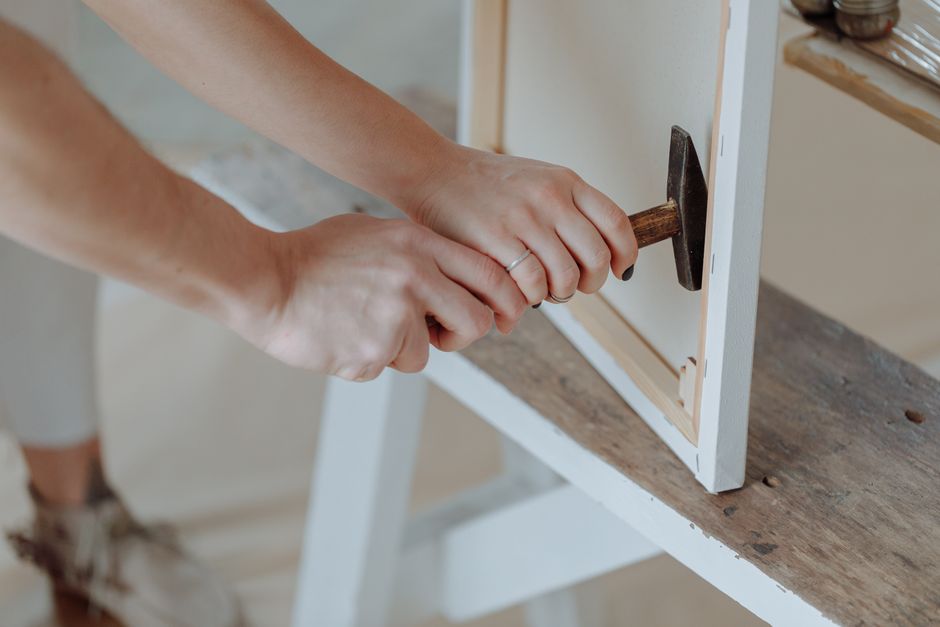
Ready to build? Follow these steps to make soundproof panels that rival commercial products.
1. Measure and Cut the Wood
Standard insulation batts are usually 24″ x 48″. To make the frame, cut your 1×4 boards so the inside dimensions of the frame match the size of your insulation. For a 2×4 foot panel, you will need two pieces at 48 inches and two pieces at approximately 22.5 inches (accounting for the thickness of the side boards).
2. Assemble the Frame
Apply wood glue to the joints and screw them together. We highly recommend pre-drilling pilot holes to avoid splitting the pine. For a cleaner look, you can use pocket holes on the inside of the frame. If you want a more detailed breakdown of frame styles, see our guide on Creating Homemade Soundproof Panels.
3. Add a Backing (Optional but Recommended)
Staple a thin, breathable mesh or landscaping fabric to the back of the frame. This keeps the insulation from falling out and helps maintain an air gap when mounted.
4. Insert the Insulation
Lay the frame face down and press the insulation into the cavity. It should be a snug fit. If there are gaps, the sound will find them! Use a serrated knife to trim any excess if the batt is too large.
5. Wrap in Fabric
This is the “gift wrapping” phase. Lay your decorative fabric on the floor, place the panel face down on top of it, and pull the fabric tight.
- Pro Tip: Start stapling in the center of each side and work your way toward the corners. This prevents ripples.
- The Corners: Fold them neatly like a hotel bedsheet or a present. Use plenty of staples to ensure the fabric remains taut over time.
Strategic Placement and Installation for Maximum Performance
You’ve built the panels—now where do they go? Throwing them randomly on the wall is like putting your car’s tires on the roof; they won’t do much work there.
The Mirror Trick for First Reflection Points
Sound behaves like light. It bounces off walls at the same angle it hits them. To find your “first reflection points,” sit in your normal listening position. Have a friend slide a mirror along the side wall. The spot where you can see your computer speakers (or the TV) in the mirror is where your first panel should go. This is a fundamental step in A Beginners Guide to Basic Soundproofing.
The Power of the Air Gap
One of the best-kept secrets in acoustics is the air gap. If you mount a 2-inch panel directly against the wall, it absorbs sound once. If you mount it with a 1 to 2-inch space behind it, the sound wave passes through the panel, hits the wall, and passes through the panel again on the way out. This significantly improves low-frequency absorption without requiring thicker insulation.
Mounting Hardware
- D-Rings and Wire: Just like hanging a heavy picture frame.
- Z-Clips: Great for a secure, flush mount that won’t budge.
- Impaling Clips: Simple metal tabs that “bite” into the insulation core.
Cost Analysis and Budget-Friendly Alternatives
One of the biggest reasons to make soundproof panels yourself is the massive cost savings.
- Commercial Panels: $50 – $100+ per panel.
- DIY Panels: $20 – $25 per panel.
By building a set of six panels, you can save over $300 while getting the exact colors and sizes you want. If $20 per panel is still too high, there are even cheaper ways to get started. You can check out Cheap Acoustic Panels That Deliver Great Results for more ideas.
Budget Substitutions
- Towels: Layering old towels inside a frame can work as a makeshift core.
- Cork: While not as absorbent as Rockwool, Cork Panels are a sustainable and decorative secondary option.
- Moving Blankets: Great for temporary setups or vocal booths.
- Avoid Egg Cartons: Despite the myths, Using Egg Cartons for DIY Soundproofing is ineffective. They don’t have the mass to block sound or the porosity to absorb it—they just make your room look like a giant refrigerator.
Frequently Asked Questions about DIY Acoustic Treatment
How many panels do I need for my room?
For most home offices or studios, you want to cover 20-30% of the wall space. If you are looking for conversational clarity (like in a podcast room), aim for 25-35% coverage. You don’t need to cover every inch of the wall; in fact, “deadening” a room completely can make it feel unnatural and claustrophobic.
What are common mistakes to avoid when building panels?
- Using Non-Breathable Fabric: If you can’t blow air through it, sound can’t get in.
- Compressing the Insulation: If you squash a 4-inch batt into a 2-inch frame, you lose the air pockets that trap sound.
- Ignoring Corners: Low-frequency energy (bass) builds up in corners. Placing thicker panels (bass traps) in corners is essential for a balanced sound.
- Skipping the Air Gap: You’re leaving “free” performance on the table by mounting flush to the wall.
How do I maintain and clean DIY acoustic panels?
Since these are fabric-wrapped, they will collect dust over time. Use the upholstery attachment on your vacuum cleaner once every few months. For stains, spot clean with a damp cloth and mild detergent, but avoid soaking the panel, as you don’t want moisture getting into the insulation core.
Conclusion
At Finance No Vax, we believe that creating a professional workspace shouldn’t require a professional’s budget. When you make soundproof panels yourself, you gain total control over your environment’s acoustics and aesthetics. Whether you’re a gamer, a podcaster, or just someone who wants a little peace and quiet during the workday, these panels are the single most effective upgrade you can make to your room.
Ready to transform your space? Once you’ve mastered panels, you can Explore more DIY solutions to keep your home running smoothly and quietly. Happy building!
