
Don’t Let the Basement Rock the House
Why Your Basement Noise Problem Is Costing You More Than Just Sleep
The best way to soundproof basement spaces combines four core strategies: adding mass, decoupling surfaces, damping vibrations, and sealing every gap. Here’s a quick-start overview:
- Add mass – Install mineral wool insulation and double layers of 5/8″ drywall to block airborne sound
- Decouple surfaces – Use resilient channels or sound isolation clips to disconnect drywall from joists
- Damp vibrations – Apply Green Glue compound between drywall layers to absorb sound energy
- Seal all gaps – Use acoustic caulk around outlets, pipes, windows, and door frames
- Upgrade doors and floors – Install solid-core doors with sweeps and rubber underlayment beneath flooring
Picture this: you’re on a video call from your basement home office. Upstairs, someone drops something heavy. The thud travels right through the ceiling and into your headset. Your concentration is gone.
You’re not alone. According to a Gallup poll, 55% of adults report feeling stressed throughout their day — and household noise is a major contributor. For remote workers especially, a noisy home isn’t just annoying. It directly hurts your productivity and mental health.
The good news? Soundproofing a basement is more achievable than most people expect. Whether you’re dealing with footsteps from upstairs, voices bleeding between rooms, or the constant hum of HVAC systems, there are proven methods that work — and they don’t all require tearing your home apart.
This guide walks you through everything: from understanding what type of noise you’re dealing with, to which materials actually work (and which ones don’t), to realistic cost estimates for both DIY and professional approaches.
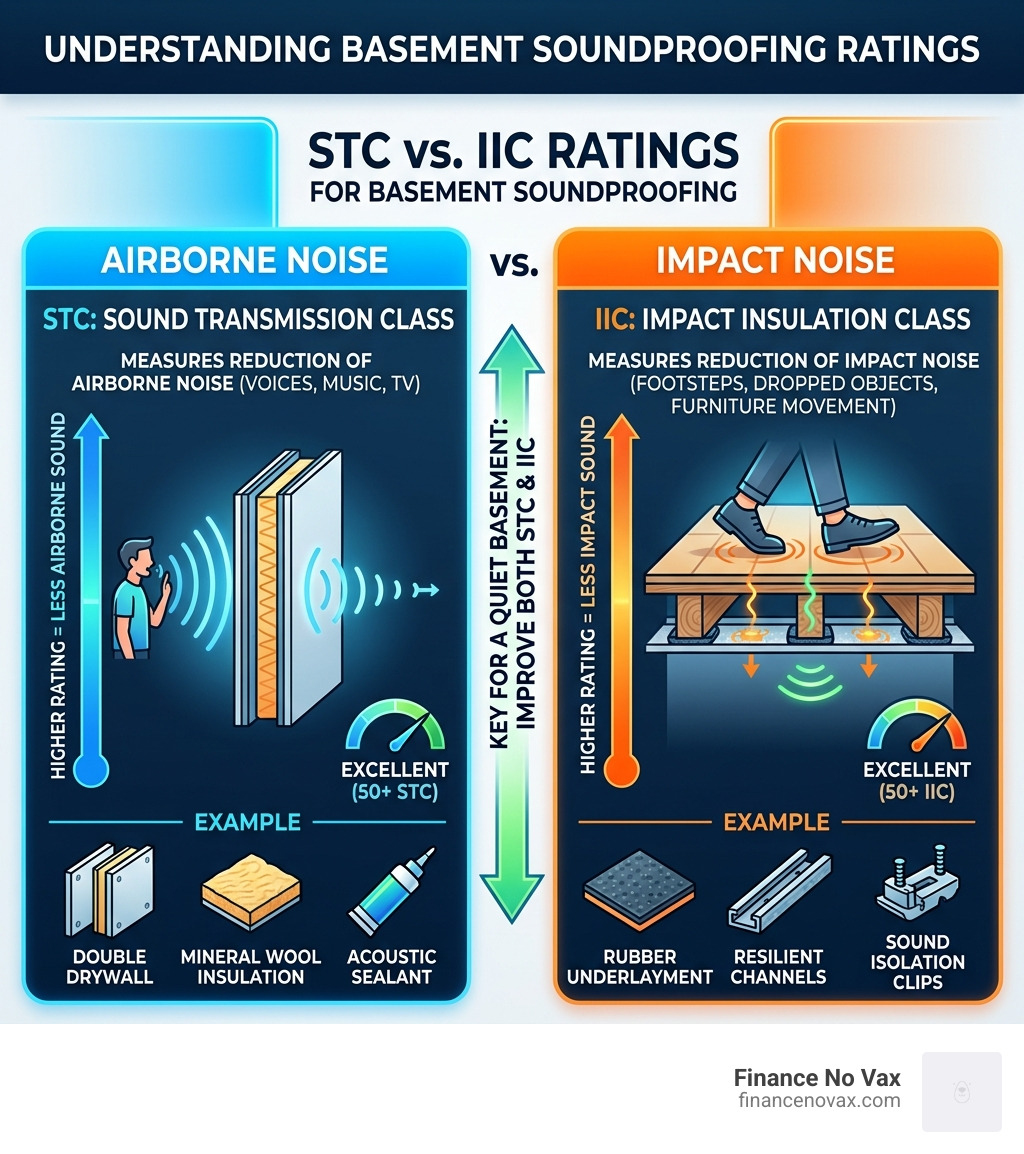
Simple best way to soundproof basement glossary:
Understanding Noise: The First Step to a Quiet Basement
Before we start buying rolls of insulation, we need to understand the enemy. Noise doesn’t just “leak” into a basement; it travels in very specific ways. If you don’t identify the type of noise you’re fighting, you’ll likely waste money on the wrong materials.
Airborne Noise vs. Impact Noise
Airborne noise is exactly what it sounds like: sound waves traveling through the air. Think of the TV in the living room, people talking, or a dog barking. These sounds find the path of least resistance—cracks under doors, gaps around pipes, and even through porous materials.
Impact noise (or structure-borne noise) is the vibration caused by an object hitting a surface. This is the classic “footstep” problem. When someone walks on the floor upstairs, the energy travels through the floorboards, into the joists, and vibrates the ceiling of your basement. It acts like a giant drum skin.
Flanking Transmission and Vibrations
Sound is sneaky. It doesn’t just go through the ceiling; it can travel down the wall studs or through the ductwork. This is called “flanking transmission.” You might soundproof your ceiling perfectly, but if the sound is vibrating down the wall studs, you’ll still hear it.
STC and IIC: The Measuring Sticks
To choose the right materials, you need to know two ratings:
- Sound Transmission Class (STC): This measures how well a partition (like a wall or ceiling) blocks airborne sound. For a private home office or bedroom, you want an STC of 50 or higher.
- Impact Insulation Class (IIC): This measures how well a floor/ceiling assembly blocks impact noise.
To dive deeper into the basics, check out Basement Soundproofing 101: How to Eliminate Noise and Echoes or learn more info about soundproofing your walls to see how these ratings apply to different structures.
The Best Way to Soundproof Basement Structures for 2026
As we move through April 2026, the technology for home soundproofing has become incredibly accessible. We no longer rely on “egg cartons” (which are a fire hazard and don’t actually block sound) or thin foam. Today, the best way to soundproof basement rooms involves a “layered attack.”
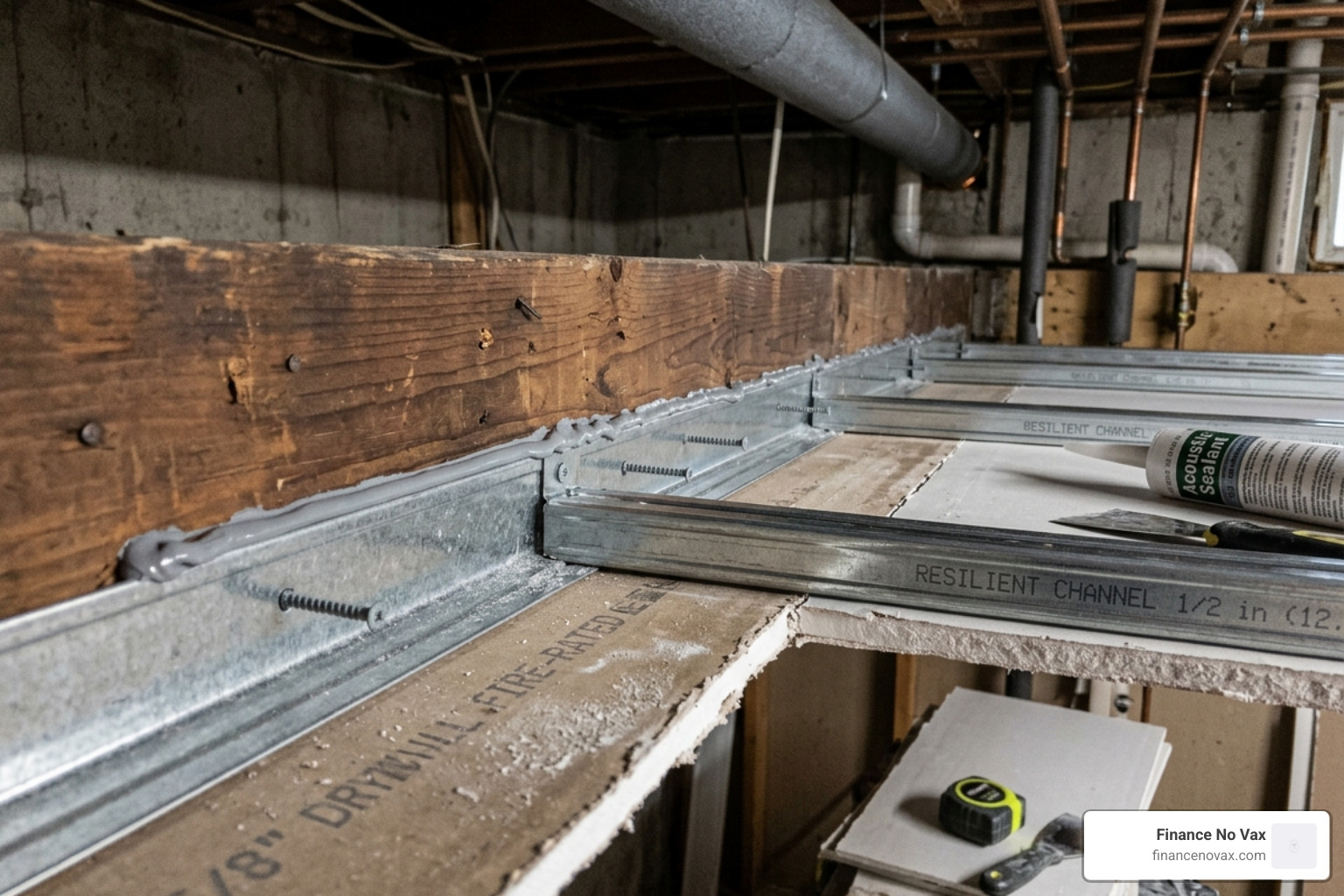
The modern standard for high-performance soundproofing includes:
- Acoustic Insulation: Using dense mineral wool (like Rockwool) instead of standard fiberglass.
- Mass-Loaded Vinyl (MLV): A heavy, flexible material that adds incredible density to surfaces without taking up much space.
- Damping Compounds: Products like Green Glue that sit between layers of drywall and convert sound energy into heat.
For a deep dive into these techniques, see this How to Soundproof a Basement: Essential Tips & Techniques guide.
Decoupling: The Best Way to Soundproof Basement Ceilings
If you want to stop those annoying footsteps, you must “decouple.” This means breaking the physical connection between the upstairs floor and your basement ceiling.
When you screw drywall directly into the ceiling joists, you create a bridge for vibrations to travel. By using resilient channels or sound isolation clips (RSIC), you create a “floating” ceiling. The vibrations hit the joists but can’t easily pass through the clips to the drywall. It’s like putting shock absorbers on your house.
- Pro Tip: Be careful with screw length! If your screw goes through the resilient channel and into the joist, you’ve “short-circuited” the system, and the sound will pass right through.
Learn more about making your space silent with more info about floating ceilings and explore the best ceiling panels to stop overhead noise. If you’re looking for an all-in-one solution, check out these top ceiling soundproofing kits for your home.
Strategic Sealing: The Best Way to Soundproof Basement Gaps
You could have the thickest walls in the world, but if there’s a 1/4-inch gap under the door, you’ve lost about 50% of your soundproofing effectiveness. Sound behaves like water—it will find any hole and pour through it.
We recommend using acoustic caulk (which stays flexible and doesn’t crack over time) to seal:
- The gap between the drywall and the floor.
- Areas where pipes or wires penetrate the ceiling.
- Around electrical outlet boxes.
For electrical outlets, use putty pads. These are non-hardening pads that wrap around the back of the outlet box to prevent sound from leaking through the hole in the wall. It’s a small detail that makes a massive difference. For more stress-free tips, read how to soundproof a ceiling without losing your mind.
Advanced Wall and Floor Isolation Techniques
Once the ceiling is handled, we turn our attention to the walls and floors. If you’re building a home theater or a music studio, standard 2×4 walls won’t cut it.
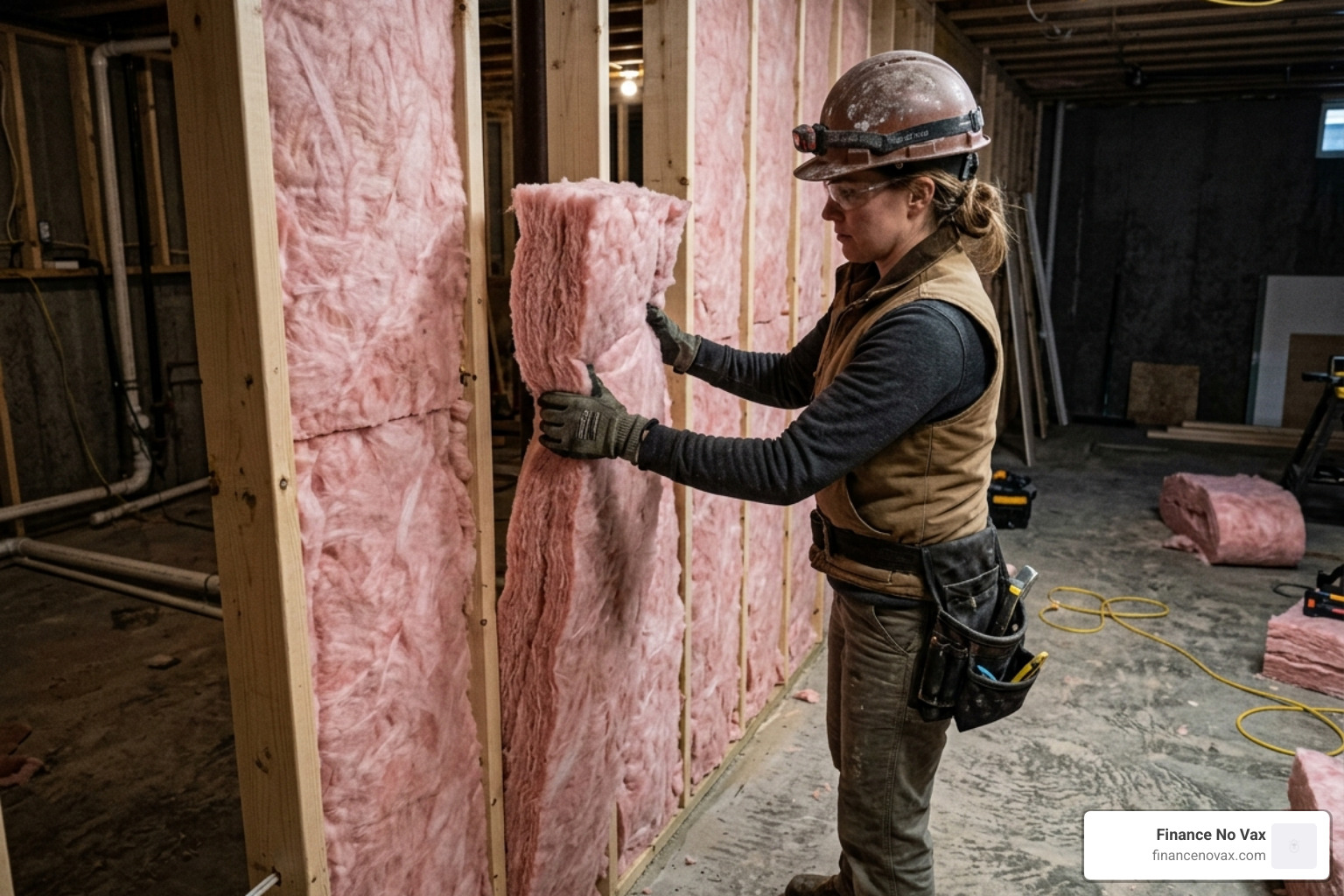
Adding Mass: The Best Way to Soundproof Basement Walls
Mass is the enemy of sound. The heavier the wall, the harder it is for sound waves to move it.
- Double Drywall: Instead of one layer of 1/2″ drywall, use two layers of 5/8″ fire-rated drywall.
- Damping: Sandwich a layer of Green Glue between those two sheets of drywall. This is arguably the most cost-effective way to kill noise.
- SONOpan Panels: These are specialized soundproofing panels that can be installed behind drywall to add an extra layer of noise-blocking power.
If you are building new walls, consider staggered stud construction. This is where you use a wider base plate (like a 2×6) but alternate 2×4 studs so that the drywall on one side isn’t touching the studs used for the drywall on the other side. This provides built-in decoupling.
For the best insulation choices, see why many pros say Rockwool or bust and discover why double wall soundproofing is the secret to a silent home. To manage the sound inside the room (echoes), check out the ultimate guide to taming echoes with wall and ceiling panels.
Floor Underlayments
If you have a concrete floor, you might think it’s already soundproof. While concrete is great at blocking airborne sound, it’s terrible for impact. If you drop a barbell in your basement gym, the vibration will travel through the concrete and up the walls.
Using a high-quality underlayment like Impact Barrier QT (made from 92% recycled tire rubber) can significantly improve your IIC rating. It provides a cushioned layer that “breaks” the vibration before it can enter the structure of the house.
Addressing HVAC, Pipes, and Entryways
The most common mistake homeowners make is ignoring the “hidden” noise highways: the metal pipes and ducts.
HVAC and Pipe Noise
Metal ducts act like a telephone system, carrying your voice from the basement right into the master bedroom.
- Duct Wrap: Use specialized MLV duct wrap to add mass to the metal, stopping it from vibrating.
- Vibration Isolation: Use rubber hangers for pipes so they aren’t clanking against the wooden joists.
- Soffits: When boxing in your HVAC, fill the surrounding cavity with mineral wool before closing it up with double drywall.
Doors and Windows
A standard hollow-core door has almost zero soundproofing value. It’s essentially two thin pieces of veneer with air in the middle.
- Upgrade to Solid-Core: Replacing a hollow door with a solid-core door is one of the single best investments you can make.
- Automatic Door Sweeps: These are genius devices that drop a seal down to the floor only when the door is closed.
- Window Inserts: If your basement has windows near a busy road, acrylic window inserts can create an airtight seal that blocks traffic noise without replacing the entire window.
For those building a dedicated music space, these basement drum room suggestions are essential for keeping the peace.
DIY Hacks vs. Professional Installation Costs
How much should you expect to spend in 2026? The best way to soundproof basement projects varies wildly depending on whether you do it yourself or hire a crew.
| Method | Estimated DIY Cost (per sq. ft.) | Estimated Pro Cost (per sq. ft.) | Effectiveness |
|---|---|---|---|
| Basic Sealing & Rugs | $1 – $2 | N/A | Low |
| Insulation & Double Drywall | $3 – $5 | $8 – $12 | Medium-High |
| Full Decoupling (Clips/Channels) | $6 – $10 | $15 – $25 | Maximum |
Cost-Effective “Hacks”
If a full renovation isn’t in the budget, you can still make a dent in the noise:
- Heavy Rugs: Adding thick rugs with high-quality pads can reduce echo and some impact noise.
- Moving Blankets: While not pretty, hanging heavy moving blankets on walls can absorb some mid-to-high frequency sounds.
- Acoustic Tiles: These are great for reducing echo inside the room, though they won’t stop sound from leaving.
Soundproofing is an investment. It’s estimated that a high-quality basement renovation (including soundproofing) offers a 70-75% return on investment (ROI). Beyond the money, you’re gaining thermal insulation—materials like mineral wool and MLV help keep your basement warm in the winter, lowering your energy bills.
To get the job done right, make sure you have the best tools to decouple your ceiling.
Frequently Asked Questions about Basement Soundproofing
What is the most effective material for basement ceilings?
The most effective setup is a combination: Mineral wool insulation in the joist cavities, RSIC clips for decoupling, and two layers of 5/8″ drywall with Green Glue damping compound between them. This addresses both airborne noise and those pesky footsteps (impact noise).
Can I soundproof a basement without removing existing drywall?
Yes! This is a common “retrofit” technique. You can apply a layer of Green Glue directly to your existing ceiling or walls and then screw a second layer of 5/8″ drywall on top. While you won’t get the benefit of decoupling (unless you use resilient channels over the old drywall), it still significantly increases the mass and damping of the room.
How much does professional basement soundproofing cost in 2026?
For a professional, high-performance installation (including decoupling and specialized materials), expect to pay between $15 and $25 per square foot. For a standard 500-square-foot basement ceiling, this could range from $7,500 to $12,500. While expensive, it ensures the “airtightness” that is nearly impossible for most DIYers to achieve perfectly.
Conclusion
At Finance No Vax, we believe your home should be a sanctuary, not a source of stress. Finding the best way to soundproof basement rooms is about more than just quiet—it’s about improving your cardiovascular health, enhancing your sleep quality, and giving your family the privacy they deserve.
By following the principles of mass, decoupling, damping, and sealing, you can transform a cold, echoing basement into a professional-grade home office, a cinematic theater, or a peaceful guest suite. Not only does this add significant value to your property, but it also provides the mental clarity that only comes with true silence.
Ready to take the next step in your home renovation journey? Start your basement transformation today and reclaim your peace and quiet.
