
Why Noise Is Killing Your Work-From-Home Productivity
A complete soundproof home office setup typically involves sealing door and window gaps, adding acoustic panels to walls, laying thick rugs, and treating ceilings — all working together to block or absorb noise.
Quick setup overview:
- Seal gaps — weatherstripping on doors, acoustic caulk around windows and outlets
- Add mass — solid-core doors, mass-loaded vinyl, extra drywall layers
- Absorb sound — acoustic panels, thick rugs with underlay, heavy curtains
- Decouple surfaces — resilient channels, air gaps between wall layers
- Mask residual noise — white noise machine or background music
Working from home sounds ideal — until the dog starts barking, a delivery truck rumbles past, or someone in the next room turns on the TV right before your most important call of the week.
You are not alone. According to survey data from over 1,500 remote workers, nearly two-thirds reported being regularly distracted by noise — from both inside and outside their homes. Family members, roommates, and pets top the list, followed closely by traffic, neighbors, and construction.
The good news? You don’t need to gut your walls or hire a contractor to fix this. Most of the most effective improvements are affordable, DIY-friendly, and can be done over a weekend.
This guide walks you through everything — from quick wins like door seals and rugs, to advanced techniques like decoupled walls and ERV ventilation systems — so you can build the quiet, focused workspace you actually need.

Understanding Noise in Your Soundproof Home Office Setup
Before we start sticking foam to the walls like a 1990s recording studio, we need to understand what we are actually fighting. Sound is a bit like water; it will find the smallest crack to leak through, and it travels in ways that might surprise you.
In any soundproof home office setup, we deal with two primary types of noise:
- Airborne Noise: This is exactly what it sounds like — sound traveling through the air. Examples include your neighbor’s leaf blower, your partner’s Zoom call in the kitchen, or the local teenager’s questionable taste in bass-heavy music.
- Impact Noise (or Contact Noise): This is sound traveling through the structure of your house. Think of footsteps on the floor above you, the vibration of a washing machine, or someone slamming a door.
To tackle these effectively, we recommend understanding noise: how noise travels through walls to see why simply closing a door isn’t always enough.
Decibel Levels and STC Ratings
We measure sound in decibels (dB). For context, a quiet whisper is about 30 dB, while a normal conversation is 60 dB. If you are trying to work while construction is happening outside at 100 dB, your brain is going to struggle to focus.
When looking at materials for your soundproof home office setup, you’ll often see an STC (Sound Transmission Class) rating. This number tells you how well a partition (like a wall or door) stops sound. A standard interior wall usually has an STC of around 33. If you can bump that up to 50, you’ve reached the “soundproof” holy grail where loud speech is essentially inaudible. You can learn more about these metrics in our guide on how to soundproof your home office for remote work.
Identifying Common Distractions
Our research shows that distractions come from everywhere. In a survey of 1,552 participants:
- 46.6% identified family, roommates, or pets as the primary distraction.
- 23.7% blamed outside traffic.
- 21.5% were annoyed by neighbors.
- 19.6% cited construction.
- 15.2% were distracted by their own running appliances.
Basically, 61.8% of our problems are coming from inside the house. If you want to reclaim your focus, check out these home peace: best ways to reduce noise at home to start silencing the domestic chaos.
The Science of Sound Absorption vs. Blocking
This is the most common mistake people make: confusing absorption with blocking.
- Sound Blocking (Mass and Decoupling): This keeps sound from entering or leaving the room. It requires heavy, dense materials.
- Sound Absorption (Acoustic Treatment): This stops sound from bouncing around inside the room. It gets rid of that “echoey” bathroom sound on your conference calls.
To build a truly effective workspace, you need both. For a deep dive into the mechanics, read up on how does soundproofing work and our soundproofing vs. acoustic treatment: a comparison to ensure you aren’t buying the wrong gear for your specific problem.
Essential Components of a Soundproof Home Office Setup
If you want a professional-grade environment, you have to address the “weakest links.” In most homes, these are the doors and windows. You could have three-foot-thick concrete walls, but if there is a half-inch gap under your door, noise will pour in like a flood.
Sealing the Weakest Links: Doors and Windows
Most interior doors are “hollow-core,” which is a fancy way of saying they are two thin sheets of wood with cardboard honeycombs inside. They are basically drums that amplify noise.
The Door Strategy:
- Replace with Solid-Core: If your budget allows, a 1-3/4″ solid MDF door is a game-changer.
- Seal the Gaps: Use top-rated soundproof door seals on the market to create an airtight fit.
- Install a Door Sweep: This is a thick strip that seals the gap at the bottom. It’s one of the best ROI moves you can make. See why door sweeps: a practical solution for noise reduction are so effective.
- Weather Stripping: Apply this around the entire frame. We have a guide on using weather stripping for enhanced soundproofing that explains the best materials to use.
If you are dealing with a large gap that standard seals won’t fix, learn how to soundproof a door gap effectively and check out these additional how to soundproof a door gap effectively-2 techniques for tricky thresholds.
The Window Strategy: Windows are notorious for letting in traffic and construction noise.
- Acoustic Caulk: Seal the edges of the window frame. Unlike regular caulk, acoustic caulk stays flexible and doesn’t crack, maintaining the seal for years.
- Window Inserts: These are custom-made acrylic panels that pop into your existing frame, creating a secondary air gap that can reduce noise by up to 70%.
- Double-Glazing: If you are doing a full renovation, double-glazed or laminated glass is the gold standard.
Wall and Ceiling Treatments for Maximum Isolation
Once the air leaks are sealed, we turn our attention to the surfaces. If your voice sounds hollow on calls, you need absorption. If you can hear your neighbor’s TV, you need mass and insulation.
Mineral Wool Insulation: If you are able to open up your walls, replacing standard pink fiberglass with mineral wool (like Rockwool) is highly recommended. It’s much denser and specifically designed for fire and sound resistance.
Acoustic Panels: These are the bread and butter of any soundproof home office setup. They catch sound waves before they can bounce off hard walls. You don’t need to cover the whole room — usually, covering 20-30% of the wall surface is enough. We’ve rounded up the cheap acoustic panels that deliver great results so you don’t have to spend a fortune.
For those looking for the “best of the best,” check out the best acoustic panels for home use to find options that actually look like art rather than industrial foam.
Ceiling Solutions: If you have a “family of elephants” living above you, standard panels won’t help much. You need to address the vibrations. Explore these DIY ideas for soundproofing your ceiling to reclaim your peace.
| Material Type | Primary Purpose | Effectiveness (1-10) | Ease of Install |
|---|---|---|---|
| Acoustic Foam | Echo Reduction | 4 | Very Easy |
| Acoustic Panels (Fiber) | Sound Clarity | 8 | Easy |
| Mass-Loaded Vinyl | Blocking Noise | 9 | Moderate |
| Solid-Core Door | Blocking Noise | 10 | Hard |
Budget-Friendly Strategies for a Soundproof Home Office Setup
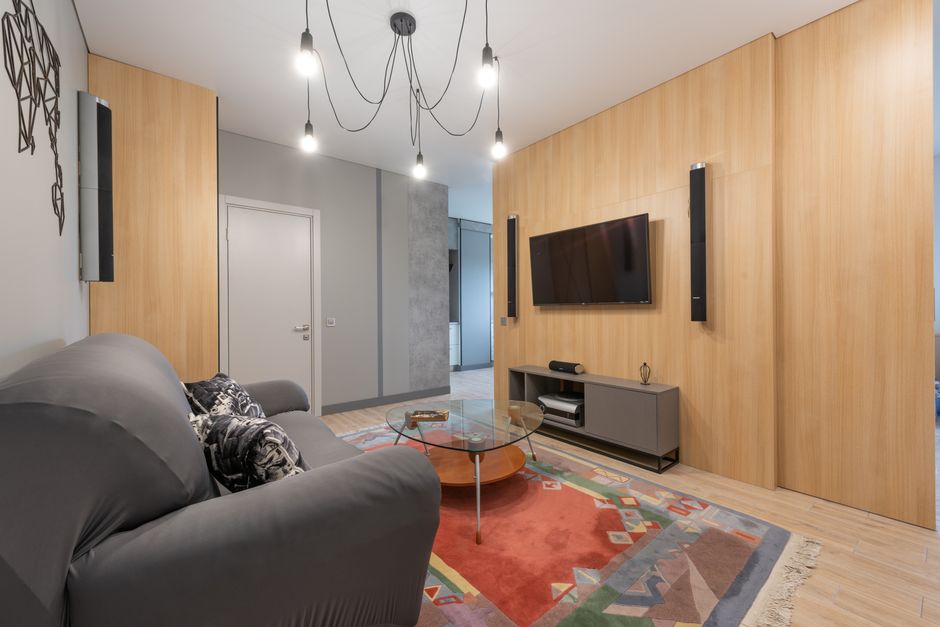
We know that not everyone wants to tear down drywall or spend $1,000 on a new door. Fortunately, there are plenty of ways to how to achieve soundproofing on a budget using items you might already have.
Soft Furnishings and Heavy Decor
Sound loves hard, flat surfaces. It hates soft, “squishy” things.
- Rugs and Carpets: A thick rug with a high-quality rug pad can significantly reduce impact noise from footsteps. It also stops sound from bouncing off the floor. Read more about soundproofing with rugs and carpets: a cheap alternative to see which piles work best.
- Bookshelves: A floor-to-ceiling bookshelf filled with books is essentially a giant, heavy sound diffuser. Place it against a shared wall to add mass and block your roommate’s noise.
- Blankets: In a pinch, hanging heavy moving blankets can work wonders. While not the most “designer” look, the art of soundproofing with blankets is a legitimate strategy for temporary setups.
For more small-space hacks, our guide on soundproof small home office on a budget covers everything from furniture placement to DIY seals.
DIY Acoustic Solutions
If you’re handy with a staple gun, you can save hundreds of dollars.
- Homemade Panels: You can build frames out of 1×4 lumber, fill them with mineral wool, and wrap them in breathable fabric. This is often more effective than cheap foam. Follow our steps for creating homemade soundproof panels.
- Foam Alternatives: If you can’t find acoustic foam, there are other materials that work. Check out diy acoustic foam alternatives for soundproofing for creative ideas.
- Budget Materials: We’ve also compiled a list of budget-friendly soundproof materials worth considering that won’t break the bank.
Renter-Friendly Noise Reduction
Renters have it tough because they can’t exactly replace doors or glue vinyl to the walls. If you’re in this boat, our renters guide: soundproofing for renters is your new best friend.
- Acoustic Partitions: These are free-standing dividers that absorb sound. They are perfect for “creating” an office in a corner of a living room.
- Temporary Fixes: Use temporary fixes: temporary soundproofing solutions like tension rods for heavy curtains or command-strip-mounted panels.
- Room Dividers: If you share a space, a thick room divider can provide visual and acoustic privacy. Learn more about silence in close quarters: soundproofing for small spaces.
Advanced Construction for a Soundproof Home Office Setup
If you are building a new home or doing a major renovation, you have the opportunity to create a “room within a room” — the ultimate soundproof home office setup.
Decoupling and Mass
The secret to high-end soundproofing is decoupling. This means breaking the physical connection between the inside and outside of the wall so vibrations can’t travel through the studs.
- Resilient Channels: These are metal rails that you attach to the studs before installing drywall. The drywall “floats” on the rails, which act like a shock absorber.
- Mass-Loaded Vinyl (MLV): This is a heavy, flexible material that you staple to the studs. It adds immense mass without adding much thickness.
- Green Glue: This is a damping compound you sandwich between two layers of drywall. it converts sound energy into heat. Yes, it’s basically magic.
- Staggered Studs: By using a wider base plate and alternating which studs touch which side of the wall, you can prevent sound from taking a direct path through the wood.
For a step-by-step walkthrough of these heavy-duty methods, see our diy projects: step-by-step guide to soundproofing a room and our building a soundproof home office: an advanced guide.
Maintaining Airflow and Air Quality
Here is the catch-22 of soundproofing: sound travels through air. If you make a room perfectly airtight to block sound, you also block fresh air. We’ve seen people build incredible soundproof booths only to realize they get dizzy from lack of oxygen after an hour!
- ERV (Energy Recovery Ventilator) Systems: These pull in fresh air and exhaust stale air while maintaining the temperature. They are essential for sealed rooms.
- Baffle Boxes: These are “sound mazes” for your vents. The air has to turn several corners lined with absorbent material, which kills the sound but lets the air flow.
- HVAC Silencers: These are pre-made tubes that you install in your ductwork to quiet the hum of the AC.
Keep your air clean and your ears happy with our your quiet home office soundproofing checklist.
Frequently Asked Questions about Soundproofing
Can I soundproof a home office without major renovations?
Absolutely. Most of the distractions we face can be mitigated with “soft” changes. Start with easy fixes: soundproofing without construction like sealing the door and adding a rug. You can also master the silence: simple soundproofing techniques like using heavy drapes and strategically placed bookshelves.
What are the most common soundproofing mistakes to avoid?
Don’t fall for the “egg carton” myth! Egg cartons do absolutely nothing for soundproofing — they just make your room look like a recycling center and create a fire hazard. Also, avoid these common soundproofing mistakes like leaving air gaps around outlets or using thin, cheap foam that only addresses high frequencies. For more debunking, read debunked: soundproofing myths explained.
How do I measure the effectiveness of my setup?
You don’t need expensive lab equipment. There are several smartphone apps that act as decibel meters.
- Before: Measure the noise level during a “loud” time of day.
- After: Measure again after your improvements. A reduction of 10 dB is perceived by the human ear as a 50% reduction in volume. If you can achieve that, you’ve done a fantastic job!
Conclusion
Building the perfect soundproof home office setup is one of the best investments you can make in your career and your mental health. When you eliminate the stress of background noise, your productivity skyrockets, and your professionalism on calls remains top-tier.
Whether you are starting with simple door seals or going all-in with double drywall and Green Glue, the key is to be systematic. Seal the air leaks first, add mass to block noise, and use absorption to clear up the echo.
At Finance No Vax, we believe your home should be your sanctuary. Use this guide to make your home a haven: easy soundproofing guide and start enjoying the silence today.
Ready to take the next step toward a quieter life? Explore more expert tips at Finance No Vax and transform your workspace into a powerhouse of focus!
