
Why High Performance Sound Doors Are Worth Every Penny in 2026
High performance sound doors are specially engineered doors that block significantly more noise than standard doors — making them the go-to solution for home offices, recording studios, home theaters, and anywhere silence matters.
Here’s a quick look at the top options to consider:
| Door Type | STC Rating | Best For |
|---|---|---|
| Entry-level acoustic door | STC 35-40 | Home offices, bedrooms |
| Mid-range sound door | STC 45-52 | Studios, conference rooms |
| Heavy-duty sound door | STC 56-64 | Professional studios, industrial |
| Double-leaf assemblies | Up to STC 56 | Large openings, theaters |
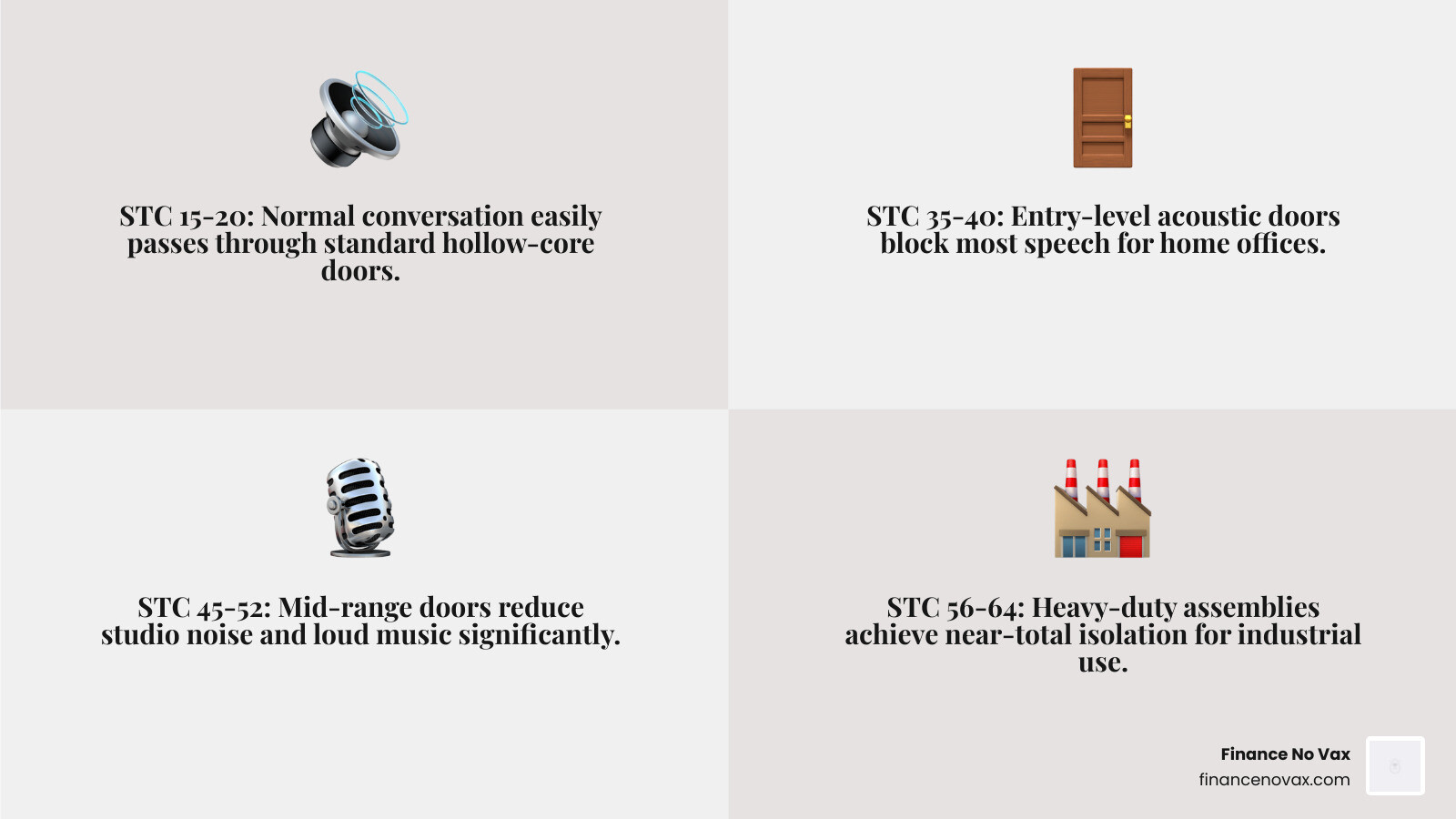
Think about your average interior door. It typically rates between STC 15 and STC 20 — meaning normal conversation passes right through it. For anyone trying to work from home, that gap under the door and the hollow core inside might as well be an open window to the rest of the house.
Silence, it turns out, is genuinely golden. As open floor plans and always-on notifications have become the norm, the demand for real acoustic separation has grown fast.
High performance sound doors solve this by combining mass, specialized core materials, and airtight seals to stop sound in its tracks. The difference between a standard door and a true acoustic door isn’t just noticeable — it’s dramatic.
The sections below break down exactly what makes these doors work, what the ratings mean, and which solutions are worth your investment in 2026.
Simple high performance sound doors glossary:
What Defines a High Performance Sound Door?
When we talk about high performance sound doors, we aren’t just talking about a heavy slab of wood. These are precision-engineered assemblies designed to combat the three enemies of silence: vibration, air leaks, and lack of mass.
A standard door is often hollow-core or made of lightweight composite materials. In contrast, a high-performance model utilizes a combination of physics-based principles:
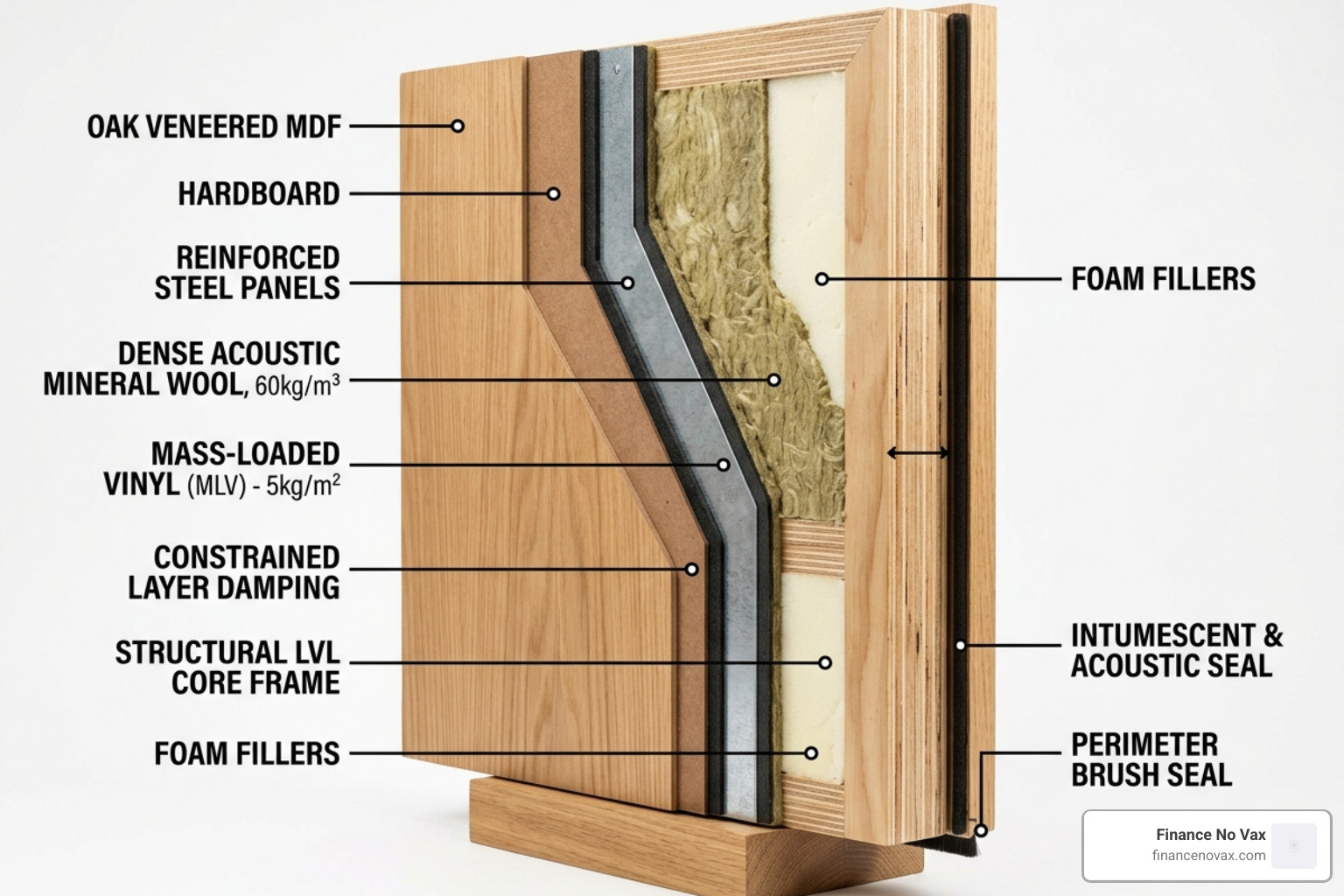
- Mass: Sound waves are lazy; they don’t like moving heavy objects. By using materials like high-density wood or 16-gauge steel, these doors provide the weight necessary to reflect sound energy rather than letting it pass through.
- Damping: Specialized acoustic door insulation materials are used inside the door core to dissipate sound energy as heat. This prevents the door from acting like a drum skin that vibrates and re-radiates noise.
- Decoupling: The most advanced doors use internal layers that are physically separated to break the path of vibration.
- Air Gap Elimination: If air can get through, sound can get through. High-performance doors feature redundant, laboratory-tested seal systems that make the door airtight when closed.
For those looking to achieve total isolation, understanding high density door noise barriers is essential. These barriers ensure that the door matches the performance of the high-STC walls surrounding it. Without a high-performance door, your expensive soundproof wall is essentially compromised by a massive “acoustic hole.”
Understanding STC Ratings and Sound Isolation Performance
In acoustics, we use the Sound Transmission Class (STC) to measure how well a partition blocks airborne sound. For high performance sound doors, these ratings are verified in independent laboratories using ASTM E-413 standards.
Here is how those numbers translate to your daily life:
- STC 35-40: This is the “privacy” threshold. Loud speech is audible but not intelligible. It’s a massive upgrade over a standard STC 20 residential door.
- STC 45: At this level, loud speech is no longer audible. This is the sweet spot for high-end home offices and conference rooms.
- STC 50: Very loud sounds, such as musical instruments or a home theater system, are only faintly heard.
- STC 60+: This is the gold standard. Most sounds become completely inaudible. These doors are typically 3.5 to 5 inches thick and are used in professional recording studios or industrial test cells.
It is important to note that STC ratings primarily focus on mid-to-high frequencies (like human speech). If you are dealing with low-frequency “thumping” from a subwoofer or heavy machinery, you need a door specifically tested for low-frequency transmission loss. Some heavy-duty wood doors, like the IsoDoor HD, weigh up to 17 pounds per square foot specifically to handle these difficult low frequencies.
Critical Construction Elements of High Performance Sound Doors
What’s actually inside these doors? It’s more than just “stuffing.”
Core Materials
Modern acoustic doors use proprietary cores. For wood doors, this often involves a “noise control core” that is significantly denser than standard particle board. You can find beautiful high STC acoustic wood door panels that look like luxury furniture but perform like industrial barriers.
Steel versions often feature 16-gauge skins filled with high-density polyurethane foam (sometimes achieving an R-32 insulation value) or specialized mineral wool.
Sealing Systems
The seals are arguably the most critical component. High-performance assemblies include:
- Magnetic Seals: Similar to a refrigerator door, these provide a tight, self-aligning grip.
- Automatic Door Bottoms: As the door closes, a plunger hits the frame and drops a neoprene seal to the floor, eliminating the gap.
- Acoustic Thresholds: These provide a solid, level surface for the door bottom to seal against.
- Redundant Perimeter Gaskets: Multiple layers of rubber or silicone seals ensure no sound leaks through the jambs. To see which ones are best for your project, check out our guide on the best sound blocking door sweeps.
Specialized Hardware
Because these doors are incredibly heavy (often 300 to 700+ lbs), standard hinges won’t cut it. Cam-lift hinges are frequently used; they actually lift the door slightly when it opens and lower it as it closes to compress the bottom seal tightly against the floor.
Materials Used in High Performance Sound Doors
We see a variety of materials depending on the application:
- Galvanized Steel: Common in industrial and commercial settings for durability and high STC (up to 64).
- High-Density Wood: Preferred for residential use where aesthetics matter. These can reach STC 56 or higher.
- Acoustic Glass: If you need a window (vision lite), specialized laminated glass is used. Be aware that larger windows can slightly lower the overall STC of the door assembly.
Specialized High Performance Sound Doors for Industrial Use
In industrial settings, high performance sound doors do more than just block noise. Some are rated for Radiofrequency (RF) shielding (up to 100 dB), which is vital for secure government facilities (SCIF compliance). Others offer blast resistance, fire ratings up to 3 hours, or even bullet resistance. For massive facilities, oversized industrial hatches and quad-leaf doors allow for the movement of heavy machinery while maintaining acoustic integrity.
Top-Rated High Performance Sound Door Solutions for 2026

As we move through 2026, several high-performance solutions have risen to the top of the market. Choosing the right one depends on your specific isolation needs and the thickness of your walls.
- The Economical Choice (STC 35-49): For home offices and bedrooms, look for wood doors that offer a significant boost over standard cores without requiring massive structural changes. These often weigh around 7 to 9 lbs per square foot and can be pre-hung for easier installation. IsoDoor SD is a great example of a quality door for most isolation assemblies.
- The Studio Standard (STC 50-56): These are the heavy hitters. Doors like the Sound Lock Soundproof Double Door are perfect for separating a control room from a live room. They are often 2.5 to 3 inches thick and require robust framing.
- The Heavy-Duty Monster (STC 60+): When you need to block a jet engine or a full drum kit, you need mass. The IsoDoor HD is a prime example, weighing 17 pounds per square foot (that’s 340 lbs for a standard 3×7 door!). These are often used in specialty door configurations where performance cannot be compromised.
- Steel Swing Doors: For commercial environments, QuietSwing doors offer STC ratings up to 64. They often feature “EZ Open” magnetic seals that allow a high-STC door to be opened with less than 5 pounds of force, keeping them ADA compliant.
For a deeper dive into which model fits your budget, read our soundproof door solutions 101 guide.
Key Considerations for Installation and Hardware
You cannot simply “hang” a high-performance door like a regular bedroom door. The sheer weight and precision required make installation a specialized task.
Structural Requirements
A door weighing 340 to 700 pounds requires serious support. We recommend using double king and jack studs for the rough opening. If you are installing into steel framing, you must add wood blocking to ensure the screws have something solid to bite into.
Weight Management
Continuous hinges (also called piano hinges) are often used to distribute the door’s weight evenly along the entire length of the jamb. This prevents the door from sagging over time, which would ruin the acoustic seal.
The “Acoustic Hole” Problem
Even the best door will fail if the installation isn’t airtight. We always use a split-frame design or a custom jamb that wraps the rough opening. The gap between the door frame and the wall must be stuffed with backing rod and sealed with a high-quality acoustic sealant. If you can see light or feel a draft, you will hear the noise.
For more tips on sealing your space, check out The Great Escape: How To Soundproof Your Office Door.
Frequently Asked Questions about Acoustic Doors
What is the difference between an acoustic door and a soundproof door?
While the terms are often used interchangeably, there is a technical distinction. An acoustic door is engineered to reach a specific STC rating (like STC 45). A soundproof door is a high-performance assembly designed to provide the maximum possible isolation, often blocking almost all audible frequencies. Essentially, every soundproof door is an acoustic door, but not every acoustic door is fully soundproof.
Do high performance sound doors require special framing?
Yes. Because these doors are significantly heavier than standard doors (up to 17 lbs per square foot), they require reinforced “king and jack” studs. Standard residential framing may bow or warp under the weight of a 350-lb door, causing the seals to fail.
Can I install a high performance sound door in a standard residential home?
Absolutely. Many manufacturers now offer wood-veneer finishes that look identical to standard high-end home doors. Products like the SoundSentry STC 40 provide industrial-grade quiet with a residential look. However, you should always consult a contractor to ensure your floor and walls can support the extra weight.
Conclusion
In 2026, the world isn’t getting any quieter, but your home or office can be. Investing in high performance sound doors is the single most effective way to upgrade your privacy and focus. Whether you are building a world-class recording studio or just trying to keep the sound of the dishwasher out of your Zoom calls, there is a solution that fits your needs.
At Finance No Vax, we believe in doing things right the first time. A high-quality acoustic door is a long-term investment in your productivity and peace of mind. For more help planning your next project, explore our DIY soundproofing solutions and take the first step toward a quieter life.
