
Why Noise Is Killing Your Focus (And What to Do About It)
The cheapest way to soundproof a room combines a few simple, low-cost steps: seal gaps around doors and windows, add thick rugs or curtains, and place heavy furniture against noisy walls. Here’s a quick breakdown:
- Seal gaps – Use weatherstripping, door sweeps, and acoustic caulk ($10-$20)
- Add soft furnishings – Thick rugs, heavy curtains, or moving blankets ($15-$60)
- Reposition furniture – Place bookshelves filled with books against shared walls (free)
- DIY acoustic panels – Build your own with Rockwool and fabric for under $20 each
- Use removable solutions – Foam mats, window plugs, and tension-rod curtains for renters
It’s the middle of a work call. Your neighbor’s TV is bleeding through the wall. A car honks outside. You lose your train of thought — again.
You’re not alone. In England, a noise complaint is filed for every 160 people in the country. And 20% of people live in areas where traffic noise reaches levels that are actually harmful to health. For remote workers trying to think clearly, that’s a real problem.
The good news? You don’t need to gut your walls or hire a contractor to make a serious dent in the noise. With the right approach — and as little as $30 to $100 — you can reclaim a meaningful level of quiet in your home office.
This guide covers five wall-focused methods that are both genuinely effective and easy on your wallet.
Understanding the Basics: Soundproofing vs. Sound Absorption
Before we start sticking things to our walls, we need to understand the physics of the “enemy.” Noise comes in two main flavors: airborne and structure-borne.
- Airborne noise is exactly what it sounds like—sound traveling through the air. Think of your neighbor’s dog barking, the hum of traffic, or the dialogue from a nearby TV.
- Structure-borne noise (or impact noise) happens when an object hits a surface, sending vibrations through the building’s skeleton. This is the classic “upstairs neighbor moving furniture” or “toddler doing sprints at 6:00 AM” scenario.
To fight these, we use two different strategies. Soundproofing is about blocking sound from entering or leaving a room. This requires mass (heavy stuff) and decoupling (separating structures so vibrations can’t jump from one to the other). Sound absorption, on the other hand, is about soaking up echoes inside the room so it doesn’t sound like you’re living in a giant tin can.
When looking for the cheapest way to soundproof a room, we often look at NRC (Noise Reduction Coefficient) ratings for absorption and STC (Sound Transmission Class) ratings for blocking. While pro-grade materials have high ratings, we can mimic these effects using smart DIY tactics. For a deeper dive into these concepts, check out a-beginners-guide-to-basic-soundproofing. If you want to see how these principles apply specifically to low-cost projects, read more about How to Soundproof a Room Cheaply (That Actually Works).
The Cheapest Way to Soundproof a Room: Sealing the Gaps
Imagine you’re on a boat. If there’s a tiny hole in the hull, the boat sinks. Sound works the same way. If you have a perfectly insulated wall but a 1/4-inch gap under your door, noise will pour through that gap like water. In fact, even a 1% gap in your room’s seal can reduce its sound-blocking effectiveness by 50%!
This is why sealing leaks is the absolute cheapest way to soundproof a room. It costs almost nothing and yields the biggest immediate “wow” factor.
The Flashlight Test
Grab a friend and a flashlight. Turn off the lights in your room and have your friend shine the light around the edges of the door and windows from the outside. Anywhere you see light peeking through is a “noise highway” that needs to be closed.
Essential Sealing Tools
- Weatherstripping: This adhesive foam or rubber tape costs about $10 and creates a tight seal when doors or windows close.
- Door Sweeps and Draft Stoppers: Most noise enters through the bottom of the door. An under-door stopper can block up to 80% of hallway noise for less than $15.
- Acoustic Caulk: Unlike regular caulk, acoustic caulk stays flexible for years. This means it won’t crack when your house shifts, keeping the sound seal intact. Use it around window frames and baseboards.
- Foam Gaskets: Did you know noise leaks through your electrical outlets? For a few dollars, you can buy foam gaskets that sit behind your outlet covers to block air (and sound) from the wall cavity.
For more detailed instructions on these small but mighty fixes, see our guide on easy-fixes-soundproofing-without-construction.
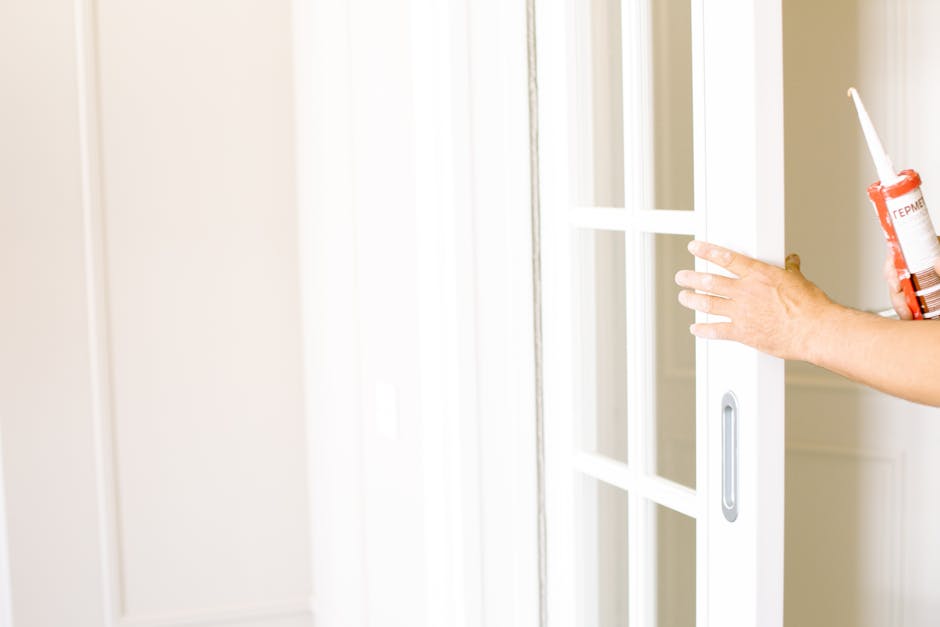
5 Budget-Friendly Methods for Quieter Walls and Surfaces
Once the gaps are sealed, we can focus on the walls themselves. Here is a quick comparison of what you can expect from various budget materials:
| Method | Cost | Difficulty | Noise Reduction Type |
|---|---|---|---|
| Repurposed Bookshelves | Free (if owned) | Easy | Blocks transmission (Mass) |
| Moving Blankets | $15 – $30 | Medium | Absorbs echo & muffles sound |
| DIY Rockwool Panels | ~$20 per panel | Hard | High-end absorption |
| Mass Loaded Vinyl | $75+ | Medium | High-density blocking |
| Thick Rugs/Pads | $40 – $100 | Easy | Reduces impact/floor noise |
Repurposing Household Items as the Cheapest Way to Soundproof a Room
You don’t always need to buy new materials. Sometimes, you just need to move your furniture. One of the oldest and most effective tricks in the book is using a bookshelf as a sound barrier.
Sound waves struggle to pass through dense, heavy objects. A large wooden bookshelf filled to the brim with books provides significant mass. By placing this against a shared wall where you hear your neighbors, you create a buffer that dampens vibrations. Even a heavy dresser or a plush sofa pushed against a noisy wall can help.
If you’re looking for more pocket-friendly-ways-to-soundproof-your-bedroom, consider hanging heavy quilts or tapestries. While they won’t stop a jackhammer, they are excellent at reducing the “bounce” of sound off hard walls, making the room feel much quieter.
Using Soft Furnishings as the Cheapest Way to Soundproof a Room
If you can’t build a new wall, cover your existing ones with soft, porous materials. This is the “blanket” approach.
Moving blankets are a secret weapon for DIYers. They are heavy, dense, and designed to take a beating. Hanging these over a door or a particularly thin wall can muffle mid-to-high frequency noises significantly. For even better results, look for soundproof curtains. To be effective, these should be hung floor-to-ceiling and extend several inches past the window or door frame to prevent sound from “leaking” around the edges.
According to research on Cheap Ways to Soundproof a Room on a Budget, pleated materials are better because the folds increase the surface area available to catch sound waves. You can learn more about the specifics of floor treatments in our article on soundproofing-with-rugs-and-carpets-a-cheap-alternative.
DIY Acoustic Panels and Wall Treatments
If you’re feeling handy, you can build professional-grade acoustic panels for a fraction of the retail price. Commercial panels can cost $150 each, but you can make them for under $20.
The “gold standard” material for this is Rockwool Safe ‘n’ Sound. It’s a mineral wool insulation that is incredibly dense and fire-resistant.
- Build a frame: Use cheap MDF or furring strips to create a 2’x4′ frame.
- Insert insulation: Snug the Rockwool into the frame (wear gloves and a mask!).
- Wrap in fabric: Use a breathable fabric (if you can blow air through it, it’s good) like burlap or 100% cotton to wrap the frame.
- Hang it: Use French cleats or heavy-duty hooks to mount them at “reflection points”—the spots on the wall where sound bounces most directly.
For a step-by-step walkthrough, check out the Easiest DIY Acoustic Panels Under $20 or our own guide on creating-homemade-soundproof-panels.
Strategic Use of Mass Loaded Vinyl (MLV)
If you have a bit more in the budget (around $75), Mass Loaded Vinyl (MLV) is a powerhouse. It is a thin but incredibly heavy material that acts like a lead sheet without the toxicity. Because it’s so thin, you can hang it behind curtains, staple it to doors, or even layer it behind a second sheet of drywall.
MLV is the cheapest way to soundproof a room when you need high-performance blocking in a small space. It doesn’t absorb sound; it stops it cold. We explore more affordable-solutions-cheap-soundproofing-methods involving MLV for those who need a step up from blankets.
Temporary Solutions for Renters
Renters have it tough because we can’t exactly rip open the walls. However, you can still achieve a 30-50% noise reduction with reversible fixes.
- Command Strips: Use these to hang lightweight foam panels or DIY frames without drilling.
- Tension Rods: Use extra-strong tension rods to hang heavy soundproof curtains in window frames or even across doorways.
- Window Plugs: Cut a piece of rigid foam insulation to fit perfectly inside your window frame. Wrap it in fabric and pop it in at night to block street noise. It’s removable, cheap, and highly effective.
For more renter-specific hacks, visit our renters-guide-soundproofing-for-renters.
Addressing Floors, Ceilings, and Windows on a Budget
We’ve talked a lot about walls, but sound is a 3D problem. It comes from the neighbor upstairs and the traffic outside.
Floors: Hardwood and laminate are beautiful but terrible for acoustics. A thick area rug combined with a high-quality rug pad can reduce footstep noise by up to 60%. Look for rug pads with an Impact Insulation Class (IIC) rating of 60 or higher. If you’re soundproofing a workout area, EVA foam mats (the kind used in gyms) are a fantastic, cheap way to soak up vibration.
Windows: If you can’t afford noise-reducing glass, try plexiglass inserts. By creating a secondary layer of “glazing” with a small air gap in between, you can block up to 70% of traffic noise. This is much cheaper than replacing the whole window unit.
Ceilings: These are the hardest to fix cheaply. However, hanging “acoustic clouds” (basically the DIY panels we mentioned earlier, but hung horizontally) can help reduce the echo of footsteps from above. Check out budget-options-for-soundproofing-your-bedroom for more ideas on overhead quiet.
Frequently Asked Questions about Budget Soundproofing
Can egg cartons really soundproof a room?
We hate to break it to you, but no. This is one of the biggest myths in DIY soundproofing. Egg cartons are too thin to block sound and the wrong shape to effectively absorb it. At best, they might slightly reduce some high-frequency flutter, but they are mostly a fire hazard. If you’re tempted to try, read our reality check on using-egg-cartons-for-diy-soundproofing.
How effective are moving blankets for noise reduction?
Surprisingly effective for the price! While they don’t have an official NRC rating like professional panels, a heavy-duty moving blanket can absorb a decent amount of mid-to-high frequency sound. They are perfect for creating a temporary vocal booth or muffling the sound of a noisy hallway. For more “under $100” ideas, see DIY Soundproof: Under $100.
What are the limitations of cheap soundproofing methods?
Cheap methods are great for airborne noise (voices, TV) and echoes. However, they struggle with low-frequency bass. If your neighbor has a massive subwoofer, you generally need structural changes like decoupling (building a “room within a room”) to stop those long, powerful sound waves. Cheap methods will make a room quieter, but they rarely make it silent.
Conclusion
Achieving a quiet home doesn’t require a lottery win. By focusing on the cheapest way to soundproof a room—sealing gaps, adding mass with furniture, and using soft absorbers like rugs and DIY panels—you can transform a chaotic space into a sanctuary.
Soundproofing is about layers. One rug might not do it, but a rug, plus a door sweep, plus a bookshelf against the wall will make a world of difference. Start with the smallest gaps and work your way up.
At Finance No Vax, we believe in practical solutions that protect your peace of mind and your wallet. For more tips on reclaiming your space, explore our guide on how-to-achieve-soundproofing-on-a-budget. Reclaim your focus today—your ears (and your sanity) will thank you!
