
The Best Insulation for Soundproofing Basement Ceiling Installations
The Noise Above You Is Killing Your Focus — Here’s How to Stop It
Basement ceiling insulation for sound is one of the most effective ways to block noise between floors — and it’s something most homeowners can tackle themselves.
Quick answer: The best materials for soundproofing a basement ceiling are:
- Mineral wool (e.g., ROCKWOOL Safe’n’Sound) — densest, highest STC rating (45–52), fire-resistant
- Fiberglass batts — budget-friendly, good NRC rating (up to 0.95), widely available
- Mass-loaded vinyl (MLV) — thin, heavy barrier that blocks airborne sound
- 5/8-inch fire code drywall + Green Glue — adds mass and damping when layered
- Resilient channels or sound isolation clips — decouple drywall from joists to stop vibration transfer
For most people working from home, mineral wool batts combined with resilient channels and double drywall is the sweet spot between cost and performance.
Here’s the problem: your basement ceiling is basically a speaker for everything happening upstairs. Footsteps, TV noise, kitchen clatter — it all travels down through the floor joists and straight into your workspace.
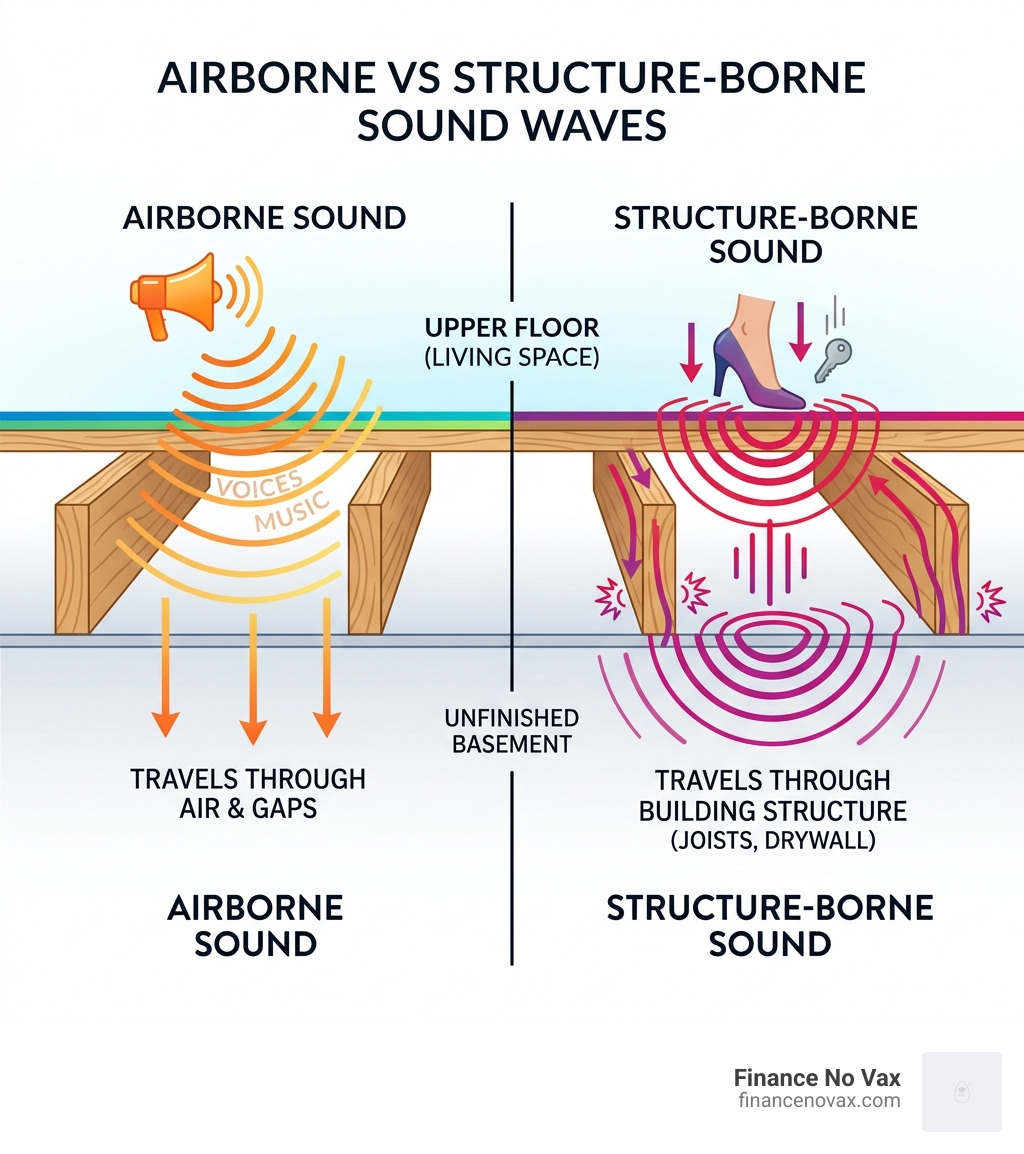
There are two types of noise you’re dealing with:
- Airborne noise — voices, music, TV (travels through air and gaps)
- Impact noise — footsteps, dropped objects (travels through the building structure itself)
Insulation alone handles airborne noise well. But for impact noise, you need to decouple the ceiling from the structure above it. That’s where resilient channels, hat channels, and sound isolation clips come in.
The good news? Whether your basement ceiling is unfinished (exposed joists) or already drywalled, there are solutions at every budget.
Discover more about basement ceiling insulation for sound:
Why You Should Use Basement Ceiling Insulation for Sound
When we think about basement renovations, we often focus on the flooring or the bar setup. However, ignoring the ceiling is a mistake you’ll literally hear every day. Using basement ceiling insulation for sound isn’t just about peace and quiet; it’s about making the basement a truly livable part of your home’s “building envelope.”
Beyond noise, insulation provides thermal separation. In many homes, the basement is naturally cooler. While insulating the ceiling can prevent some heat transfer from the upper floors (potentially making the basement slightly cooler if not properly heated), it creates a more controlled environment for specialized rooms like home theaters or recording studios. It also helps with echo reduction. If you’ve ever stood in an empty basement and heard your voice bounce off every wall, you know how vital acoustic improvement is.
According to Klein Kitchen & Bath, the right insulation acts as the first line of defense against noise pollution. By filling the empty cavities between joists, you stop these spaces from acting like “echo chambers” that amplify sound. For a deeper dive into the sanity-saving benefits of this process, check out our guide on how to soundproof a ceiling without losing your mind.
Comparing Mineral Wool and Fiberglass for Basement Ceiling Insulation for Sound
When choosing between mineral wool and fiberglass, we have to look at density and the Sound Transmission Class (STC) rating.
- Mineral Wool (e.g., ROCKWOOL Safe’n’Sound): This is often the gold standard. It has a stellar 4.6/5 user rating from over 1,100 reviews because it is incredibly dense. Mineral wool is made from stone and slag, which makes it naturally fire-resistant and excellent at absorbing low-frequency sounds (like the bass from a sound system).
- Fiberglass (e.g., Knauf EcoBatt): Fiberglass is the budget-friendly veteran. With a 4.6/5 rating from 2,452 reviews, products like EcoBatt prove that you don’t have to spend a fortune to get results. While less dense than mineral wool, it is excellent at soaking up mid-to-high frequency airborne noises.
If your goal is to block footsteps and heavy vibrations, mineral wool’s higher density usually wins. If you just want to stop hearing the TV from the living room, fiberglass is a highly effective, cost-efficient choice. You can learn more about the best ceiling panels to stop overhead noise to complement these insulation types.
Top Materials for Basement Ceiling Sound Insulation
To achieve professional-grade results, we often recommend a “layered” approach. Here are the heavy hitters in basement ceiling insulation for sound:
- Mineral Wool Batts: As mentioned, these offer STC ratings between 45 and 52, which is significantly higher than standard thermal insulation.
- Fiberglass Batts: A cost-effective solution that provides an NRC (Noise Reduction Coefficient) of nearly 1.0, meaning it absorbs almost all sound that hits it.
- SONOpan Panels: These 3/4-inch panels are rated 4.6/5 for their ability to stop a wide range of frequencies. They are often installed behind drywall.
- SilveRboard R5: This radiant acoustic kit offers an STC 19 rating and is excellent for those looking for a moisture-resistant, lightweight option.
- Mass-Loaded Vinyl (MLV): This is a thin but incredibly heavy material (usually 1 lb per square foot). It acts as a limp mass barrier that sound waves simply cannot move.
| Material | STC Rating | NRC Value | Best For |
|---|---|---|---|
| Mineral Wool | 45-52 | 0.95 – 1.05 | Maximum sound blocking & fire safety |
| Fiberglass | 39 | 0.90 – 0.95 | Budget-friendly airborne noise |
| SONOpan | Variable | High | Added density in thin layers |
| MLV (1/8″) | 25-27 | 0.25 | Blocking airborne sound in tight spaces |
For those looking into specific installation scenarios, ROCKWOOL provides excellent data on how stone wool performs in cellar environments.
Step-by-Step Guide to Soundproofing Your Basement Ceiling
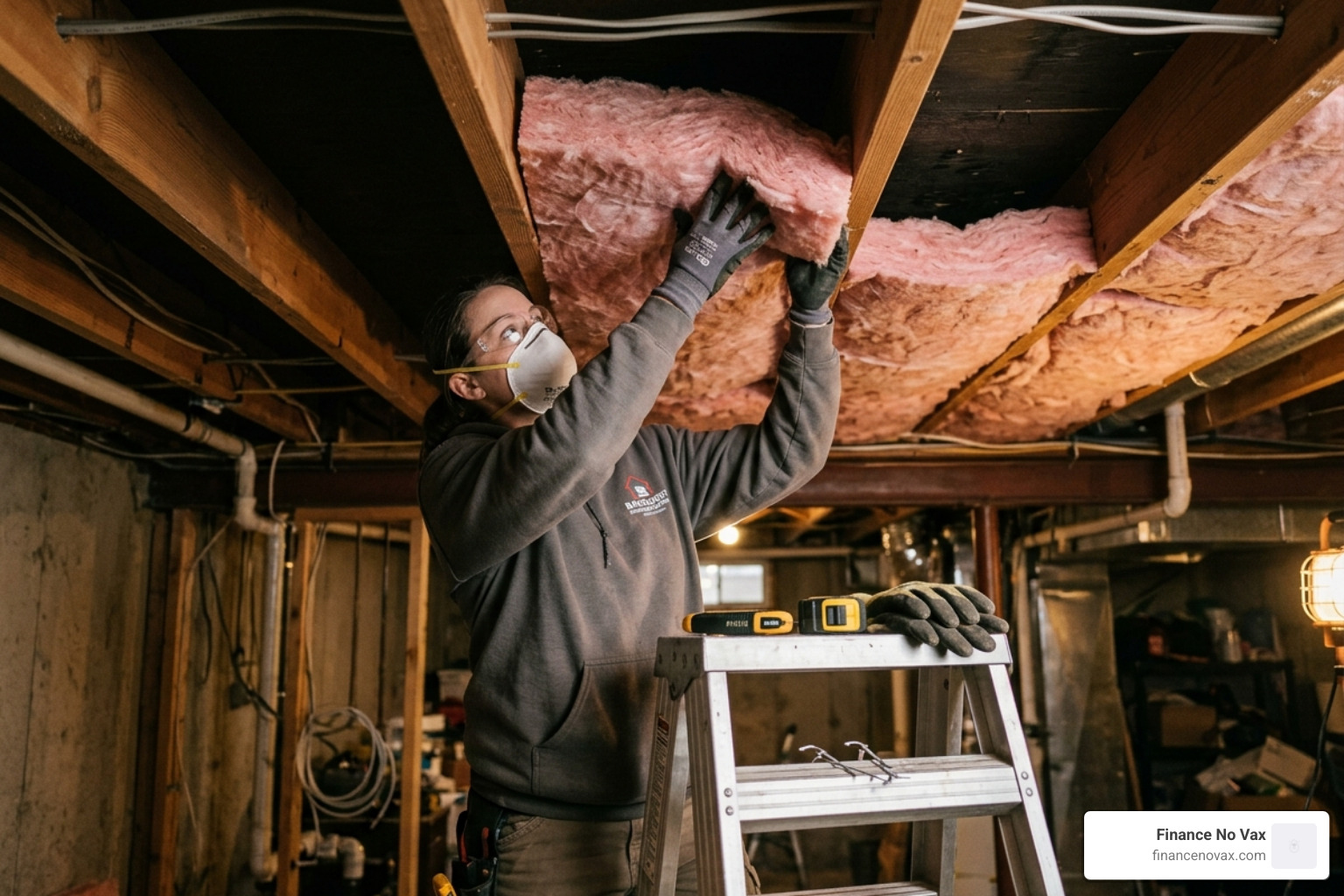
Ready to get to work? Follow this DIY-friendly process to install your basement ceiling insulation for sound.
Step 1: Seal the Gaps Sound is like water; it will find the smallest hole and pour through. Use acoustic caulk to seal gaps around pipes, wires, and the subfloor above. This can reduce airborne sound by up to 80%.
Step 2: Install the Insulation Press your mineral wool or fiberglass batts into the joist cavities. Ensure they fit snugly without being overly compressed. If the joists are exposed, you can use wooden cleats or wire “lightning rods” to hold them in place.
Step 3: Apply Damping (The Green Glue Method) If you are installing drywall, use Green Glue damping compound. This viscoelastic material converts sound energy into heat. Apply two tubes per 4×8 sheet of drywall, leaving a small border at the edges.
Step 4: Layer the Drywall We recommend using 5/8-inch fire code drywall. It is much denser than the standard 1/2-inch variety. For optimal results, use two layers of 5/8-inch drywall with Green Glue sandwiched between them. Offset the seams so that sound doesn’t have a direct path through the cracks.
Step 5: Decouple (Optional but Recommended) Before the drywall goes up, consider installing resilient channels. These break the physical connection between the joist and the drywall, stopping footsteps in their tracks. Using the best tools to decouple your ceiling is the secret to a truly quiet basement.
Installing Resilient Channels and Basement Ceiling Insulation for Sound
Decoupling is the most “advanced” part of the DIY process, but it’s worth it. Resilient channels or hat channels used with sound isolation clips create a “floating” ceiling.
By attaching the drywall to these metal channels rather than the joists themselves, you interrupt the vibration path. This method is incredibly efficient for preserving headroom; a system using four layers of drywall and hat channels might only result in a 5/8-inch loss of total ceiling height. It’s the closest thing to magic in the construction world—the art of making your ceiling float and your neighbors disappear.
Advanced Techniques and Budget Options
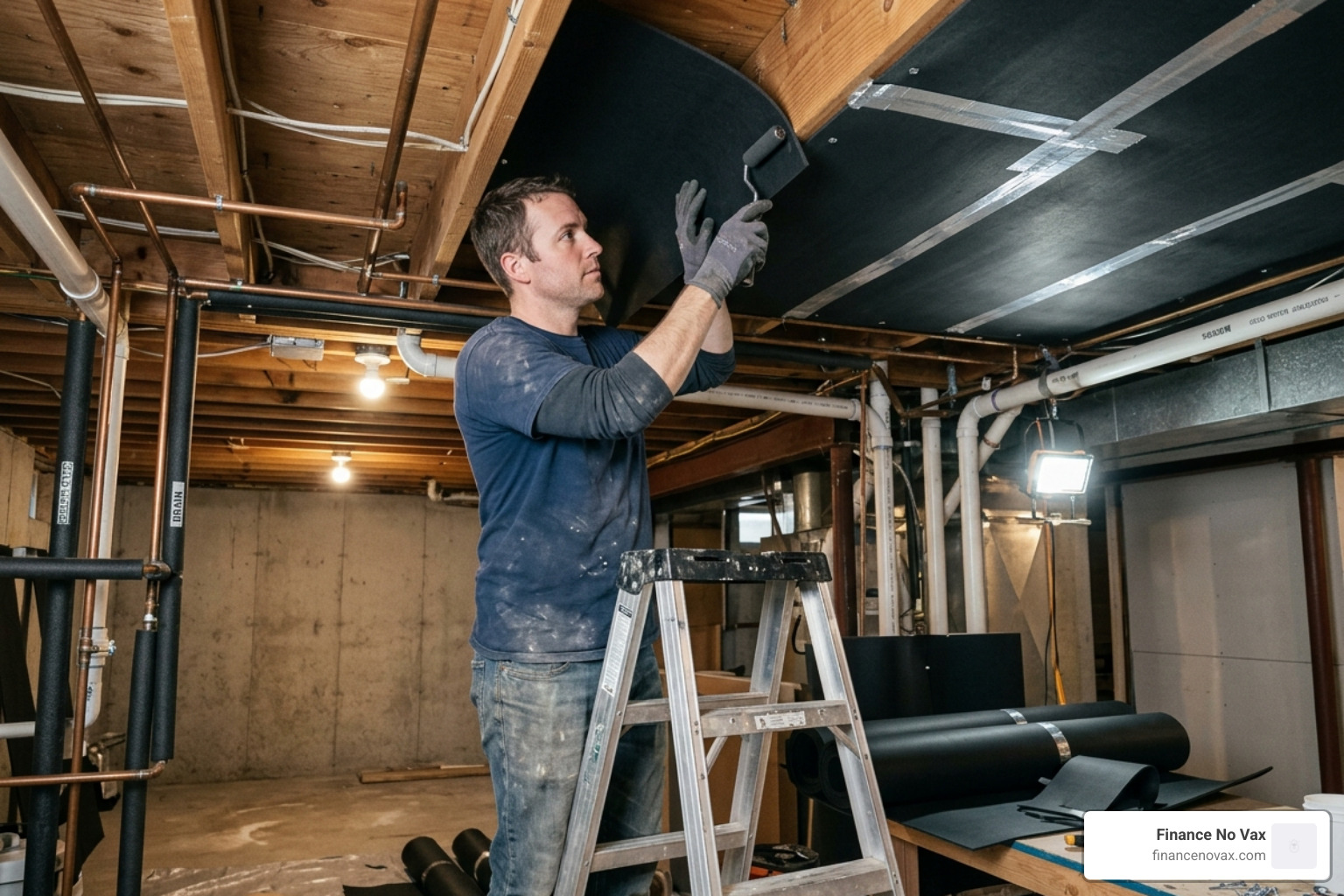
If a full drywall tear-down isn’t in the cards, don’t worry. There are other ways to use basement ceiling insulation for sound.
- Drop Ceilings & Acoustic Tiles: A drop ceiling creates a natural air gap (decoupling). While it can cost you 3 to 5 inches of headroom, it offers easy access to plumbing. Using high-quality acoustic tiles can significantly reduce noise.
- Pipe and Duct Wrapping: HVAC ducts are “noise highways.” Wrap them in MLV or specialized fiberglass duct wrap to stop the hum of the furnace or the sound of voices traveling through the vents.
- Budget-Friendly Choices: If you’re on a tight budget, focus on fiberglass batts and sealing gaps with acoustic caulk. These two steps alone provide a noticeable 15-20% reduction in noise for a fraction of the cost of advanced systems.
For those looking for an all-in-one solution, check out our list of top ceiling soundproofing kits for your home.
Final Considerations and Frequently Asked Questions
At Finance No Vax, we want to ensure your project is safe as well as quiet. Always check local fire codes before beginning. For example, many regions require insulation to be covered by a fire-rated barrier (like 5/8-inch drywall) in living spaces.
Does insulating the ceiling make the basement colder?
Yes, it can. By adding basement ceiling insulation for sound, you are also creating a thermal barrier. This prevents heat from the upper floors from “leaking” into the basement. If your basement doesn’t have its own heat source or registers, you might notice a temperature drop. We recommend ensuring your basement has adequate heating before fully insulating the ceiling.
Is Green Glue necessary for effective soundproofing?
While not “necessary,” it is highly recommended if you are using multiple layers of drywall. Without a damping compound like Green Glue, two layers of drywall will still vibrate together. Green Glue turns that vibration into microscopic amounts of heat, effectively “killing” the sound.
What are the fire code considerations for basement ceilings?
Safety first! Mineral wool is excellent because it can withstand temperatures over 1,000°C. Using 5/8-inch fire code drywall is also a standard requirement in many multi-family units or basements with kitchens. Always consult your local building department to ensure your soundproofing materials meet local safety regulations.
By following these steps and choosing the right basement ceiling insulation for sound, you can transform your basement from a noisy cavern into a peaceful sanctuary. Whether you’re building a drum room or just a quiet home office, the effort you put into your ceiling today will pay off in years of silence. For more easy-to-install options, look up the best easy soundproofing ceiling panels to finish your project with style.
