
Why Echo and Noise Are Killing Your Focus (And What to Do About It)
Acoustic panels for walls and ceilings are porous sound-absorbing materials that reduce echo, reverberation, and background noise inside a room — making speech clearer and spaces quieter.
Quick answer: What do acoustic panels do?
- Absorb sound waves before they bounce off hard surfaces
- Reduce echo and reverberation that make rooms feel loud and chaotic
- Improve speech clarity so conversations and calls are easier to follow
- Work best when covering 15–30% of your total wall and ceiling area
If you work from home, you already know the problem. A hard-walled room turns every sound into a muddy wash of noise. Video calls feel exhausting. Concentration breaks down fast.
The issue isn’t just volume — it’s reflected sound. Every time a sound wave hits a hard surface like drywall, glass, or a bare ceiling, it bounces back. Those reflections stack up into what we call reverberation, and it makes everything harder to hear and understand.
Research shows this effect is serious. Studies on classroom acoustics found that students miss around 50% of what their teachers say when room acoustics are poor. The same principle applies to your home office: a reverberant room isn’t just annoying — it actively drains mental energy and hurts productivity.
The good news? Acoustic panels are one of the most effective and affordable fixes available. They come in dozens of styles, materials, and price points — from simple foam tiles to designer wood slat panels — and they can be installed without professional help.
This guide covers everything you need to know: how they work, which type is right for your space, where to put them, and how much to spend.

Understanding Acoustic Panels for Walls and Ceilings
When we talk about acoustic panels for walls and ceilings, we are talking about tools designed to manage the “behavior” of sound within a four-walled space. Most modern rooms are built with hard, reflective surfaces like drywall, hardwood floors, and large windows. To a sound wave, these surfaces are like mirrors. The sound hits them and bounces back instantly.
The goal of installing acoustic treatment is noise reduction and improved speech clarity. By strategically placing panels, we can “soak up” those reflections. This is a fundamental part of How Does Soundproofing Work? because while soundproofing stops noise from entering or leaving, acoustic treatment fixes the noise that is already inside. For more on the basics of internal noise, check out our Taming Echoes: Indoor Noise Reduction Tips.
The Science of Sound Absorption
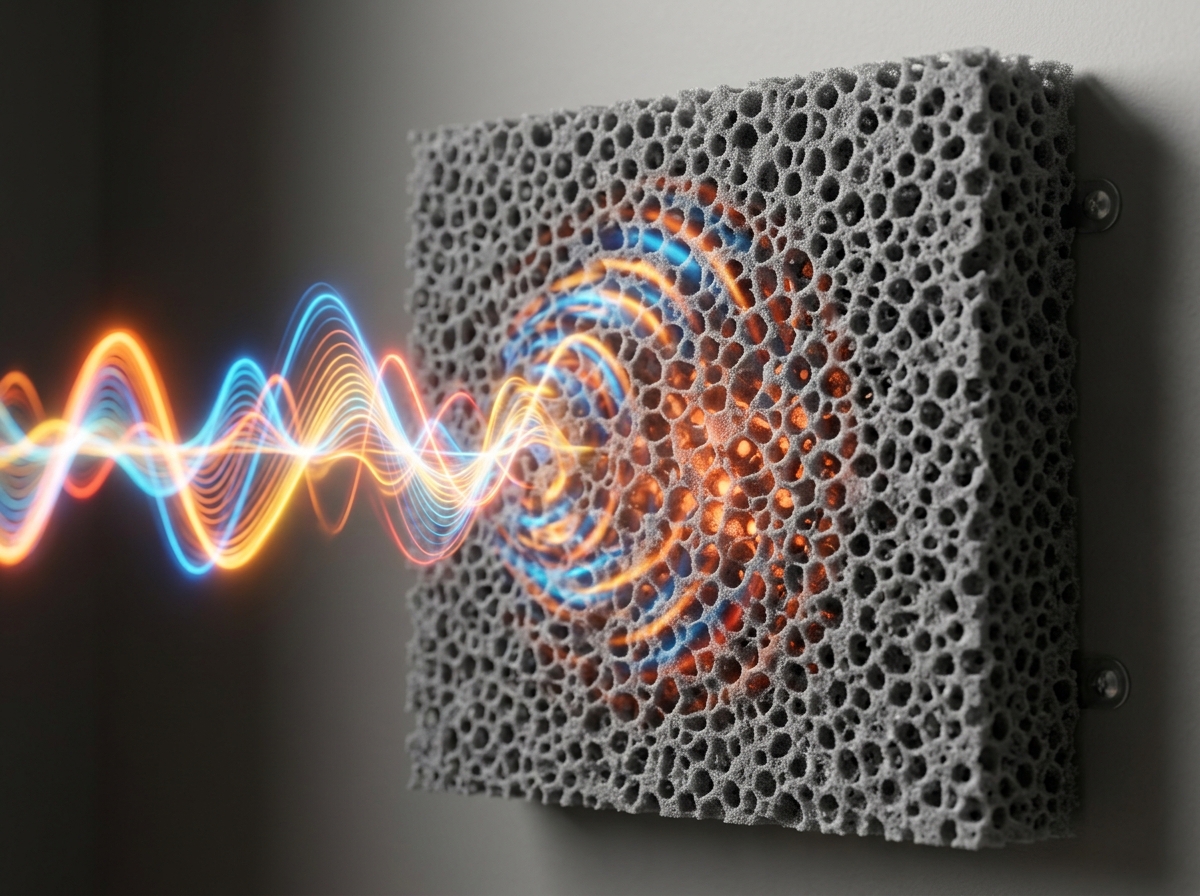
It might sound like magic, but the way acoustic panels for walls and ceilings work is actually pure physics. When a sound wave (which is a vibration in the air) hits a porous material like open-cell foam or rigid fiberglass, it doesn’t just stop. Instead, it enters the tiny interconnected pores of the material.
As the air molecules vibrate inside these tiny spaces, they rub against the fibers of the panel. This friction converts the sound’s kinetic energy into a tiny amount of heat. You won’t feel the panel getting warm, but that energy conversion is what stops the sound from bouncing back into the room. This process is the backbone of A Beginner’s Guide to Basic Soundproofing.
Impact on Learning and Productivity
The importance of this science is most evident in educational and professional settings. The average noise level in a typical classroom is around 65dB. Because of poor acoustics and high reverberation, students can miss up to 50% of what their teachers say. By installing proper treatment, we can bring that noise level down to a healthier threshold, significantly improving comprehension.
This isn’t just for kids, though. In an office or home studio, high noise floors lead to “listener fatigue.” Your brain has to work harder to filter out the echoes to hear the actual message. This is why we focus so heavily on the Category: Soundproofing Basics; better acoustics lead to better focus.
Types of Acoustic Materials and Panel Designs
Not all panels are created equal. Depending on your budget and aesthetic needs, you have several choices.
- Fabric-Wrapped Panels: These are the gold standard for professional spaces. They usually consist of a rigid core (like mineral wool or fiberglass) wrapped in “acoustically transparent” fabric. Brands like GIK Acoustics or Vicoustic offer these in hundreds of colors.
- Wood Slat Panels: These are currently very trendy. They feature wooden slats over a felt backing, providing a mix of absorption and a bit of diffusion.
- Acoustic Foam: The most common entry-level option. While easy to install, it is generally less effective at lower frequencies than thicker panels.
- PET Felt: Made from recycled plastic bottles, these are eco-friendly and very slim, making them great for modern office designs.
For a deeper dive into home options, see The Best Acoustic Panels for Home Use. If you are looking for natural materials, Cork Panels: A Sustainable Option for Soundproofing are another fantastic choice.
| Material | Best For | NRC Rating (Approx) |
|---|---|---|
| Acoustic Foam | High frequencies, budget setups | 0.40 – 0.70 |
| Rigid Fiberglass | Broadband absorption, studios | 1.00 – 1.05 |
| Wood Slat Panels | Aesthetics, mid-range frequencies | 0.70 – 0.85 |
| PET Felt | Offices, eco-friendly designs | 0.45 – 0.75 |
Selecting High-Performance Acoustic Panels for Walls and Ceilings
When shopping, the most important number to look for is the NRC (Noise Reduction Coefficient) rating. This rating ranges from 0 to 1. An NRC of 0 means the panel absorbs no sound (like a brick wall), while an NRC of 1.0 means it absorbs 100% of the sound that hits it.
Some high-performance panels, like Classic Acoustic Panels, actually boast an NRC of 1.05. This happens because the edges of the panel also absorb sound, technically absorbing more than their front-facing surface area. In contrast, cheap foam products often have an NRC as low as 0.4. When comparing these, refer to Exploring the Effectiveness of Acoustic Foam vs. Panels.
Safety is also a factor. Always check for fire ratings (Class 1 or Class A is the standard for public buildings) and low-VOC certifications to ensure the materials aren’t off-gassing harmful chemicals into your room.
Decorative and Sustainable Options
Acoustics don’t have to look like a science lab. We can now use custom-printed art panels that look like high-resolution paintings but act as high-end absorbers. There are also sustainable options made from recycled materials. For instance, some PET felt panels are made almost entirely from recycled water bottles. Check out our Category: Materials for more eco-friendly ideas.
Strategic Placement and Room Coverage
You don’t need to cover every square inch of your room to see a massive improvement. In fact, doing so can make a room feel “dead” and unnatural.
The Rule of Thumb for acoustic treatment is to cover 15% to 30% of the total surface area (walls and ceiling combined). If you have a particularly “live” room with lots of glass, you might lean toward 30%. For a standard bedroom-turned-office, 15-20% is usually the sweet spot.
To understand why sound moves the way it does before you place your panels, read Understanding Noise: How Noise Travels Through Walls.
Best Practices for Installing Acoustic Panels for Walls and Ceilings
Placement matters more than quantity. You should prioritize first reflection points. These are the spots on your side walls and ceiling directly between you and your sound source (like your speakers or where you sit during a meeting).
For installation, you have a few options:
- Impaling Clips: Small metal plates with spikes that you screw into the wall; you then “impale” the panel onto them.
- Z-Clips: A two-part rail system that allows you to hang panels like a picture frame.
- Construction Adhesive: A permanent solution where you glue panels directly to the drywall.
- Ceiling Clouds: These are panels suspended from the ceiling using wire or specialized brackets. See DIY Ideas for Soundproofing Your Ceiling for creative ways to handle overhead noise.
If you’re handy, you can even try Creating Homemade Soundproof Panels or follow our DIY Projects: Step-by-Step Guide to Soundproofing a Room.
Specialized Treatment for Studios and Theaters
In critical listening environments like home theaters or recording studios, standard panels aren’t enough. You also need to manage low-frequency energy, which tends to gather in corners.
- Bass Traps: Thicker panels (usually 4 to 6 inches deep) placed in corners to catch “boomy” bass. Products like the Primacoustic FullTrap are designed specifically for this.
- Acoustic Clouds: Large panels suspended horizontally from the ceiling. These are vital for taming floor-to-ceiling echoes.
- Hybrid Panels: Some panels, like the GIK Amplitude, combine absorption with a plate that diffuses sound, keeping the room sounding “alive” while still removing the echo.
For those on a budget, there are plenty of DIY Acoustic Foam Alternatives for Soundproofing that work surprisingly well in studio settings.
Comparing Sound Absorption, Soundproofing, and Diffusion
It is a common mistake to use these terms interchangeably, but they serve very different purposes:
- Sound Absorption: Using acoustic panels for walls and ceilings to stop echoes inside the room. (Measured by NRC).
- Soundproofing: Using heavy materials like Homasote Sound Barrier Panels to stop sound from leaving or entering the room. (Measured by STC).
- Diffusion: Using uneven surfaces to scatter sound waves in different directions. This prevents “hot spots” of sound without removing the energy entirely.
To get the full picture, read our detailed guide: Soundproofing vs. Acoustic Treatment: A Comparison. If you’re looking for a quick fix, Foam Tiles for Soundproofing: A Comprehensive Review might help you decide if foam is enough for your needs.
Budget-Friendly Solutions and DIY Tips
You don’t need a professional studio budget to fix your room. Cheap acoustic panels can still deliver great results if used correctly. Many people start with basic acoustic foam and upgrade to fabric-wrapped panels later.
We’ve put together several resources for those watching their wallet:
- Cheap Acoustic Panels That Deliver Great Results
- Budget-Friendly Soundproof Materials Worth Considering
- Budget-Friendly Ways to Soundproof a Wall
Frequently Asked Questions about Acoustic Treatment
How many panels do I need for a standard room?
As a general rule, aim for 15-20% coverage of your wall and ceiling area for a home office or bedroom. For a dedicated home theater, you might increase this to 25-30%. Use a room calculator if you want to be precise, but starting with a few panels at the “first reflection points” usually provides the most noticeable difference.
What is the difference between NRC and STC?
NRC (Noise Reduction Coefficient) measures how much sound a material absorbs (0 to 1). STC (Sound Transmission Class) measures how much sound a material blocks from passing through a wall (higher is better). Acoustic panels have high NRCs; thick walls have high STCs.
Can I install acoustic panels without damaging my walls?
Yes! For lightweight foam, you can use 3M Command Strips or specialized spray adhesives. For heavier fabric panels, you can use “sawtooth” hangers similar to those used for heavy picture frames, which only leave a small nail hole.
Conclusion
At Finance No Vax, we believe that your environment directly impacts your well-being and your bottom line. Investing in acoustic panels for walls and ceilings isn’t just about making music sound better; it’s about creating a space where you can think, communicate, and work without the constant drain of background noise and echoes.
Whether you choose high-end designer wood slats or go the DIY route with homemade frames, the key is to start with the basics: identify your reflection points, choose materials with a solid NRC rating, and aim for that 15-30% coverage mark. With a little planning, you can transform a chaotic, echoing room into a professional sanctuary.
Ready to start your project? Check out More info about DIY solutions to see how you can take control of your space today.
