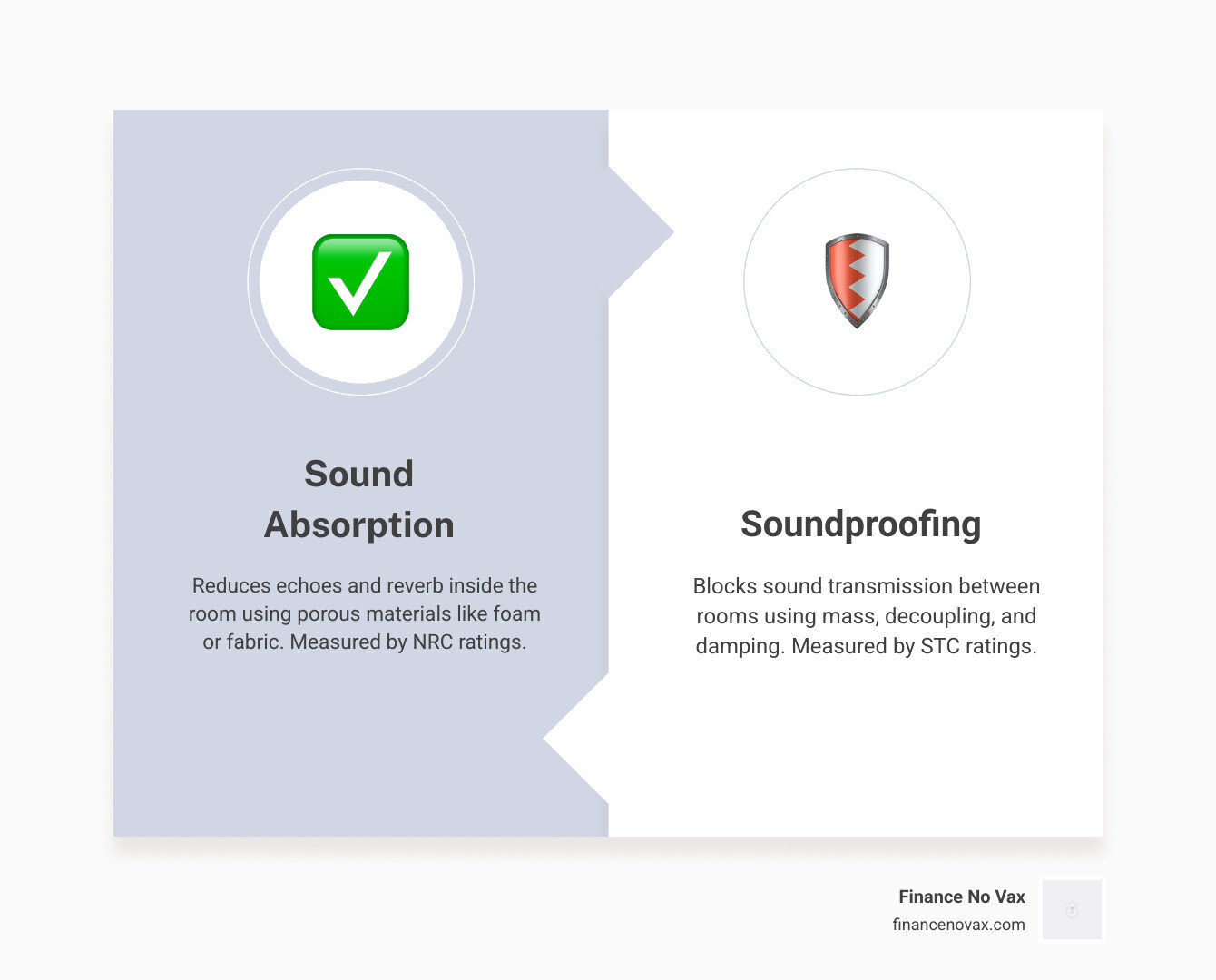
Why Sound Dampening for Ceiling Matters in Your Home Office
Sound dampening for ceiling surfaces is one of the most effective ways to reduce noise in a home workspace. Whether it’s footsteps from upstairs neighbors or voices echoing around a hard-surfaced room, ceiling noise is one of the top complaints among remote workers in 2026.
Here are the best options for ceiling sound dampening, ranked by use case:
| Solution | Best For | Ease of Install |
|---|---|---|
| Acoustic foam panels | Echo reduction inside a room | Easy (self-adhesive) |
| Drop-in acoustic tiles | Existing T-bar grid ceilings | Easy (drop-in) |
| Mineral wool insulation | Blocking noise between floors | Moderate (inside cavity) |
| Resilient isolation clips + drywall | Maximum soundproofing | Hard (structural) |
| Hanging ceiling baffles | Large open spaces | Moderate (suspended) |
It’s worth knowing upfront: not all ceiling products do the same thing. Some reduce echo inside your room. Others block sound from traveling through the ceiling entirely. Picking the wrong one means wasted money and still-noisy Zoom calls.
The good news? There are solid solutions at every price point — from under $20 for a basic foam pack to full isolation systems for serious noise problems.
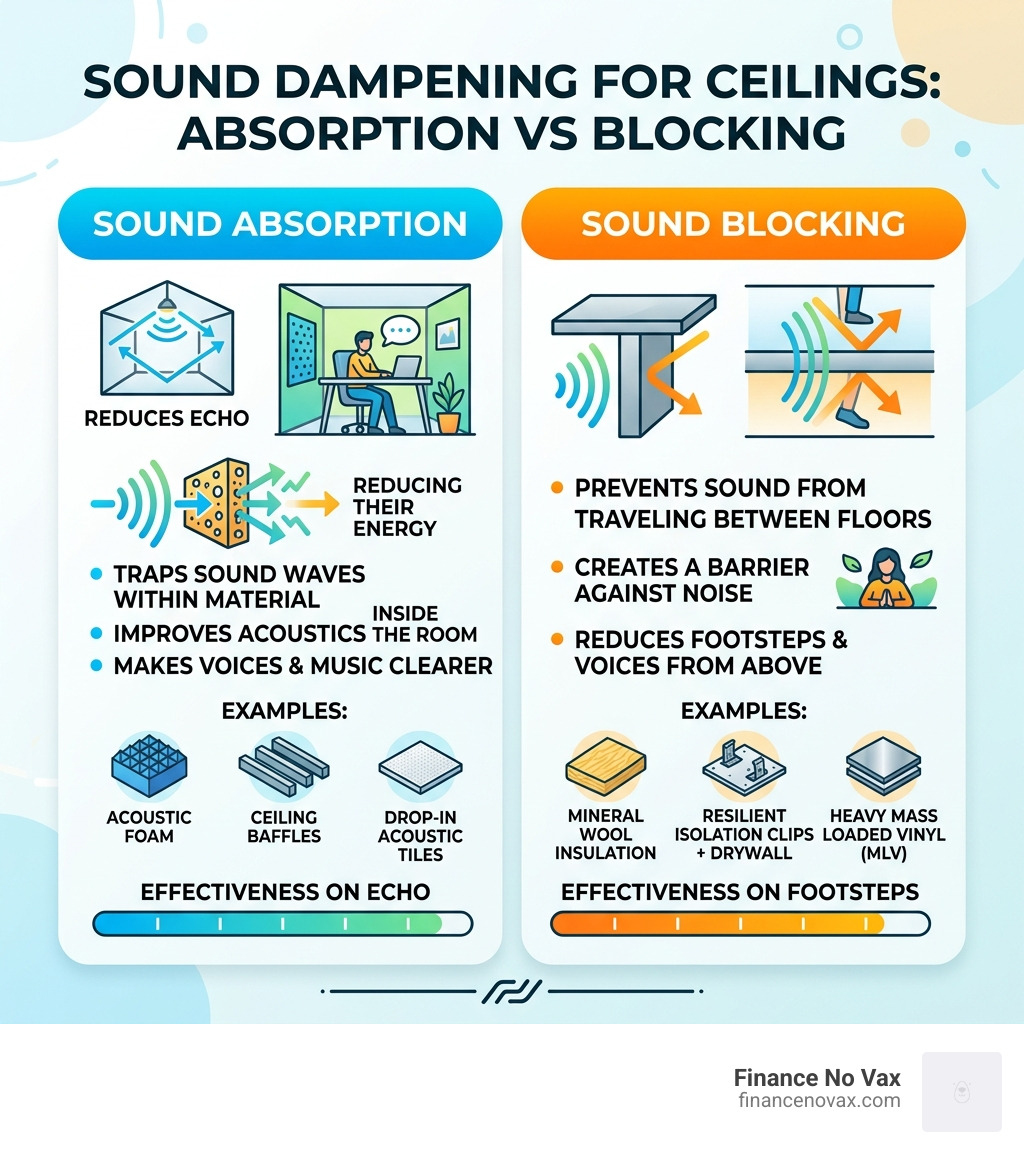
Sound dampening for ceiling vocab explained:
Understanding Sound Dampening for Ceiling Systems
To get the most out of your investment, we need to talk about how sound actually behaves. If you’ve ever stood in an empty room and heard your own voice bounce back at you, you’ve experienced “reverberation.” When we talk about sound dampening for ceiling applications, we are usually trying to solve two distinct problems: reflection and transmission.
The Science of Silence: NRC and CAC
When shopping for products, you’ll see two main ratings: NRC (Noise Reduction Coefficient) and CAC (Ceiling Attenuation Class).
- NRC measures how much sound a surface can absorb. A rating of 0.85 means the tile absorbs 85% of the sound that hits it. This is vital for stopping echoes.
- CAC measures how well a ceiling prevents sound from traveling through the ceiling plenum into the next room. If you have a shared office wall that doesn’t go all the way to the roof deck, a high CAC rating is your best friend.
Airborne vs. Impact Noise
We also have to distinguish between different types of noise. Airborne noise is things like the TV or someone talking. Impact noise is structural—think footsteps, a ball bouncing, or a chair scraping on the floor above.
Standard porous materials like Acoustic Ceiling Insulation | ROCKWOOL are fantastic at trapping airborne sound energy like heat, but they do very little to stop the vibration of a heavy footfall. To stop impact noise, you often need to look into How To Soundproof A Ceiling Without Losing Your Mind/ by using decoupling methods.
Finally, there is the STC (Sound Transmission Class). This rating tells you how well a partition (like your ceiling assembly) stops sound from passing through it. A standard ceiling might have an STC of 35, but with the right isolation system, you can push that into the 60s, which is the difference between hearing a neighbor’s conversation and enjoying total silence.
Top Types of Sound Dampening Ceiling Tiles
Choosing the right tile depends on your existing ceiling and your budget. As of April 2026, the market is flooded with options ranging from budget-friendly foam to high-end architectural wood.
| Material | Sound Focus | Durability | Best Application |
|---|---|---|---|
| Acoustic Foam | Absorption (Echo) | Low | Home Studios, Gaming Rooms |
| PVC Tiles | Decorative/Mild Dampening | High | Basements, Kitchens |
| Mineral Fiber | Heavy Absorption/Blocking | Medium | Offices, Schools |
| Wood Slat | Diffusion/Absorption | High | Living Rooms, Luxury Offices |
Acoustic Foam Panels
These are the most common DIY entry point. Products like the High-Quality AcoustifFoam Ceiling Panels for Noise Control are designed to be either dropped into a grid or stuck directly to the surface. They are lightweight and excellent at cleaning up the “muddiness” in a room’s audio.
PVC and Drop-in Tiles
If you already have a suspended “T-bar” grid, you’re in luck. You can swap out old, dusty tiles for high-performance Acoustic Drop Ceiling Tiles | GIK Acoustics. These often feature broadband absorption, meaning they handle low-frequency bass as well as high-pitched speech. For a more rugged option, PVC tiles are water-resistant and easy to clean, making them a staple for The Best Ceiling Panels To Stop Overhead Noise/ in basements.
Wood Slat and Mineral Wool
For those who want sustainability, wood slat panels (often backed by felt made from recycled plastic) are incredibly popular in 2026. Some even carry “ClimatePartner” certifications for low carbon impact. Meanwhile, mineral wool slabs provide a dense, fire-resistant core that is much more effective at blocking sound than standard fiberglass.
Decorative Sound Dampening for Ceiling Options
Who says soundproofing has to look like a padded cell? We have seen a massive shift toward “invisible” acoustics.
- Fabric-Wrapped Panels: These look like high-end art or sleek office partitions. You can even get them in custom colors to match your brand or decor.
- Open-Ceiling Baffles: If you love the industrial look of exposed pipes and concrete, you can hang vertical baffles. These catch sound on both sides, providing a massive amount of surface area for absorption without hiding your beautiful industrial ceiling.
- Ceiling Clouds: These are suspended horizontally and look like they are floating. They are perfect for placing directly over a conference table or a desk to create an “acoustic umbrella.” Check out The Ultimate List Of Acoustical Ceiling Solutions/ for more on these aesthetic powerhouses.
Choosing the Right Sound Dampening for Ceiling Materials
When you’re browsing the aisles (or your favorite online shop), keep these technical specs in mind:
- Fire Resistance: This is non-negotiable. Look for a Class A fire rating per ASTM E84. This ensures the material won’t turn your ceiling into a fire hazard.
- Density: Generally, the denser the material, the better it is at blocking sound. A product like the PrivacyShield® High CAC Foam Soundproofing Ceiling Tile uses a gypsum backer to add mass.
- Water Resistance: If you’re dampening a basement or a kitchen, look for PVC or treated mineral fiber that won’t sag or grow mold in humid conditions.
- Health Safety: In 2026, we prioritize indoor air quality. Look for formaldehyde-free and low-VOC materials.
For a deeper dive into specific product reviews, you can Look Up The Best Easy Soundproofing Ceiling Panels/ to find the perfect match for your room’s dimensions.
Advanced Installation: From DIY to Professional Kits
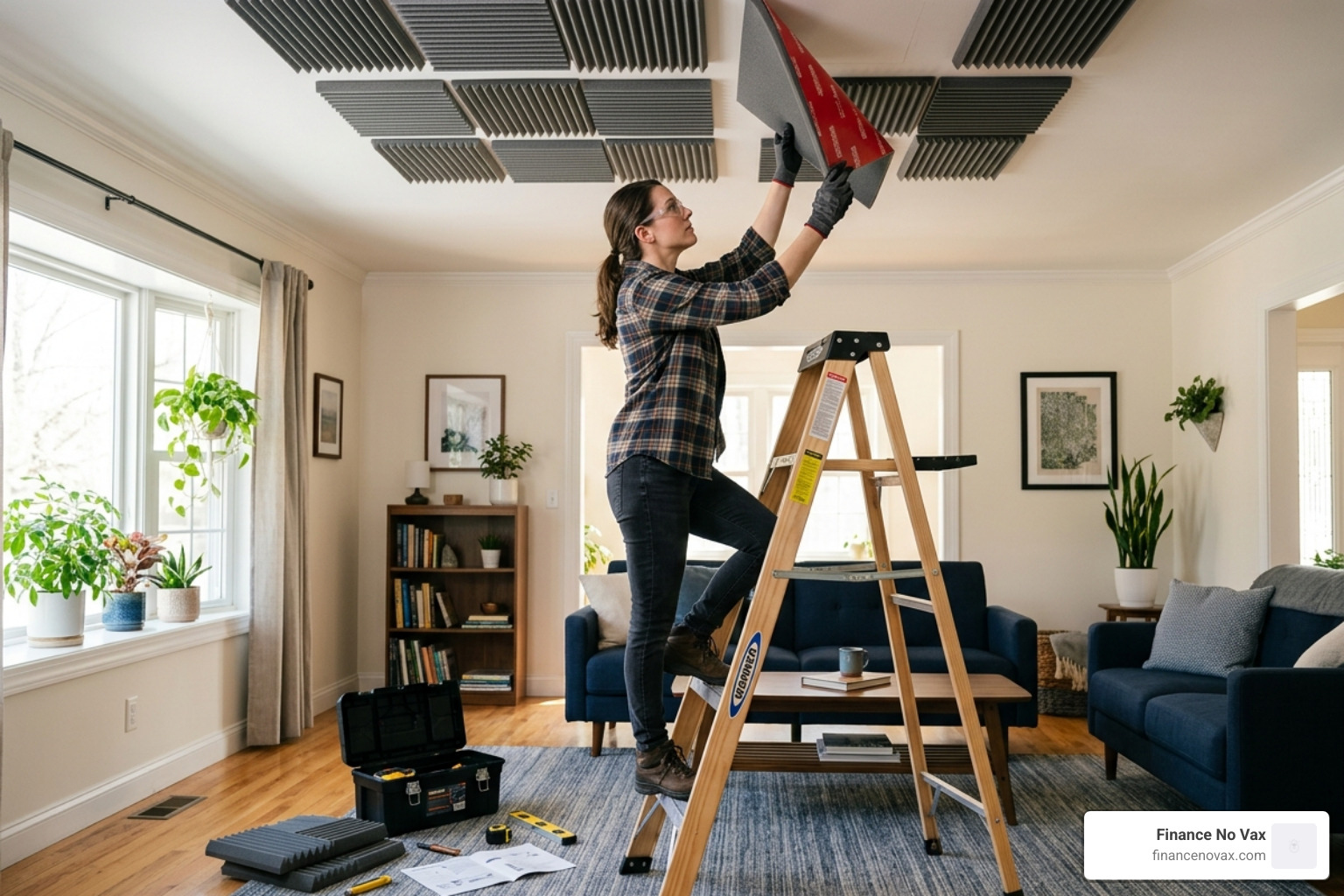
How you install your sound dampening for ceiling products depends entirely on whether you want a quick fix or a permanent structural change.
The Quick Fix: Self-Adhesive and Drop-In
If you are a renter or a weekend warrior, self-adhesive foam panels are your best bet. You simply peel and stick. For those with a drop ceiling, it’s even easier—you just lift the old tile out and drop the new acoustic one in. Just remember to wear clean gloves; some acoustic materials, like melamine foam, are fragile and soil easily.
The Pro Approach: Decoupling and Damping
If you want to truly “disappear” your neighbors, you need to decouple the ceiling from the floor joists above. This is where Top Ceiling Soundproofing Kits For Your Home/ come into play.
- Resilient Isolation Clips: These clips (like RSIC-1) are screwed into the joists, and a metal “hat channel” is snapped into them. Your drywall then attaches to the channel, not the wood. This breaks the path for vibrations.
- Green Glue Damping Compound: If you don’t want to tear down your ceiling, you can add a second layer of drywall with a layer of Green Glue in between. This “visco-elastic” compound converts sound energy into trace amounts of heat.
- Mass Loaded Vinyl (MLV): This is a heavy, flexible material you can staple to joists before adding drywall to add extreme mass in a thin profile.
For a complete list of the hardware needed for these advanced setups, see The Best Tools To Decouple Your Ceiling And Kill The Noise/.
Frequently Asked Questions about Ceiling Noise Control
What is the difference between sound absorbing and soundproofing?
This is the most common point of confusion. Sound absorption (using foam or fabric) improves the sound inside the room by stopping echoes. Soundproofing (using mass and isolation) stops sound from entering or leaving the room. If you can hear your neighbor’s dog barking, you need soundproofing. If your own voice sounds like you’re in a cave, you need absorption. You can find more budget-friendly tips on this in our guide on How To Soundproof Your Apartment Windows And Ceilings For Less.
Can I install sound dampening tiles over an existing ceiling?
Yes! You can use construction adhesive or mechanical fasteners to mount panels directly to drywall or plaster. However, if you have a significant noise problem, we recommend using furring channels to create a small air gap, which acts as an extra buffer. For a truly high-end result, you might consider The Art Of Making Your Ceiling Float And Your Neighbors Disappear.
Are acoustic ceiling tiles fire-rated for residential use?
Most high-quality acoustic tiles are Class A fire-rated, meaning they have low flame spread and smoke development. Materials like stone wool and mineral fiber are naturally fire-resistant. Always check the manufacturer’s data sheet for the ASTM E84 certification before buying, especially if you are installing them in a commercial space or a basement near a furnace.
Conclusion
Achieving a silent home in April 2026 is easier than ever thanks to the wide variety of sound dampening for ceiling products available. Whether you choose the quick path with ACOUSTAFFIX Sound Absorbing Panels or a full structural overhaul with isolation clips, the key is matching the solution to your specific noise type.
At Finance No Vax, we believe that a quiet home is a productive home. While the cost can range from $20 for basic foam to several thousand for a professional isolation system, the long-term benefit to your mental health and work focus is priceless.
For more expert advice and the latest product reviews, be sure to check out our other ceiling solutions and start your journey toward a quieter space today.