
The Best Acoustic Door Draft Stopper Options for Your Home
Why a Door Draft Stopper Is the Easiest Fix for a Noisy, Drafty Home
A door draft stopper is one of the simplest, most affordable tools you can use to block noise, cold air, light, dust, and pests from sneaking under your door — no drilling, no contractor, no hassle.
Here are the best door draft stoppers to consider in April 2026:
| Product | Best For | Key Feature | Price Range |
|---|---|---|---|
| Gorilla Grip | Stability & pest blocking | 2.2 lb weight, PVC grip dots | Mid-range |
| Frost King Double Draft Stop | Budget buyers | Fits 1/8″–1/2″ uneven gaps | ~$11 |
| MAXTID Under Door Sweep | Large gaps | Adjustable 36″ sweep | ~$17 |
| Upper Echelon / Everlasting Comfort | Long-term use | Memory foam, machine washable | ~$24 |
| Magnetic Door Draft Stopper | Convenience | Moves with the door automatically | Mid-range |
| DIY weighted fabric stopper | Custom fit | Fully customizable size and filler | Low cost |
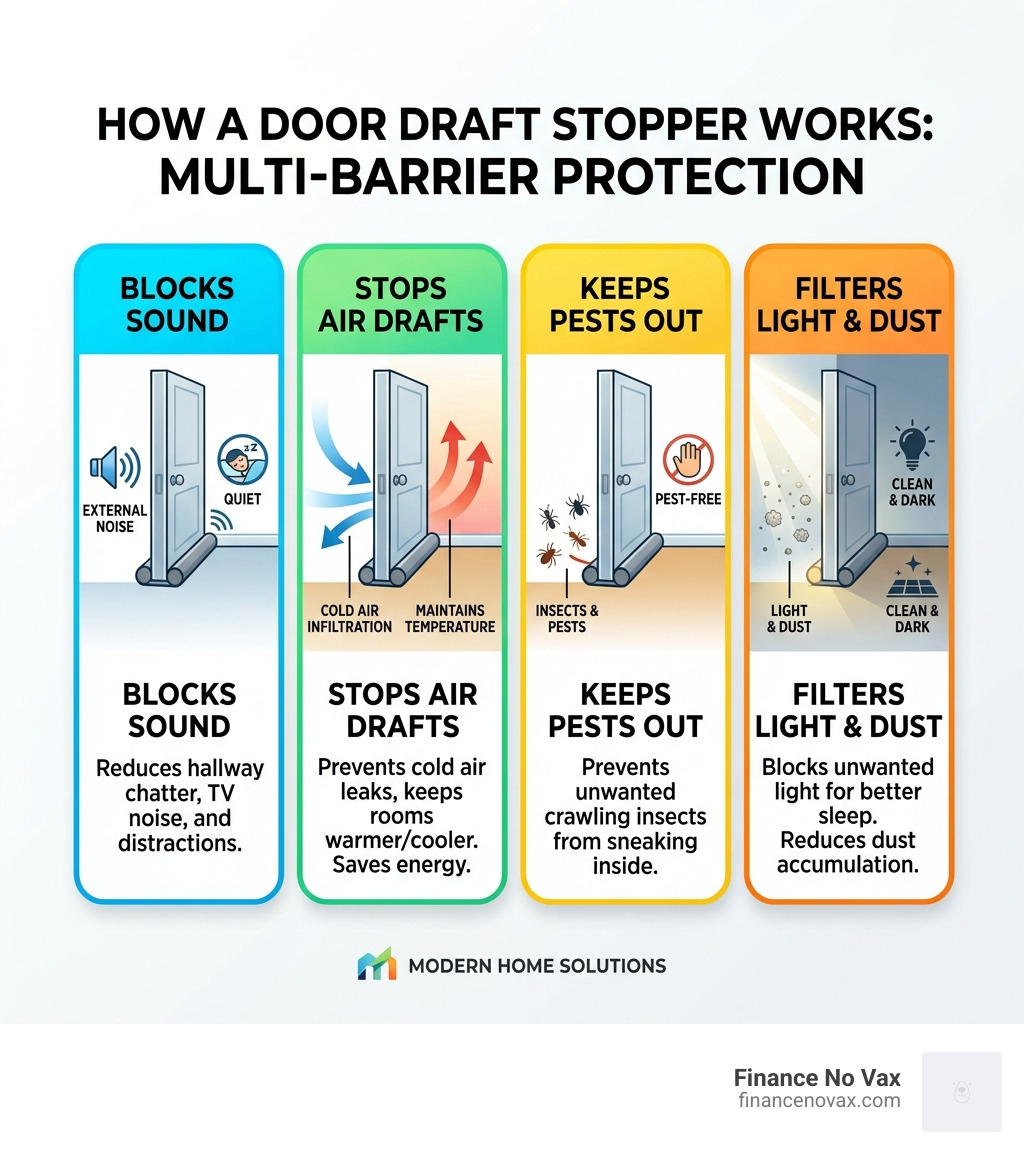
If you work from home, you already know the problem. A door that looks perfectly fine still lets in hallway chatter, TV noise from the next room, cold air, and random distractions — all through that small gap at the bottom.
That gap is doing a lot of damage. It lets sound travel freely, spikes your heating and cooling bills, and turns your home office into anything but a quiet workspace.
The good news? A quality draft stopper placed under your door can tackle all of these issues at once — and many options cost less than $25.
Below, we break down the top-rated options, compare types, and help you find the right fit for your door, floor, and noise situation.
Related content about door draft stopper:
Understanding the Door Draft Stopper: How It Works and Why You Need One
At its core, a door draft stopper acts as a physical barrier. It bridges the gap between the bottom of your door and the floor surface. While most people think of them only for winter weather, these tools are actually year-round essentials for maintaining a comfortable, quiet home.
The mechanics are simple: air and sound waves behave like water. If there is a hole, they will flow through it. By sealing that gap, you create thermal insulation that keeps your expensive heated air inside during the winter and your cool AC air locked in during the summer. This can lead to significant energy savings, reducing the strain on your HVAC system.
Beyond temperature, a door draft stopper is a primary tool for sound dampening. If you’ve read our guide on Soundproof Door Solutions 101, you know that even a 1% gap can let in 50% of the noise from the other side. Using a High Density Door Noise Barrier at the base of your door effectively “plugs” the leak.
Additional benefits include:
- Pest Control: It blocks the “highway” used by spiders, ants, and other critters.
- Light Blocking: Perfect for shift workers or parents trying to keep a nursery dark.
- Dust and Odor Barrier: Prevents kitchen smells or hallway dust from entering your clean living space.
Top-Rated Types of Acoustic Door Draft Stoppers
Not all stoppers are created equal. Depending on your door’s usage and your specific goals, you might prefer one style over another.
- Double-Sided Seals: These slide under the door and have foam or fabric tubes on both the interior and exterior sides. They provide a double barrier and move with the door.
- Magnetic Attachments: These use clips or adhesive magnetic strips to cling to the door. They are fantastic because they stay off the floor when the door moves, preventing drag.
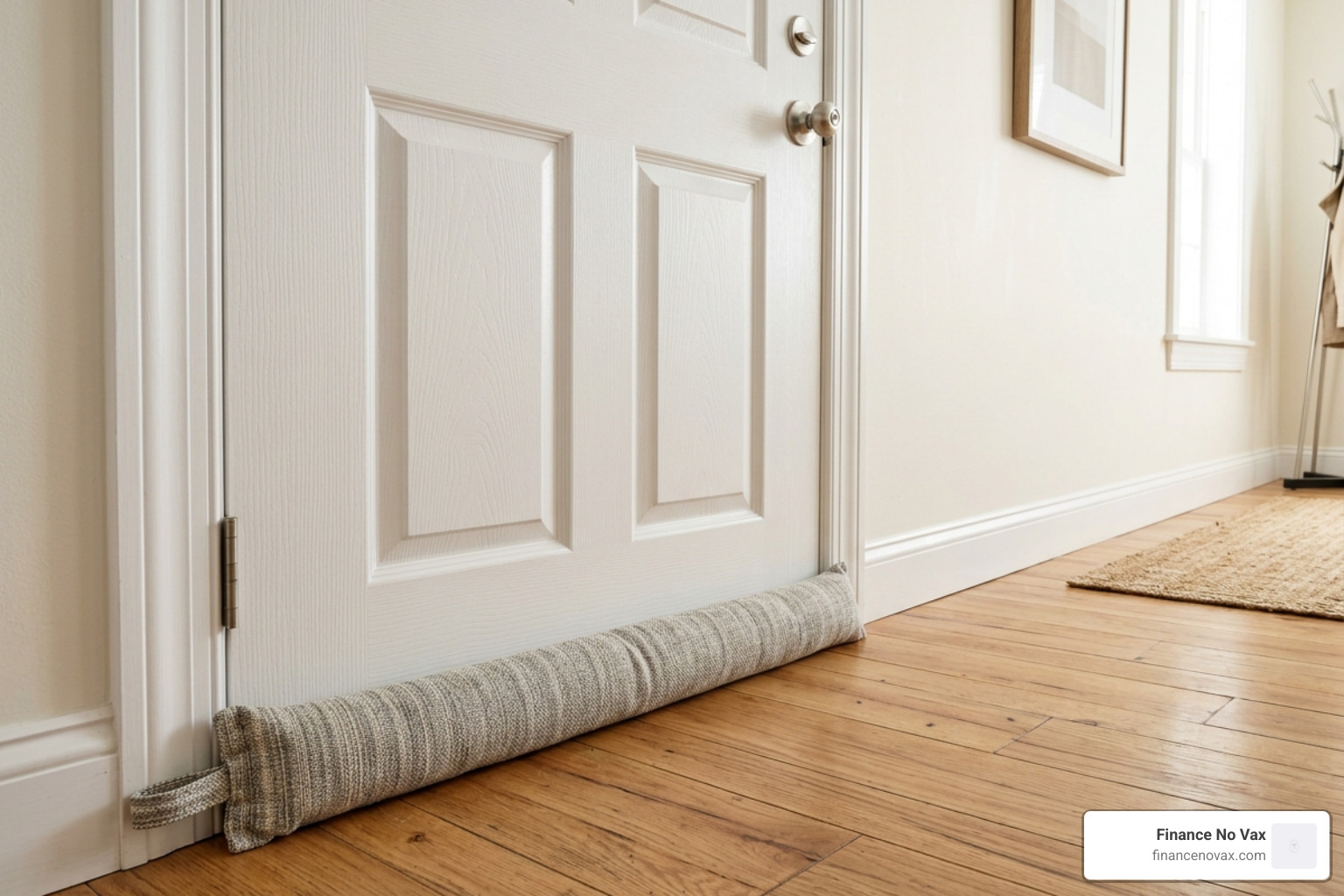
- Weighted Fabric Snakes: These are traditional “sandbags” that you place against the door. They are often the most aesthetically pleasing and can be very heavy for maximum sound blocking.
- Adhesive Sweeps: These stick directly to the face of the door. They are more permanent and low-profile.
| Feature | Single-Sided (Weighted) | Double-Sided (Slide-under) | Magnetic / Clip-on |
|---|---|---|---|
| Installation | Just drop in place | Slide under (no tools) | Clips or magnets |
| Sound Blocking | Excellent (if heavy) | Very Good | Good |
| Moveability | Must be repositioned | Moves with door | Moves with door |
| Floor Type | Best for all | Best for hard floors | Best for carpet |
The Benefits of a Weighted Door Draft Stopper
When it comes to acoustic performance, weight is your best friend. A lightweight foam tube might block a breeze, but it won’t stop the bass from a neighbor’s TV. A high-quality weighted door draft stopper, like those from Gorilla Grip, often weighs around 2.2 pounds.
This weight is usually achieved through a sand or ground stone filler. The benefit of a heavy stopper is stability; it won’t move when the wind blows or when the door is bumped. Look for models with PVC grip dots on the underside. These dots provide even weight distribution and prevent the fabric from curling or getting caught under the door as it swings. This heavy-duty construction ensures all-season protection and a tighter seal against the floor.
Choosing a Door Draft Stopper for Different Floor Surfaces
The floor under your door dictates which stopper will work best. If you have hardwood, tile, or vinyl, you need a material that glides without scratching. Soft fabric covers like synthetic fleece or cotton canvas are ideal here.
For those with low-pile carpet, double-sided foam stoppers can sometimes create too much friction. In these cases, a magnetic “snake” or a weighted stopper with a smooth satin trim is a better choice. If you are setting up a workspace, check out our recommendations for top rated acoustic doors for your home office to see how floor clearance affects your noise levels.
The goal is friction reduction—you want a stopper that offers a snug fit for silence but a smooth glide for daily use.
How to Choose and Install the Right Stopper for Your Home
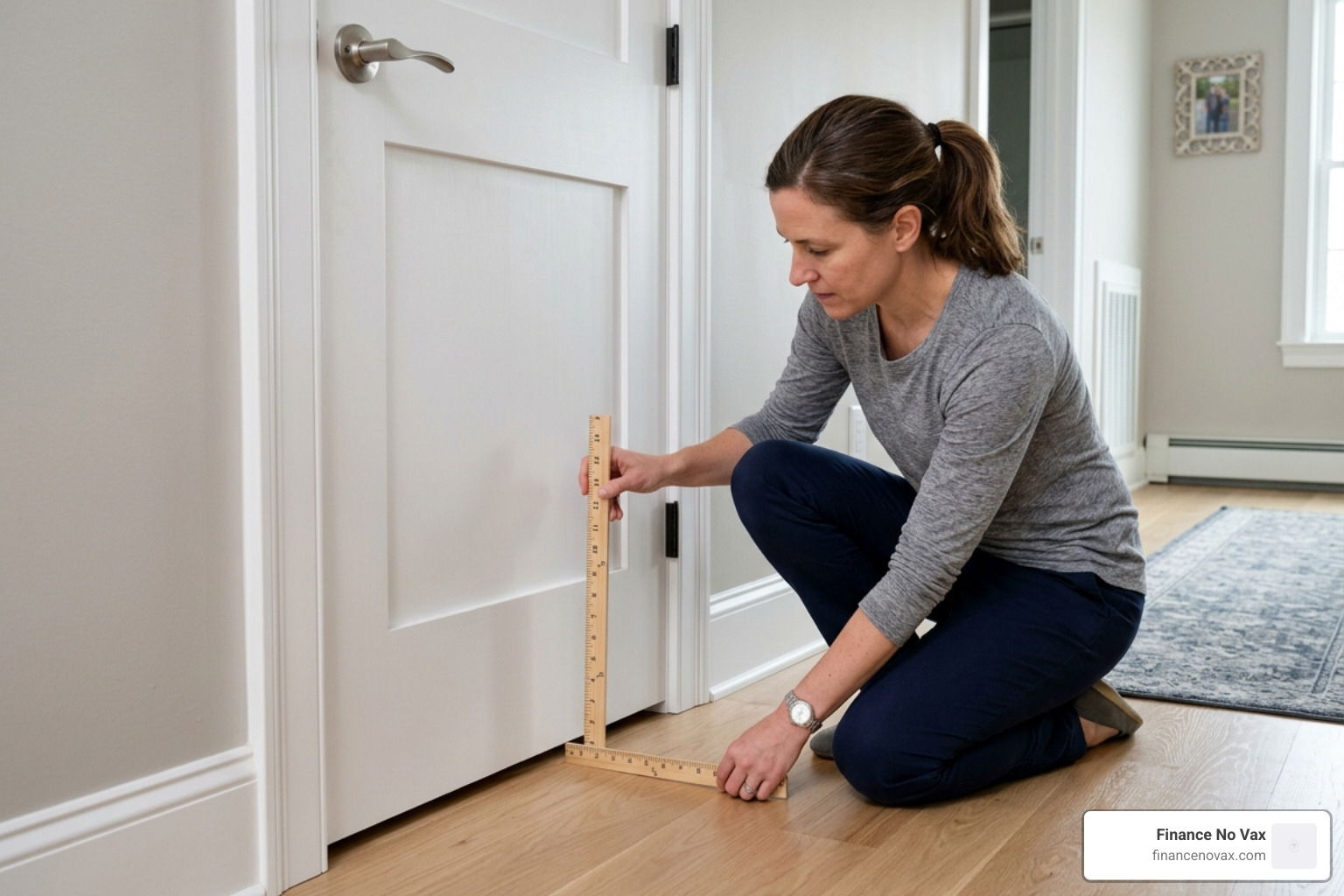
Before you click “buy,” you need two critical measurements: the width of your door and the height of the gap.
- Measuring Door Width: Most standard doors are 30, 32, or 36 inches wide. Many modern stoppers are adjustable, but buying the closest size ensures the ends don’t get crushed in the door frame.
- Gap Height: Measure from the floor to the bottom of the door. A standard door draft stopper usually handles gaps up to 1.5 inches. However, specialized “large gap” stoppers can cover up to 3 inches.
When deciding between interior and exterior usage, exterior doors face more moisture. While you can use a fabric stopper on the inside of an exterior door, you should ensure it stays dry to prevent mold. For professional-grade results, you might want to read our review of the best sound blocking door sweeps.
Installing Your Under Door Draft Stopper for Maximum Silence
Installation varies by type, but for the popular double-sided memory foam models, the process is straightforward:
- Measure and Cut: Pull the memory foam tubes out of the canvas sleeve. Use a pair of sturdy scissors to cut the foam to match your door width.
- Assemble: Slide the tubes back into the sleeve. Most premium models use velcro seals to close the ends securely.
- Fit: Slide the unit under the door. You want the fabric to be taut but not so tight that it prevents the door from closing.
- Check the Seal: Close the door and look for any light peeking through. If you see light, you have a sound leak.
For a more permanent fix involving hardware, you can follow our guide on installing frame seals and sweeps.
DIY vs. Store-Bought: Which is More Effective?
Is it worth making your own? Let’s look at the cost-benefit analysis.
DIY Advantages:
- Custom Sizing: If you have an odd-sized door (common in older homes), DIY allows for a perfect fit.
- Filler Control: You can use high-density acoustic door insulation materials like buckwheat hulls, pebbles, or even heavy fabric scraps to create a superior sound barrier.
- Aesthetics: You can choose a fabric that matches your curtains or upholstery.
Store-Bought Advantages:
- Technology: Products from brands like Everlasting Comfort use premium memory foam tubes that rebound and seal better than homemade batting.
- Maintenance: Many commercial options come with machine washable covers and are built to be wear-and-tear resistant.
- Ease: No sewing machine required. You can have a “no-drill, no-mess” solution installed in under two minutes.
If you are on a budget, a DIY “snake” filled with sand (contained in a Ziploc bag inside the fabric) is incredibly effective. However, for a door you use 20 times a day, a store-bought double-sided stopper is usually more convenient as it doesn’t require manual repositioning.
Maintenance and Troubleshooting Common Issues
To ensure your door draft stopper lasts for years, a little maintenance goes a long way.
- Cleaning: Fabric stoppers act like giant lint rollers for your floor. If the cover is removable, toss it in the wash on a cold cycle every few months. For non-removable versions, spot cleaning with a damp cloth and mild detergent is best. Avoid soaking the inner foam or weighted bags.
- Slipping: If your stopper slides out of place, check the velcro or adhesive. For weighted snakes that won’t stay put, adding a few strips of hook-and-loop fastener to the door and the stopper can keep them “locked” together.
- Door Drag: If the door becomes hard to open, the stopper might be too thick for your carpet. You may need to trim the foam or switch to a single-sided magnetic version.
Maintaining a clean seal is part of the “Great Escape” from household noise. For more tips on this, see our article on how to soundproof your office door.
Frequently Asked Questions about Door Draft Stoppers
Can I use a draft stopper on windows or sliding doors?
Absolutely. While they are marketed for doors, weighted fabric snakes are excellent for window sills to block “breeze leaks.” For sliding glass doors, a long, thin draft stopper can be placed in the track to prevent air infiltration, though you will need to move it whenever you open the door.
How do I measure my door for a perfect fit?
Open the door and measure the width of the actual door slab (not the frame). Then, close the door and measure the gap from the floor to the bottom of the door at three different points (left, middle, right). If your floor is uneven, look for a flexible foam stopper that can compress and expand to fill those varied heights.
Will a draft stopper scratch my hardwood or laminate floors?
High-quality stoppers are designed with this in mind. Materials like cotton, polyester, and fleece are non-scratch. However, dust and grit can get trapped under the stopper over time. Regularly shaking out the stopper and sweeping the floor underneath it will prevent any abrasive buildup from scratching your finish.
Conclusion
At Finance No Vax, we believe that home comfort shouldn’t require a massive renovation budget. As we move through April 2026, the focus on sustainability and energy efficiency has never been higher. A simple door draft stopper is a small investment that pays for itself in reduced utility bills and a much more peaceful home environment.
Whether you choose a heavy 2.2-pound Gorilla Grip for its stability, a Frost King for an uneven gap, or decide to start your DIY soundproofing project today, the result is the same: a cozier, quieter, and more efficient home.
