
Acoustical Gypsum Board Ceiling and Other Ways to Kill the Echo
Why the Right Acoustic Material for Ceiling Changes Everything in Your Home Office
The best acoustic material for ceiling options available in 2026 include:
| Material Type | Best For | NRC Range |
|---|---|---|
| Mineral fiber tiles | Offices, schools, drop ceilings | 0.55 – 0.80 |
| Fiberglass panels | Open offices, high-performance spaces | 0.85 – 0.90 |
| Polyester fiber tiles | Eco-conscious, drop grid systems | 0.70 – 0.90 |
| Melamine foam panels | Studios, churches, large rooms | 0.70 – 0.95 |
| Recycled cotton tiles | Direct mount, home offices | Up to 0.95 |
| Acoustic clouds & baffles | Targeted noise zones, open spaces | Varies |
If you work from home, you already know the feeling. Someone walks across the floor above you. A conversation bleeds through the ceiling. Your own voice bounces back at you during video calls.
Noise from overhead is one of the biggest productivity killers for remote workers — and most people have no idea the ceiling is where to start fixing it.
Here’s the thing: not all ceiling noise is the same. There are two main types:
- Impact noise — footsteps, dragging chairs, dropped objects traveling through the structure
- Airborne noise — voices, music, and TV sound traveling through the air
Different materials solve different problems. Some absorb sound so it doesn’t bounce around your room. Others block sound from passing through from the floor above. Many products do a bit of both.
The good news? Whether you have a drop ceiling grid, drywall, or exposed beams, there are acoustic ceiling solutions that fit your space, your budget, and your style.
This guide breaks down every major type of acoustic ceiling material — from basic mineral fiber tiles to high-performance seamless systems — so you can make a smart, confident choice.
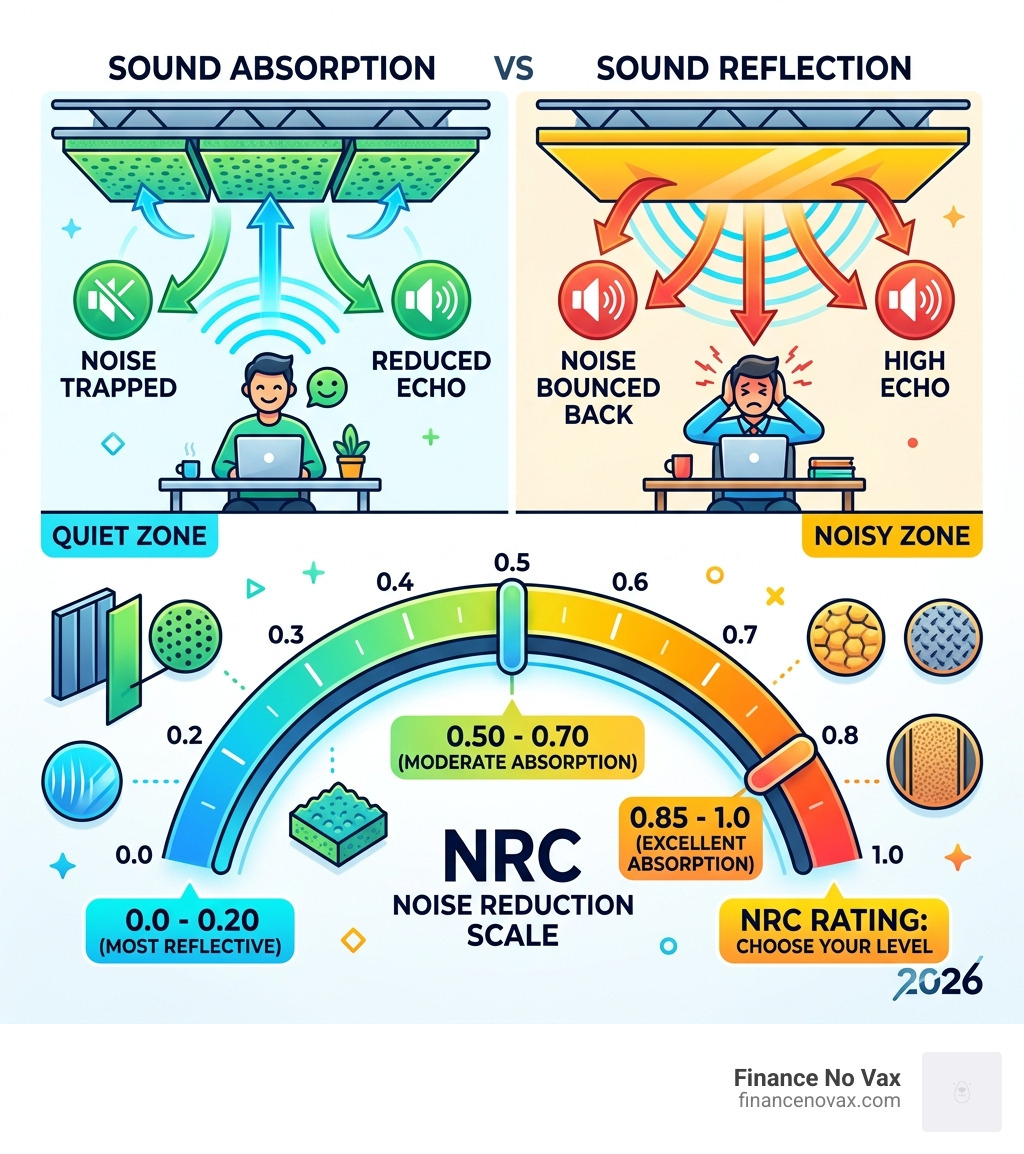
Acoustic material for ceiling terms you need:
Understanding the Best acoustic material for ceiling Applications
When we talk about the acoustic material for ceiling selection, we have to look at the ceiling as a system rather than just a surface. In April 2026, the industry has moved toward holistic designs that tackle both internal room clarity and external noise intrusion.
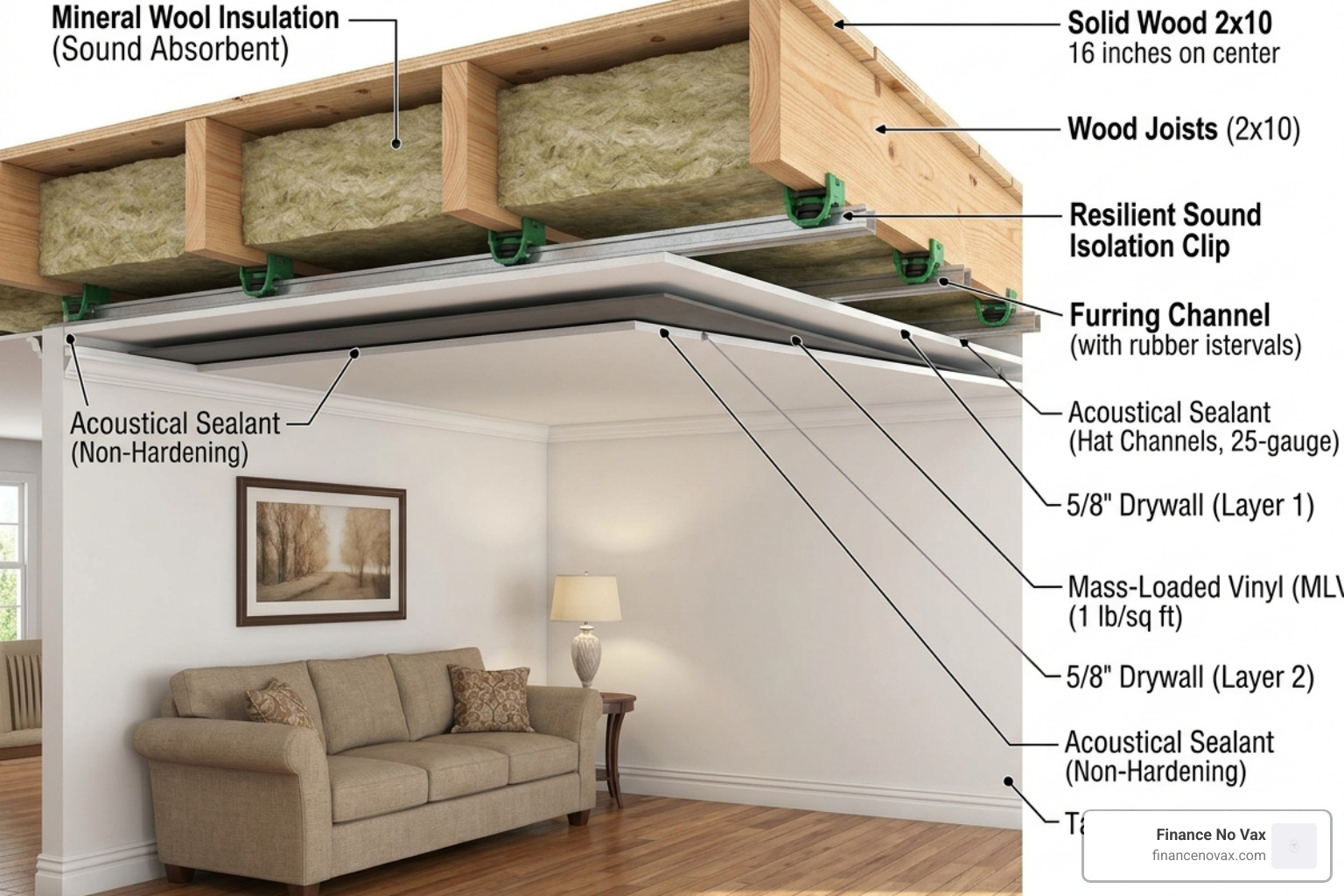
To effectively quiet a room, we must address the two primary culprits: impact and airborne noise. If you are hearing footsteps from the neighbor above, that is impact noise vibrating through the joists. If you are hearing their television, that is airborne noise finding its way through gaps and thin materials.
Choosing the best ceiling panels to stop overhead noise involves identifying which of these is your biggest headache. For most residential and commercial spaces, a combination of high-density absorption and structural decoupling is the gold standard for how to soundproof a ceiling without losing your mind.
Choosing an acoustic material for ceiling based on mass and damping
To stop sound from traveling between floors, we need to apply the four pillars of soundproofing: decoupling, absorption, mass, and damping.
- Mass: Heavier materials like double layers of drywall, Medium-Density Fiberboard (MDF), or heavy-duty vinyl sheeting (Mass Loaded Vinyl) make it harder for sound waves to move the structure.
- Damping: Using a damping compound (like Green Glue) between two layers of drywall converts sound energy into heat, effectively “killing” the vibration.
- Decoupling: This is the process of separating the ceiling from the floor joists. By using the best tools to decouple your ceiling and kill the noise, such as resilient sound isolation clips and furring channels, we break the mechanical path sound takes.
- Absorption: Filling the cavity with acoustic insulation slabs (with a minimum density of 60 kg/m3) prevents the “drum effect” inside the ceiling.
Absorption vs. Blocking: Decoding NRC and CAC Ratings
In acoustic material for ceiling specs, you will see two acronyms everywhere: NRC and CAC. Understanding the difference is the key to not wasting your money.
- NRC (Noise Reduction Coefficient): This measures how much sound a material absorbs within the room. It ranges from 0 to 1.0. An NRC of 0.80 means the material absorbs 80% of the sound that hits it and reflects 20% back. This is what stops echoes and makes voices sound clear.
- CAC (Ceiling Attenuation Class): This measures how much sound the material blocks from traveling into the next room. A CAC of 35 or higher is considered high performance for privacy.
For example, technical specs for high-performance acoustical panels like the USG Astro line show an NRC of 0.55 and a CAC of 35. This is a balanced panel—it helps a bit with echo but is specifically designed to keep your office conversations from leaking into the hallway.
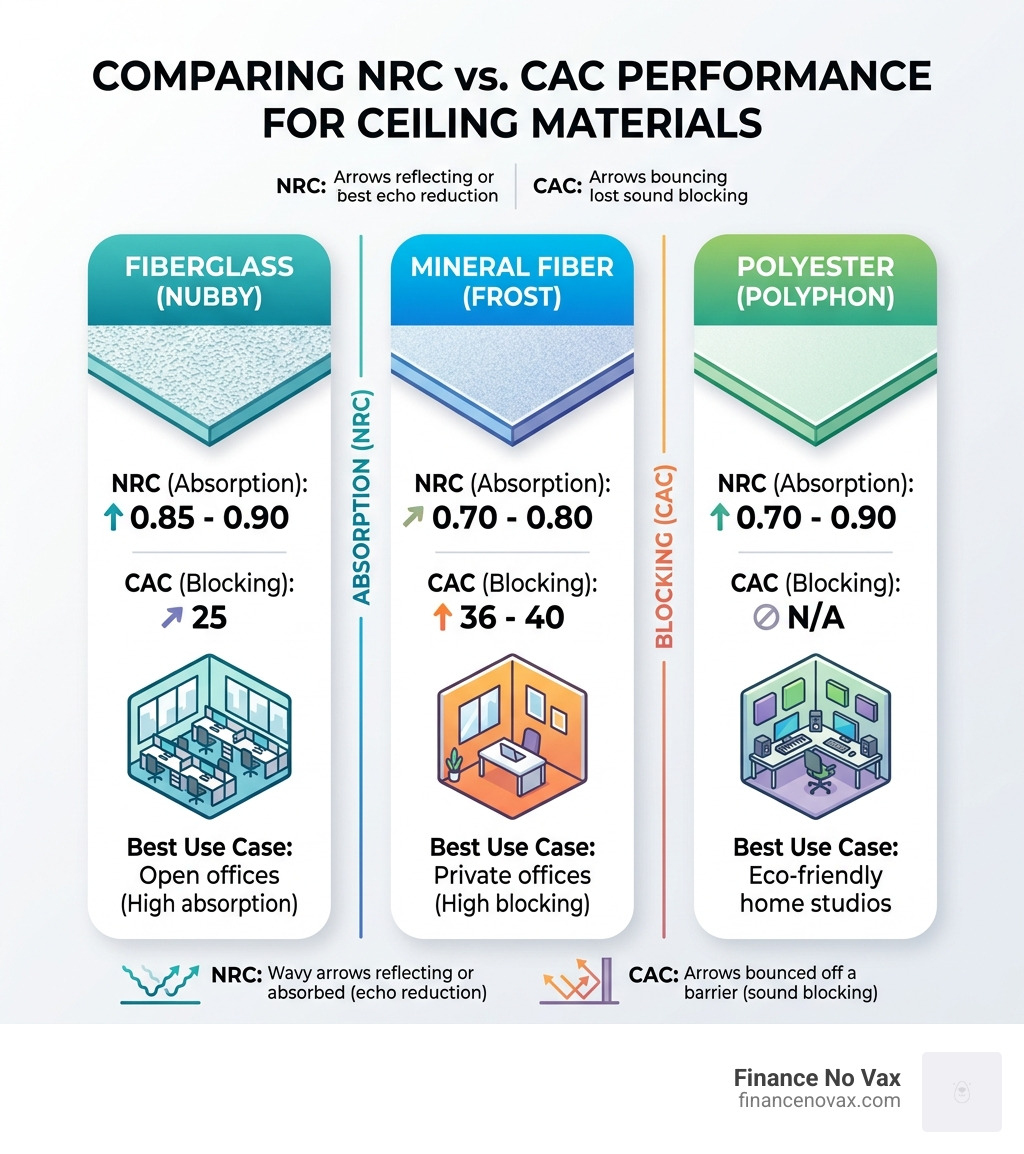
| Material | NRC (Absorption) | CAC (Blocking) | Best Use Case |
|---|---|---|---|
| Fiberglass (Nubby) | 0.85 – 0.90 | 25 | Open offices (High absorption) |
| Mineral Fiber (Frost) | 0.70 – 0.80 | 36 – 40 | Private offices (High blocking) |
| Polyester (PolyPhon) | 0.70 – 0.90 | N/A | Eco-friendly home studios |
| Seamless (Acoustibuilt) | 0.80 | 46 | Luxury lobbies and boardrooms |
From Tiles to Clouds: Popular Acoustic Ceiling Solutions
Gone are the days when an “acoustic ceiling” meant ugly, fissured tiles in a hospital hallway. Today, we have a massive variety of the ultimate list of acoustical ceiling solutions ranging from sleek, fabric-wrapped panels to modern geometric shapes.
One of the standout performers in 2026 is the polyester acoustic tile. Products like the PolyPhon™ tiles are made from 60% recycled polyester fiber. According to technical data on sustainable polyester acoustic tiles, these achieve an NRC of up to 0.90 when installed in a standard drop grid. Unlike old-school mineral fiber, these don’t crumble or create irritating dust, making them a favorite for home theaters and bedrooms.
Specialized acoustic material for ceiling in studios and offices
In large, open-concept spaces where a full drop ceiling isn’t possible or desired, we turn to suspended solutions.
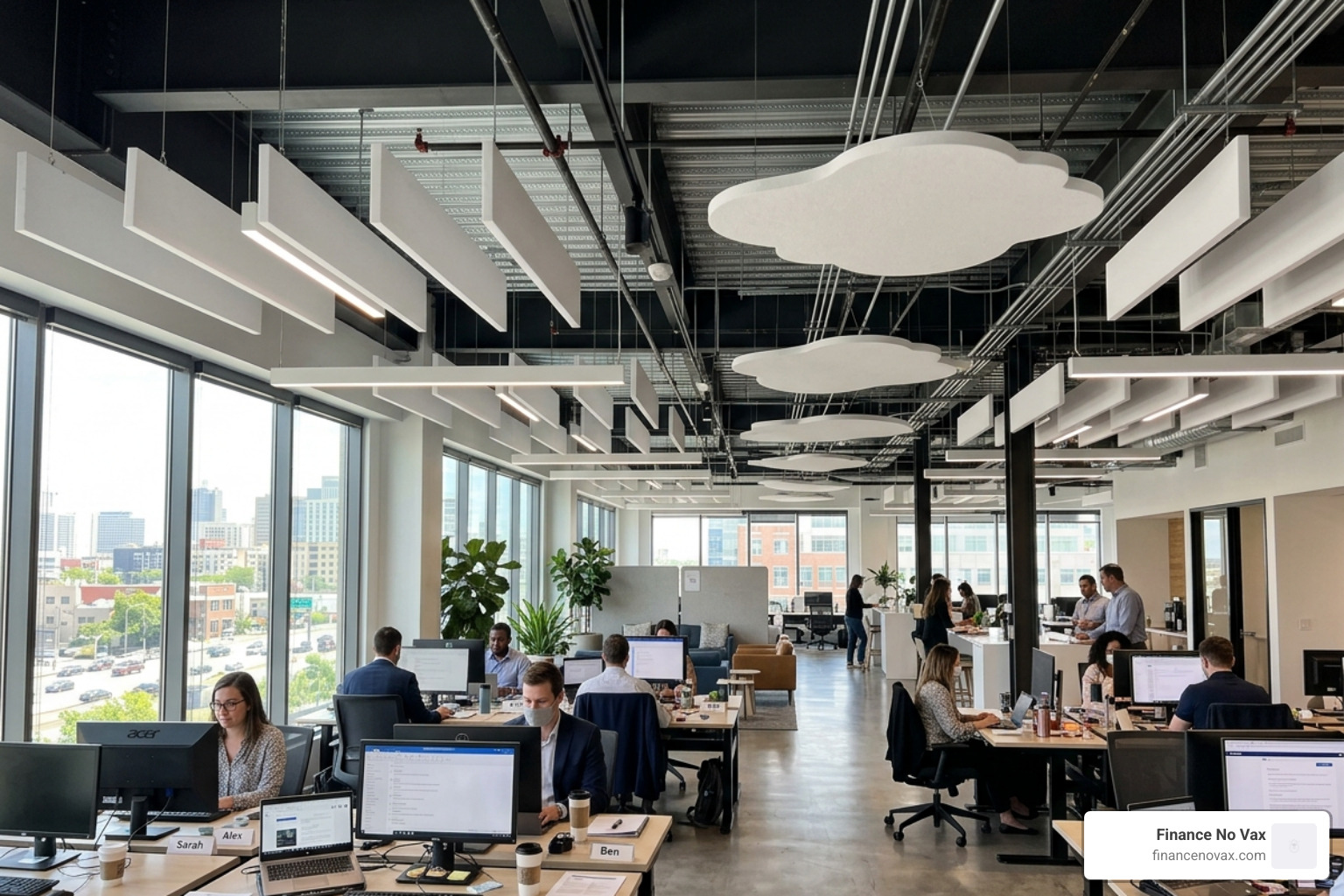
- Acoustic Clouds: These are horizontal panels suspended from the ceiling. Because they are open on the top and bottom, they absorb sound from two different points, making them incredibly efficient.
- Baffles: These hang vertically. They are great for high-ceiling environments like gyms or restaurants because they provide a massive amount of surface area to “catch” sound waves.
- Acoustic Banners: These are often “catenary-mounted” (curved) and are used in massive spaces like auditoriums to reduce long reverberation times.
If you are looking for the best easy soundproofing ceiling panels, direct-mount tiles are often the answer. Tiles like the AcoustiColor® series can be glued directly to drywall and matched to any Sherwin-Williams paint color, providing a professional look without the industrial grid.
Installation Methods for Every Ceiling Type
How you install your acoustic material for ceiling depends entirely on your existing structure and your DIY comfort level.
- Drop Ceiling (Suspended Grid): This is the most common commercial method. We install a T-bar grid and “drop” the tiles in. This is perfect for hiding wires and plumbing. High-performance tiles like USG Orion™ 75 are designed for this, offering an NRC of 0.75 and a non-directional pattern that makes installation faster with less waste.
- Direct Mount: For homes with low ceilings, we often use adhesive or brad nailers to attach panels directly to the drywall or wood deck. This is the “low profile” way to get pro-level acoustics.
- Suspended (Clouds/Baffles): These use aircraft cables or specialized hangers. This is the art of making your ceiling float and your neighbors disappear—it looks high-end and leaves the original ceiling height intact.
- Seamless Systems: For those who want the look of a perfectly smooth drywall ceiling but the performance of an acoustic tile, systems like Armstrong’s Acoustibuilt use mineral fiber panels that are screw-attached to a grid and finished to look monolithic.
Frequently Asked Questions about Ceiling Acoustics
Are acoustic ceiling materials fire-rated and safe?
Yes, safety is a non-negotiable factor. Most professional-grade acoustic material for ceiling products are Class A fire-rated according to ASTM E84. This means they have low flame spread and smoke development.
For instance, the acoustical performance and safety of seamless ceiling systems often include “BioBlock” technology, which resists the growth of mold and mildew—essential if you live in a humid climate or are installing in a basement. Brands like USG and Armstrong also offer “ClimaPlus” warranties, often covering sag and mold for up to 30 years.
How much does high-quality acoustic ceiling material cost?
Pricing in 2026 varies significantly based on performance and aesthetics:
- Basic Mineral Fiber: $1.00 – $3.00 per sq. ft.
- High-Performance Fiberglass/Polyester: $5.00 – $15.00 per sq. ft.
- Specialty Seamless or Designer Clouds: $15.00 – $45.00+ per sq. ft.
Labor typically adds another $2.00 to $5.00 per square foot depending on the complexity of the grid or suspension system.
Can acoustic ceiling panels be customized for aesthetics?
Absolutely. We are no longer stuck with “office white.”
- Color Matching: Brands like Acoustical Solutions offer tiles that can be factory-coated to match any Sherwin-Williams color code.
- Shapes: Beyond squares, you can find hexagons, circles, and custom-cut geometric “puzzles.”
- Texture: Choose from smooth, fine-textured, nubby cloth, or even wood-fiber finishes.
- Integrated Lighting: Modern systems allow for “plug-and-play” linear LED lighting that fits perfectly into the ceiling grid.
Conclusion
Choosing the right acoustic material for ceiling is about more than just stopping an echo; it’s about creating a space where you can focus, relax, and communicate without strain. Whether you opt for a high-performance USG Frost panel for your office or a sustainable polyester tile for your home studio, the investment pays off in both comfort and property value.
At Finance No Vax, we believe that sound control is a fundamental part of modern architectural wellness. By focusing on long-term durability, fire safety, and verified NRC/CAC ratings, you can transform a noisy, distracting room into a sanctuary of clarity. For more deep dives into the products that make this possible, check out more info about acoustic materials on our main hub.
