
Everything You Need to Know About Soundproofing Insulation
Why Noise Is Killing Your Focus (And How Soundproofing Insulation Fixes It)
Soundproofing insulation is a type of insulation material designed specifically to reduce noise transmission between rooms, floors, and walls — not just control temperature.
Here’s a quick look at the best options and what they do:
| Material | Best For | STC Improvement vs. Fiberglass Baseline |
|---|---|---|
| Mineral wool (stone wool) | Walls, floors, ceilings | +3 STC |
| Recycled denim (cotton) | Walls, ceilings | +3 STC |
| Cellulose (dense-pack) | Existing walls, attics | +2 STC |
| Fiberglass batt | Budget builds | Baseline |
| Spray foam | Air sealing | Minimal |
A bare interior wall with standard drywall over 2×4 studs rates around STC 34 — meaning a lot of sound passes through. Add standard fiberglass insulation and it jumps to STC 39. Upgrade to mineral wool or denim and you push even further.
If you work from home, that difference is very noticeable.
Noise isn’t just annoying — it chips away at focus, raises stress, and makes it harder to do your best work. In fact, noise ranks as one of the most common complaints in shared living and working spaces.
The good news: the right insulation, installed in the right places, can dramatically cut down the noise reaching your home office — often without a full renovation.
This guide covers every material, rating, and installation strategy you need to make a smart choice in 2026.
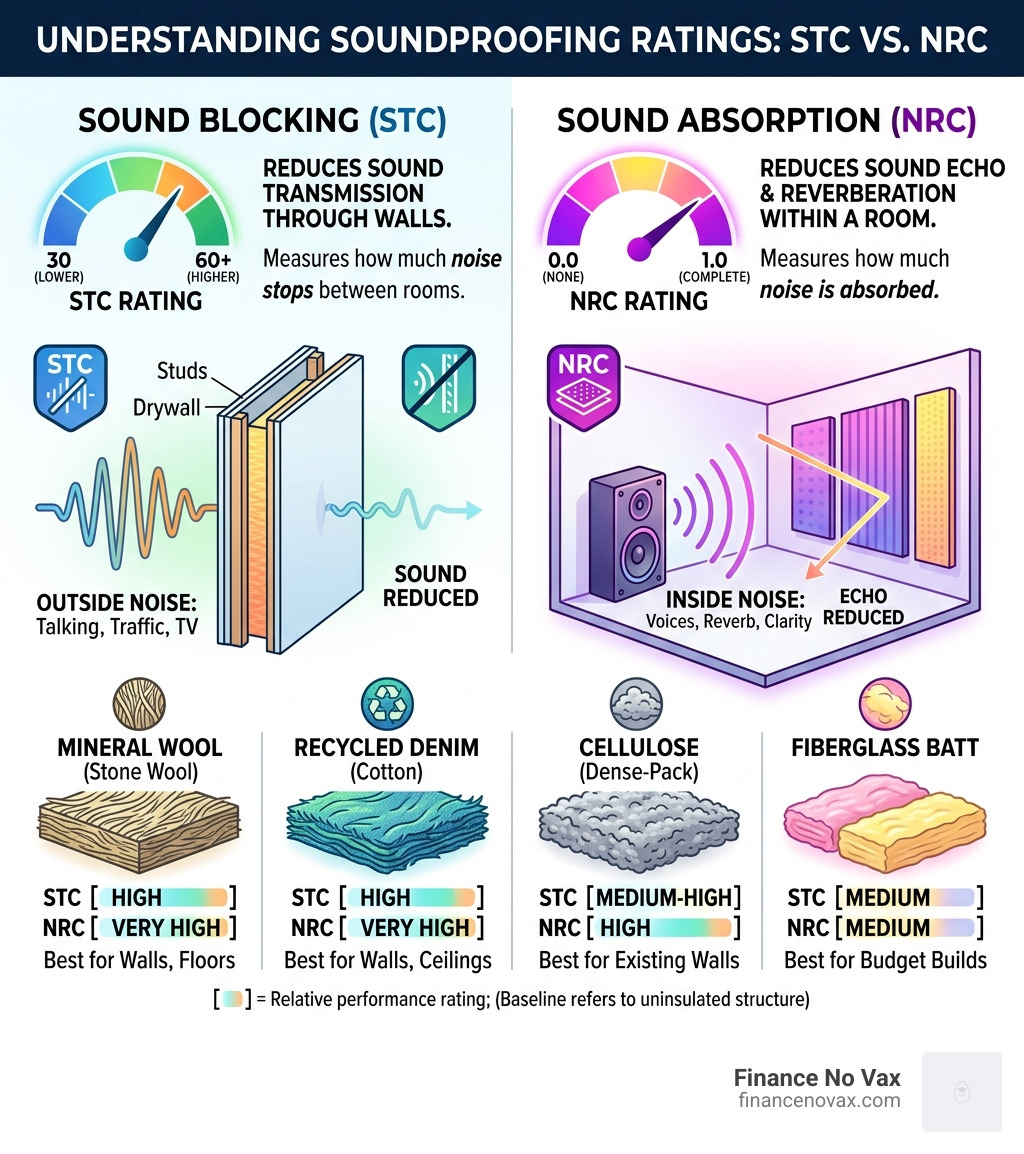
Soundproofing insulation terms made easy:
Understanding Soundproofing vs. Thermal Insulation
When we talk about insulation, most people think of keeping their house warm in the winter. That is thermal insulation, measured by R-value. However, soundproofing insulation has a different job: it’s designed to trap sound waves and stop them from vibrating through your structure.
To understand how well a product works, we have to look at three key ratings:
- STC (Sound Transmission Class): This measures how well a partition (like a wall or floor) blocks airborne sound. The higher the number, the better the privacy. For example, an STC of 50 means loud speech is barely audible.
- NRC (Noise Reduction Coefficient): This measures sound absorption. It ranges from 0 to 1. An NRC of 0.95 means the material absorbs 95% of the sound that hits it, preventing echoes.
- SAA (Sound Absorption Average): This is very similar to NRC but is based on a wider range of frequencies, giving us a more precise look at performance.
We also need to distinguish between types of noise. Airborne noise includes things like voices, the TV, or a barking dog. Impact noise is structural—think of footsteps on the floor above or a vibrating washing machine. While insulation is great for airborne noise, it often needs to be paired with other materials to stop impact vibrations.
For those focusing on specific entry points, checking out acoustic door insulation materials what actually works is a great way to see how these principles apply to the gaps in your room.
Top Materials for Effective Soundproofing Insulation
Choosing the right material is the most important decision you’ll make for your project. In April 2026, the market is filled with high-performance options that go far beyond basic pink fiberglass.
Mineral Wool (Stone Wool)
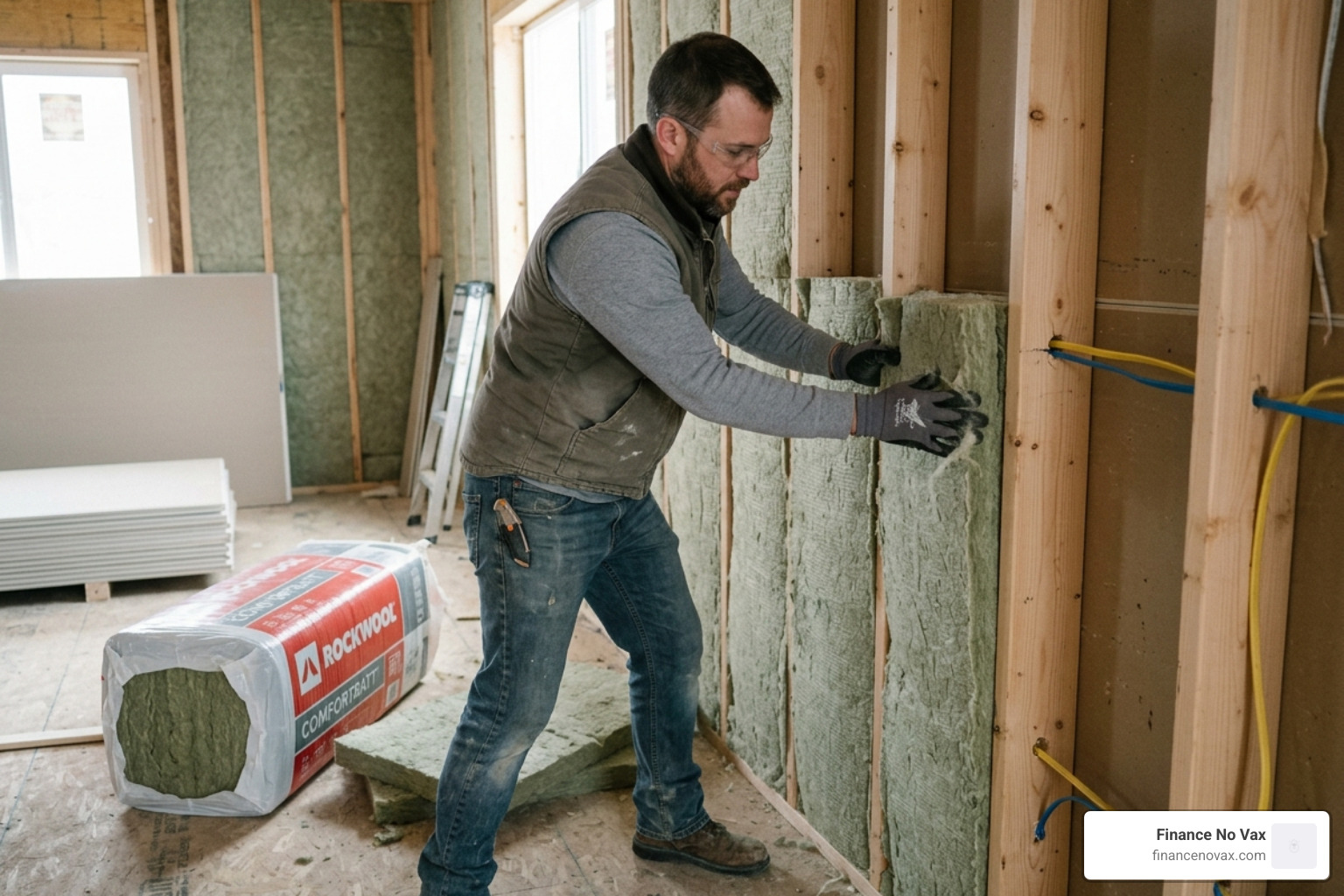
Mineral wool is widely considered the gold standard for soundproofing insulation. Made from basalt rock and furnace slag, it is incredibly dense. Products like ROCKWOOL Safe’n’Sound are specifically engineered for interior partitions. Because the fibers are so dense, they effectively slow down sound waves and minimize airflow.
We love this material because it is a “friction-fit” batt, meaning it stays in place without sagging or needing staples. You can find specific sizes like the Safe ‘n’ Sound 3 in. x 16-1/4 in. x 47 in. batts which are perfect for standard 16-inch on-center stud spacing.
Fiberglass
If you are on a budget, fiberglass insulation is still a viable option. While it is lighter and less dense than mineral wool, it still provides a significant jump in STC compared to an empty wall. For instance, adding an R13 Kraft Faced Fiberglass Roll can help with sound absorption and moisture control simultaneously.
Cellulose
Cellulose is made from recycled paper (mostly newsprint) treated with borate. When “dense-packed” into walls, it creates a very effective sound barrier because it fills every tiny nook and cranny that batts might miss. It provides a +2 STC improvement over standard fiberglass.
For those building a home recording space, we’ve analyzed the specifics of Rockwool or bust finding the best insulation for your studio walls to help you decide if the extra density is worth the investment.
Best Soundproofing Insulation for Fire and Moisture Resistance
One of the hidden benefits of high-end soundproofing insulation is safety. Mineral wool, for example, is non-combustible. It can resist temperatures over 1,000°C (1842°F). According to ASTM E84 tests, ROCKWOOL Safe’n’Sound has a Flame Spread Index of 0 and a Smoke Developed Index of 0. This means it won’t spread flames or produce toxic smoke if a fire breaks out.
Furthermore, these materials are often inorganic, meaning they don’t provide a food source for mold or mildew. This is crucial for basement renovations or “wet” walls near bathrooms. If you’ve ever wondered why studio foam insulation is the secret to professional audio, you’ll find that while foam is great for echoes, it doesn’t offer the same fire-rated protection as stone wool batts.
Eco-Friendly Soundproofing Insulation Options
For the environmentally conscious builder, recycled denim (cotton) insulation is a fantastic choice. Products like Quiet Batt® Premium Soundproofing Insulation are made from 80% recycled natural fibers—basically your old blue jeans!
Denim insulation is completely itch-free, requires no specialized safety gear to handle, and contains no harmful chemicals like formaldehyde. It’s also treated with borate, which not only acts as a flame retardant but also serves as a pest repellent against insects and rodents. Denim typically offers a +3 STC improvement over fiberglass, making it as effective as it is sustainable.
Installation Strategies for Walls, Floors, and Ceilings
The best material in the world won’t work if it’s installed poorly. Sound is like water—it will find the smallest hole and leak through.
New Construction
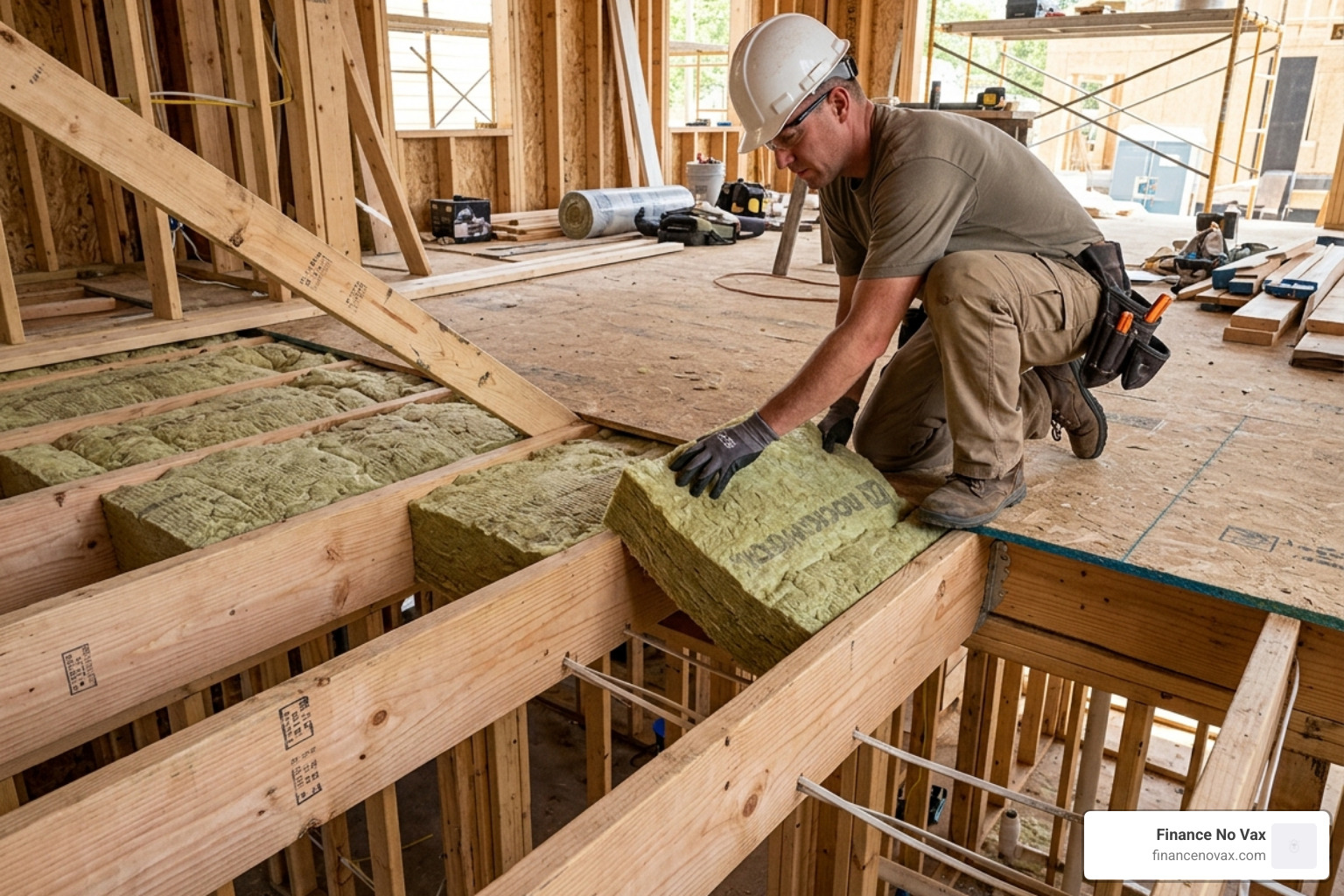
In new builds, you have the luxury of open wall cavities. We recommend a tight friction-fit. For mineral wool or denim, you should cut the batt about a half-inch wider than the cavity to ensure it stays snug against the studs. This prevents “sound flanking,” where noise travels through air gaps around the edges of the insulation.
Retrofitting Existing Spaces
If your walls are already closed, you don’t necessarily have to tear down the drywall. “Blown-in” insulation is the answer here. A professional can drill small holes at the top of the wall and pump in dense-pack cellulose or fiberglass. This fills the cavity and provides immediate noise reduction.
Maximizing Performance with Decoupling and Sealing
If you want “studio-grade” silence, insulation is only the first step. You also need to address vibration.
- Acoustic Sealant: Use this to seal gaps around electrical outlets, baseboards, and where the wall meets the floor.
- Mass-Loaded Vinyl (MLV): This is a heavy, flexible material that adds “limp mass” to a wall, making it much harder for sound waves to move the structure. You can learn more in the ultimate guide to mass-loaded vinyl installation.
- Decoupling: Using resilient channels or sound clips separates the drywall from the studs, breaking the path that vibrations use to travel through the wall.
Interestingly, these same principles apply to vehicles. If you’ve ever wanted to silence the road with professional car sound insulation, you’ll see that adding mass and sealing gaps is the universal language of quiet.
Frequently Asked Questions about Soundproofing
Does soundproofing insulation also provide thermal benefits?
Yes! While soundproofing insulation like stone wool or denim is designed for density and sound absorption, it still provides excellent thermal resistance. For example, Quiet Batt® has an R-value of 13, helping you save on heating and cooling costs while keeping things quiet.
How much does soundproofing insulation cost compared to standard fiberglass?
Generally, specialized soundproofing materials cost about 2x as much as standard fiberglass. You might pay $0.60–$1.00 per square foot for basic fiberglass, whereas mineral wool or denim can range from $1.00 to over $3.00 per square foot. However, considering the fire safety and acoustic benefits, most homeowners find it well worth the investment for bedrooms and offices. You can even unlock 5% savings on specialized floor underlayments if you shop smart.
Can I install soundproofing insulation in existing walls without removing drywall?
Yes, using the “drill and fill” method with blown-in cellulose or fiberglass. While it isn’t quite as perfect as hand-placing mineral wool batts, it is significantly cheaper than a full renovation and provides a noticeable improvement in privacy.
Conclusion
Creating a quiet home in 2026 doesn’t have to be a mystery. By choosing the right soundproofing insulation—whether it’s the fire-resistant density of stone wool or the eco-friendly performance of recycled denim—you can reclaim your focus and comfort.
Insulation is just one piece of the puzzle. For the best results, combine your insulation with proper sealing and, if necessary, decoupling techniques. At Finance No Vax, we believe that acoustic planning is just as important as aesthetic design. A beautiful home that sounds like a construction site isn’t a sanctuary.
Visit Finance No Vax for more home improvement guides to continue your journey toward a more comfortable, efficient, and silent living space.
