
Wall to Wall Silence with the Best Soundproofing Panels
Why Noise Is Killing Your Home Office Productivity in 2026
Home office soundproofing panels are one of the fastest ways to reduce echo, muffle distracting noise, and sound more professional on Zoom calls — without tearing down a single wall.
Here are the best options to know about:
| Panel Type | Best For | Price Range |
|---|---|---|
| Fabric-wrapped wall panels | Permanent setups, best absorption | $75 – $490+ |
| Freestanding acoustic screens | Renters, flexible layouts | $199+ |
| Acoustic foam tiles | Budget-friendly, DIY installs | $26 – $45/pack |
| Eco-friendly polyester panels | Sustainable home offices | $46 – $79+ |
Remote work is now the norm for millions of people. But most homes were never built for it.
New construction homes are especially problematic. As one frustrated remote worker put it in a community forum: “Our home is new construction so the walls are thin and sound travels easily.” That’s a story shared by countless people trying to stay focused while family members, traffic, and everyday household chaos leak through every surface.
The problem isn’t just annoying. Constant background noise chips away at your focus, raises your stress levels, and makes you sound unprofessional on client calls.
The good news? You don’t need a construction crew or a massive budget to fix it. The right acoustic panels can make a real, noticeable difference — fast.
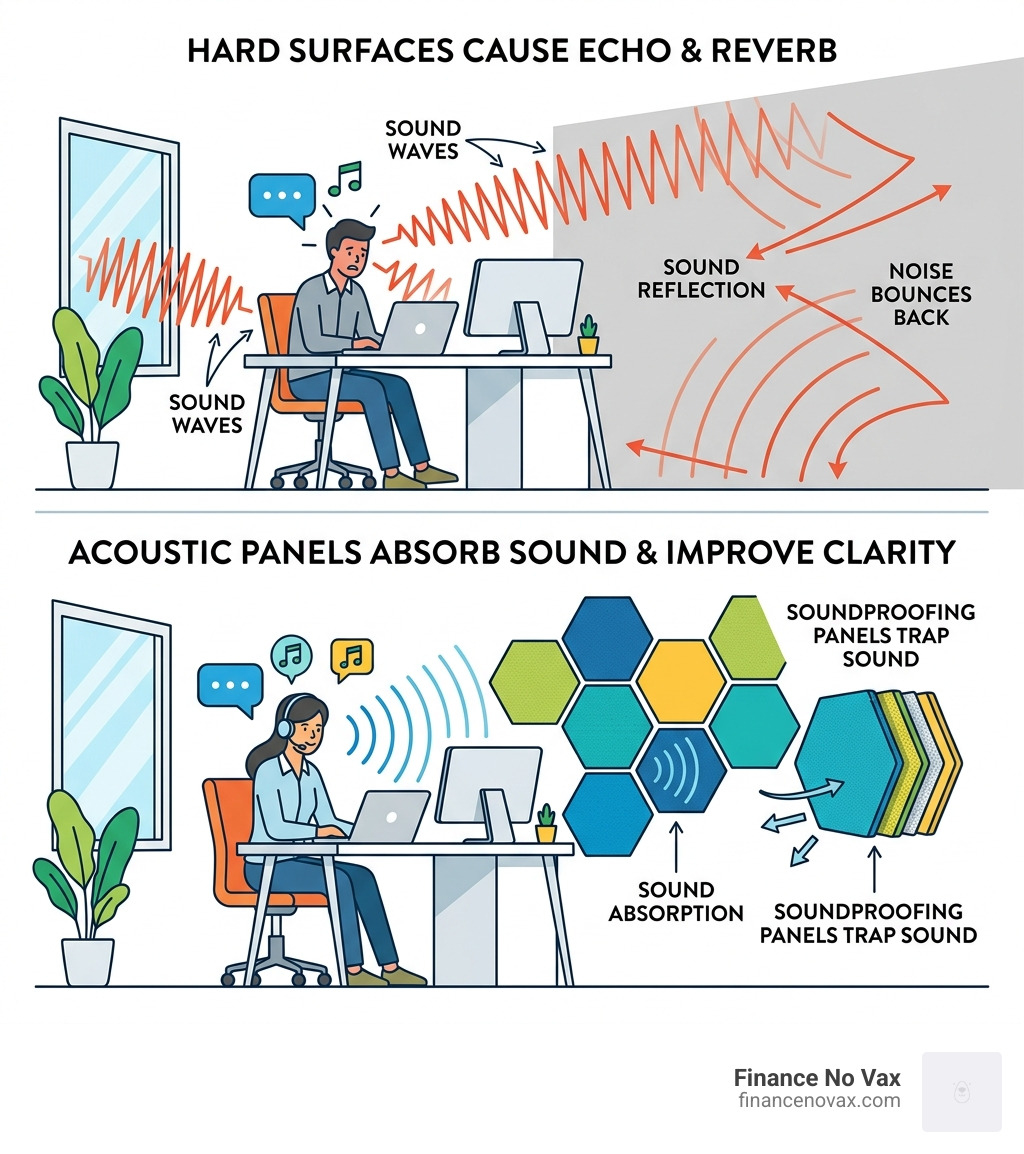
Basic home office soundproofing panels vocab:
Understanding Acoustic Absorption vs. Sound Blocking
One of the most common mistakes we see people make is using the terms “soundproofing” and “acoustic treatment” interchangeably. If you buy a pack of foam tiles expecting them to stop your neighbor’s dog from barking, you’re going to be disappointed.
Soundproofing (Blocking)
True soundproofing is about blocking sound from entering or leaving a room. This requires mass and density. We’re talking about things like double-drywall, mass-loaded vinyl, or specialized insulation inside the walls. It’s designed to stop vibrations from traveling through the structure of your home.
Acoustic Absorption (Dampening)
Acoustic panels, on the other hand, are designed for absorption. When sound waves hit a hard surface – like your desk or a bare wall – they bounce back, creating echo and reverberation. Acoustic panels are made of porous materials (like mineral wool or open-cell foam) that trap those sound waves and convert the energy into a tiny amount of heat.
This is crucial for home offices because it cleans up your audio. It makes your voice sound “dry” and clear on a microphone rather than sounding like you’re calling from a tiled bathroom. To learn more about the technical side, check out Everything You Need To Know About Office Acoustic Panels/ and Shhh The Definitive Guide To A Soundproof Home Office Setup/.
What is an NRC Rating?
When shopping for home office soundproofing panels, you’ll see a number called the NRC (Noise Reduction Coefficient). This rating ranges from 0 to 1.
- 0.0 NRC: No sound is absorbed (like a window).
- 1.0 NRC: All sound hitting the panel is absorbed.
For speech frequencies (the range most important for Zoom calls), look for panels with an NRC of 0.85 or higher. High-quality 2-inch mineral wool panels often boast ratings as high as 1.05 at 1000Hz, which is the “gold standard” for clarity.
Top Home Office Soundproofing Panels for Every Setup
Choosing the right panel depends entirely on your room’s layout and whether you’re allowed to poke holes in the walls. In 2026, the market has expanded to include everything from high-design art pieces to rugged, portable dividers.
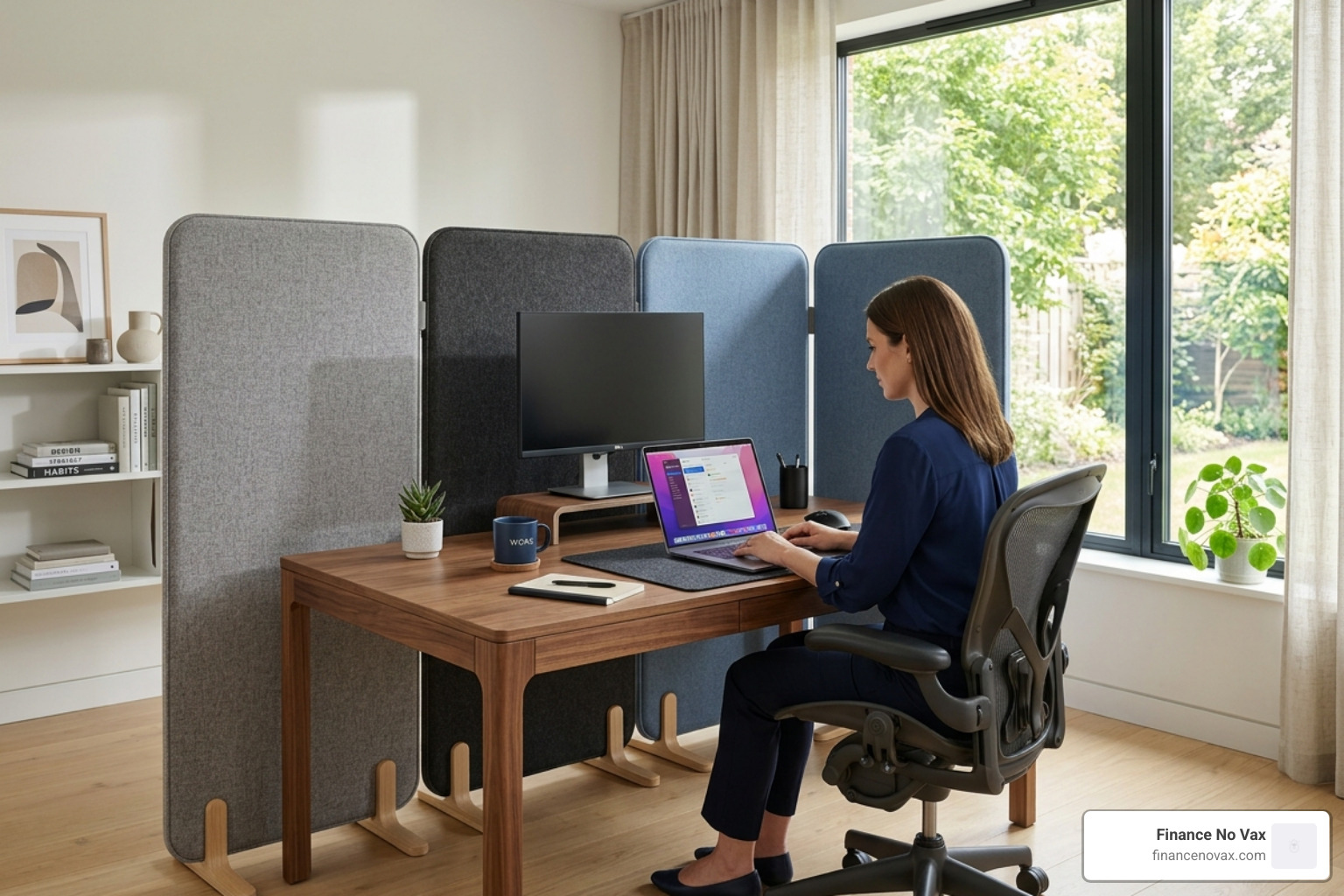
For many of us, the home office is a shared space. Maybe you work in the corner of a bedroom or a section of the living room. In these cases, permanent wall panels might not be the best fit. Instead, Quiet Your Workspace With These Desk Enclosure Solutions/ can provide immediate relief by surrounding your actual workstation with sound-dampening materials.
Wall-Mounted Home Office Soundproofing Panels
If you have a dedicated room, wall-mounted panels offer the most professional look and the best performance.
- Fabric-Wrapped Panels: These are the industry standard. They usually feature a rigid frame filled with mineral wool or fiberglass, wrapped in acoustically transparent fabric. They look like high-end canvases and come in hundreds of colors. Prices range from roughly $75 for a small panel to nearly $500 for oversized versions.
- Polyurethane Foam: This is the most budget-friendly option. You can find 80-packs of high-density foam for around $45. While they don’t block sound from passing through walls, they are excellent at killing “flutter echo”—that annoying zinging sound you hear when you clap your hands in an empty room. Dive deeper into these with The Best Studio Acoustic Foam Tiles And Panel Sets For Every Budget/.
- 3D Wave and Textured Panels: These are made from compressed polyester felt (often from recycled plastic). They are lightweight and can be installed with simple adhesive strips, making them perfect for renters.
For those looking for maximum silence in a recording or high-stakes meeting environment, we recommend High-Density Polyurethane Foam Solutions for Maximum Silence/.
Freestanding and Portable Acoustic Screens
Portable panels are the “secret weapon” for remote workers in 2026. These are often used as room dividers to create a “room within a room.”
- Versatility: Many of these screens feature 360-degree hinges, allowing you to fold them into L-shapes or U-shapes around your desk.
- Mobility: Look for models with locking casters (wheels). This allows you to roll the “booth” into place for a call and then tuck it against the wall when the workday is over.
- Visual Privacy: Beyond sound, these panels provide a clean, professional backdrop for your camera, hiding the laundry or the unmade bed behind you.
Check out the latest Office Soundproofing Solutions For A Productive Workplace/ and Quiet At Last With These Top Home Office Desk Soundproofing Tools/ to see how these freestanding units are changing the game.
Maximizing Performance: Placement and Installation Strategies
Buying the panels is only half the battle. If you place them in the wrong spot, you’re essentially leaving money on the table.
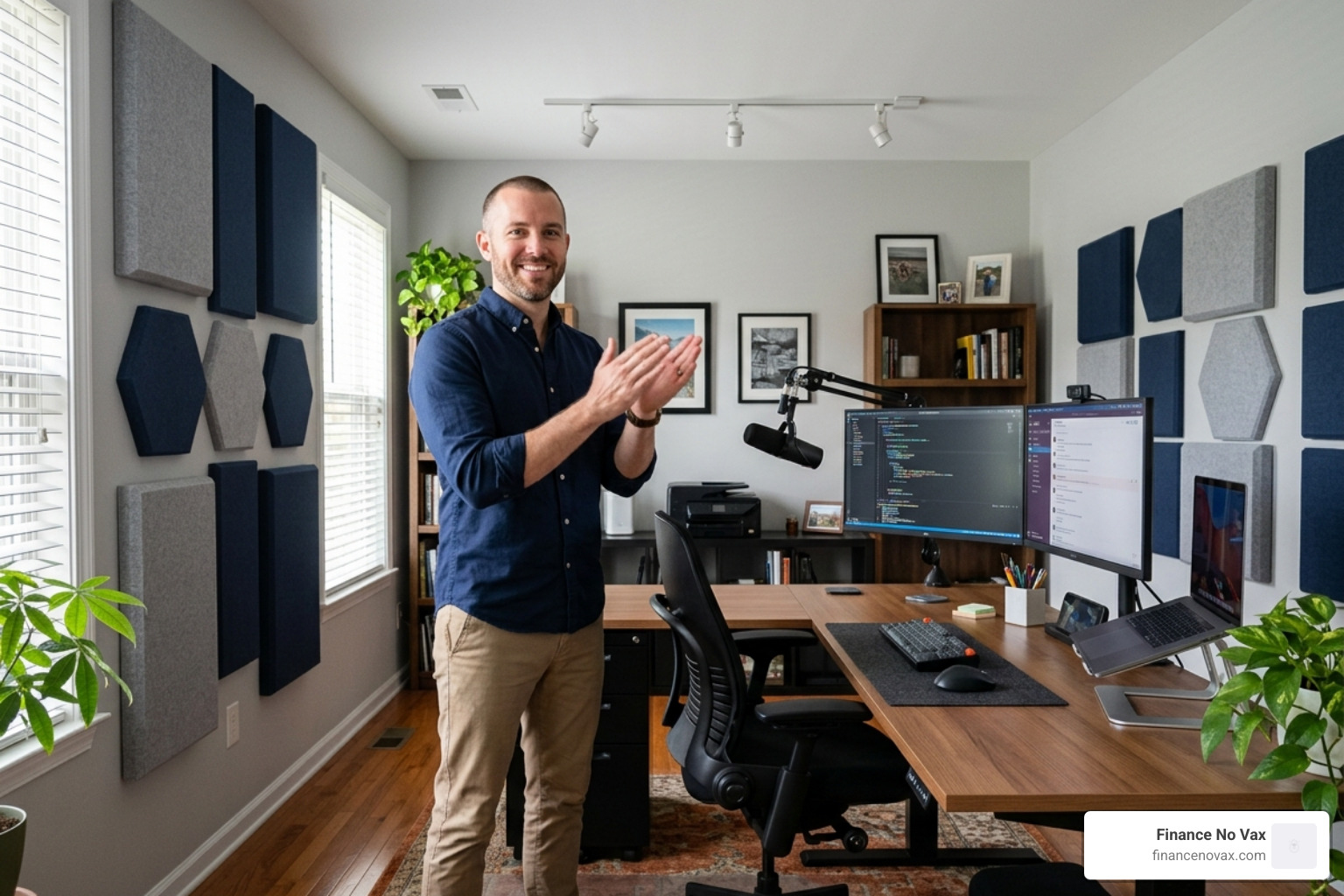
The “First Reflection” Point
Sound behaves a lot like light. If you were to put a mirror on the wall, where would you see your computer screen reflected? That is the “first reflection point.” In a home office, you want to place home office soundproofing panels at these points on the walls to your left and right. This stops the sound of your voice from bouncing off the side walls and back into your microphone.
Acoustic Symmetry
Try to treat opposing walls equally. If you have a massive window on one side of your desk, try to place a thick acoustic panel on the wall directly opposite it. This helps balance the sound and prevents “lopsided” audio.
Dealing with Thin Walls
If you are struggling with noise coming through thin, new-construction walls, a single panel won’t fix it. However, covering 20-30% of the wall surface with thick panels (2 inches or more) can noticeably reduce the amount of sound that “leaks” through by dampening the wall’s vibration.
| Panel Thickness | Typical NRC Rating | Best Use Case |
|---|---|---|
| 1-inch | 0.70 – 0.80 | High-frequency noise (clicks, fans) |
| 2-inch | 0.95 – 1.05 | Speech, mid-range frequencies |
| 4-inch | 1.10+ | Low-frequency “thumping” or bass |
For a step-by-step on getting these on your wall, see How To Install Acoustic Wall Panels Like A Sound Engineer/ and consider the benefits of The Big Picture Of Sound Control With Oversized Acoustic Wall Panels/.
Affordable DIY Alternatives and Budget Solutions
We know that a full professional kit can be expensive. If you’re not ready to drop $500 on a room kit, there are several “hacks” that actually work.
- The Garment Rack Trick: Buy a tall, sturdy garment rack and hang two or three heavy “soundproof blankets” or moving blankets from it. Place this behind you or between your desk and the door. It creates a massive, movable acoustic barrier for under $100.
- Furniture Placement: A bookshelf filled with books is a fantastic natural diffuser and absorber. If you have a thin wall, place a large bookshelf against it. Leave a small 1-inch air gap between the shelf and the wall—this gap acts as a “dead zone” for sound vibrations.
- The Door Gap: Most sound “leaks” into an office through the gap under the door. A simple $15 draft stopper or even a rolled-up heavy towel can significantly reduce the noise from the rest of the house.
For more creative ideas, read Quiet Please Diy Soundproofing Ideas For Your Workspace/ and Cheap And Chic Affordable Soundproof Panels For Your Apartment/.
Eco-Friendly Home Office Soundproofing Panels
Sustainability is a huge factor in 2026. Many modern panels are now made from PET felt, which is essentially compressed plastic bottles.
- Safety: Unlike old-school fiberglass, these panels don’t shed itchy fibers. They are safe to touch and handle.
- Customization: They can be laser-cut into beautiful geometric shapes (like hexagons or “3D waves”) and come in vibrant colors like lagoon blue or sunset red.
- Performance: While slightly less absorbent than 4-inch mineral wool, they are more than enough for speech and home office needs.
You can find more info on these in Stitch In Silence With These Budget Fabric Panels/ and The Ultimate Guide To Budget Friendly Soundproofing Panels And Foam/.
Frequently Asked Questions about Office Acoustics
What is the difference between curved and straight freestanding panels?
It mostly comes down to physics and floor space. Curved panels (like the “VersaPanel” style) are inherently more stable and can stand on their own without large feet. They also provide a more “wraparound” acoustic environment, which is great for blocking out distractions. Straight panels are better for creating long, flat walls or partitions and often use “zigzag” configurations to stay upright.
How many panels do I need for a standard 10×10 home office?
You don’t need to cover every inch of the walls. For a standard 10×10 room, we recommend starting with a “cloud” (panels on the ceiling) and about 4 to 6 large wall panels (2’x4′). This usually covers about 20% of the wall surface, which is the “sweet spot” for making a room feel quiet without making it feel “dead” or claustrophobic.
Do acoustic panels help with noise from thin new-construction walls?
Yes, but with a caveat. They won’t stop a loud TV in the next room from being heard entirely. However, they stop the sound from bouncing around your office once it gets through the wall. This makes the intruding noise much less distracting. For real-world impact, users often suggest combining panels with a white noise machine placed outside the office door to mask the incoming sound.
Conclusion
In April 2026, the “perfect” home office isn’t just about a fast computer and an ergonomic chair—it’s about controlling your environment. Home office soundproofing panels are no longer just for recording studios; they are essential tools for anyone who wants to reclaim their focus and present their best self to the world.
Whether you choose a high-end fabric-wrapped setup, a portable freestanding screen, or a DIY blanket solution, the goal is the same: silence. By understanding the difference between blocking and absorbing sound, and strategically placing your panels at reflection points, you can turn even the thinnest-walled room into a professional sanctuary.
Ready to take control of your workspace? Master your workspace today with our professional acoustic solutions/ and start building the quiet office you deserve.
