Why a Soundproof Room Kit Could Be the Simplest Fix for Your Noise Problem
A soundproof room kit is a pre-packaged set of acoustic materials designed to reduce noise, echo, and sound bleed in a room — without hiring a contractor or gutting your walls.
Quick answer: What does a soundproof room kit do?
| Goal | What it addresses | Typical materials |
|---|---|---|
| Reduce echoes and reverb | Sound bouncing inside the room | Acoustic foam panels, absorption panels |
| Block noise from entering/leaving | Sound passing through walls, doors | Mass Loaded Vinyl, barrier sheets |
| Seal sound leaks | Gaps around doors and windows | Door seals, door sweeps |
| Control bass frequencies | Low-frequency room rumble | Bass traps, corner traps |
Most kits focus on one or two of these goals — not all four. That’s the single most important thing to understand before you buy.
If you work from home and struggle to focus because of street noise, a barking dog, or a loud household, you’re not alone. Noise is one of the top productivity killers for remote workers. The good news is that kits today range from simple foam panel bundles under $250 all the way to modular isolation booths — so there’s a real solution at almost every budget.
But here’s the catch: many kits marketed as “soundproof” are actually acoustic treatment products. They make your room sound better on the inside, but they don’t stop noise from coming in through the walls. Knowing the difference saves you money and frustration.
This guide breaks down every type of soundproof room kit available in April 2026, compares the top brands, and helps you find the right fit for your space and budget.
Soundproof room kit vocab explained:
Understanding the Soundproof Room Kit: Absorption vs. Blocking
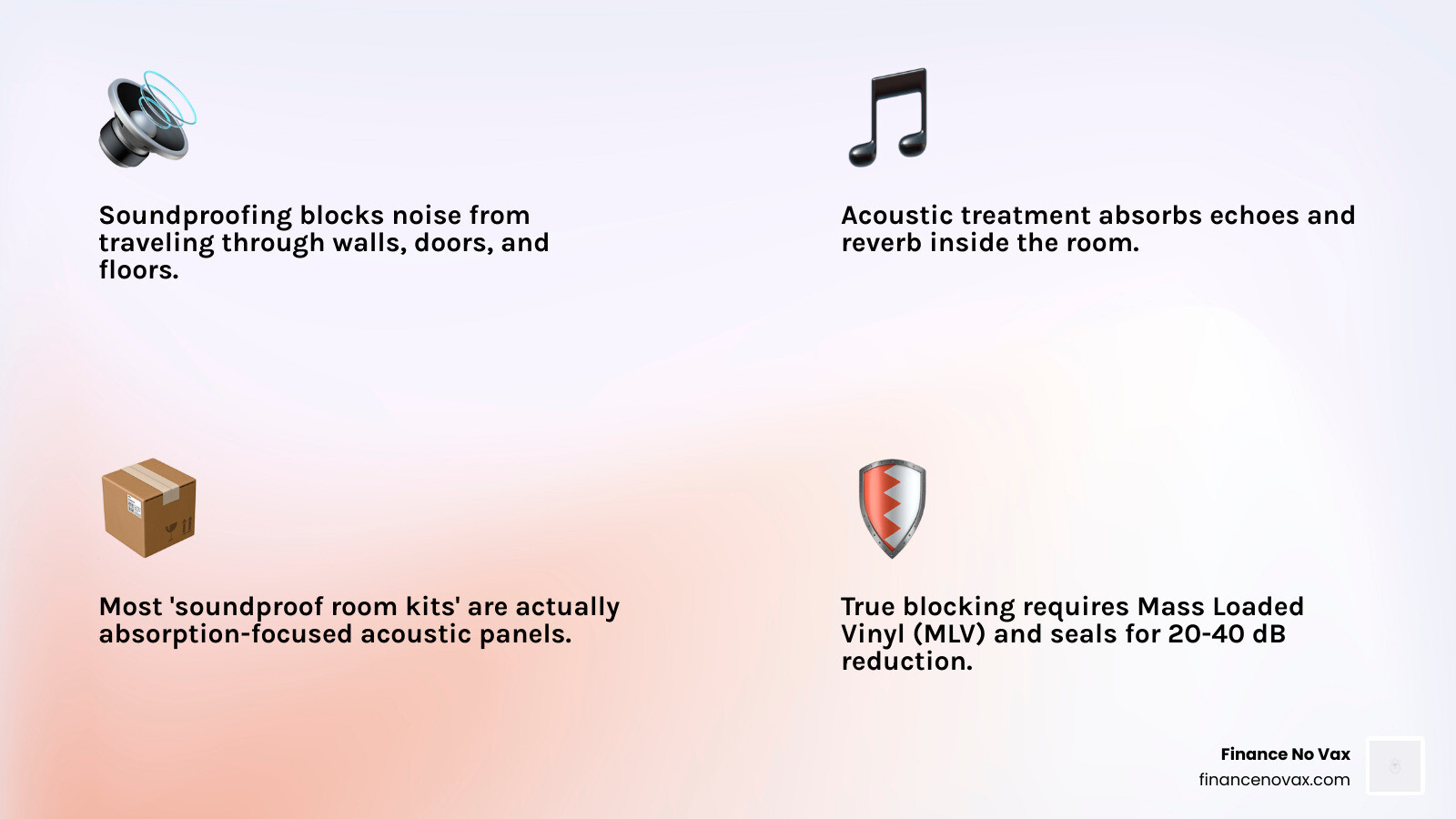
When we talk about a soundproof room kit, we are often using a bit of a “catch-all” term. In acoustics, there are two very different jobs happening: sound absorption and sound blocking. If you use the wrong one for your problem, it’s like wearing a raincoat to stay warm in a blizzard — it’s just not designed for that.
Sound Absorption (Acoustic Treatment)
This is what most people actually buy. These kits are designed to stop sound from bouncing around inside your room. Have you ever been in an empty apartment and heard your voice echo? That’s what absorption fixes.
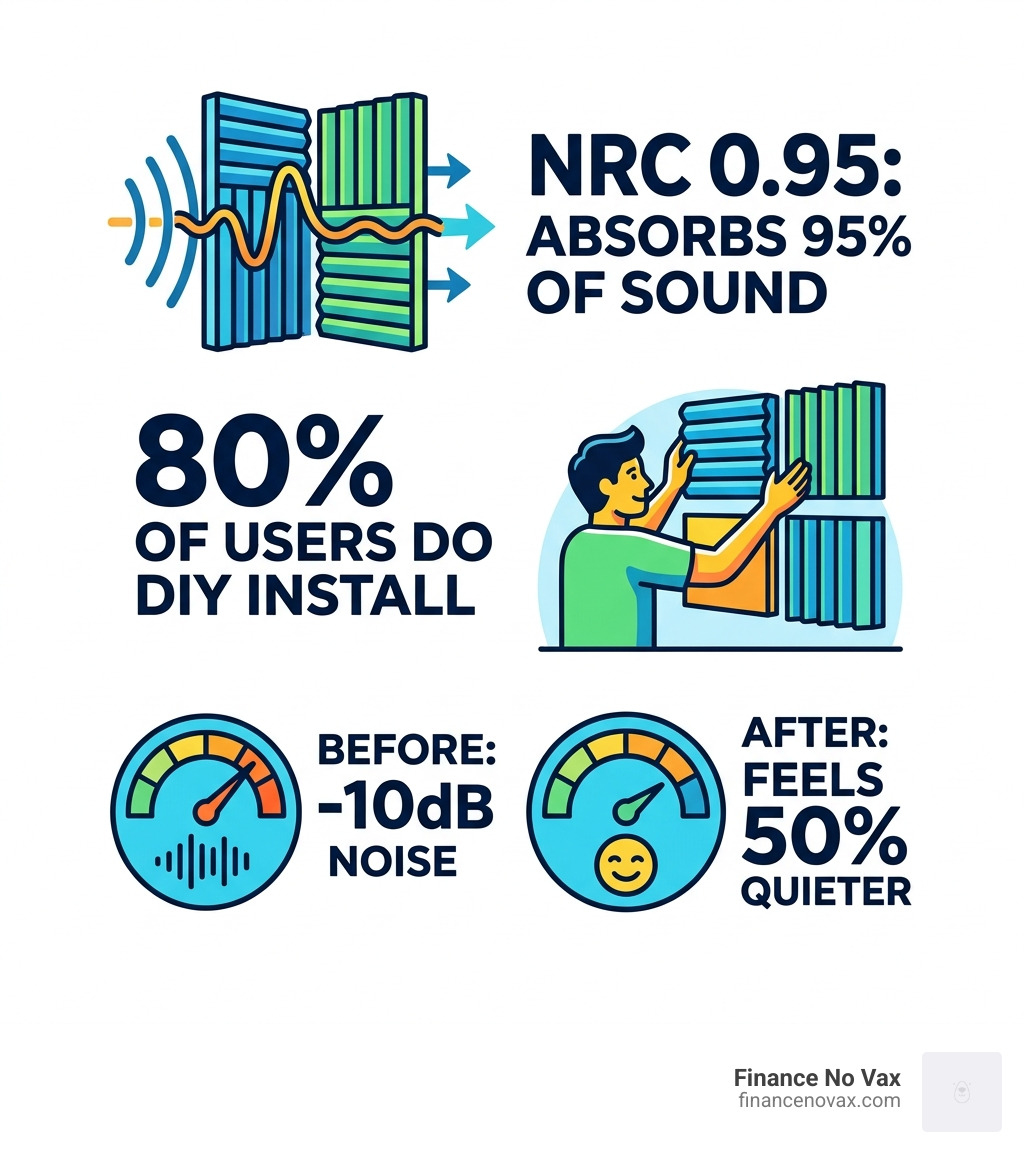
- The Metric: Look for the Noise Reduction Coefficient (NRC). An NRC of 0.95 means the material absorbs 95% of mid-to-high frequency sounds.
- The Materials: Typically soft, porous things like acoustic foam, fiberglass, or recycled cotton.
Sound Blocking (True Soundproofing)
This is much harder to achieve with a “kit” because it requires mass and density. Blocking stops sound from traveling through a wall to the neighbor’s house.
- The Metric: Look for Sound Transmission Class (STC). A higher STC means more sound is blocked. For example, a layer of Mass Loaded Vinyl (MLV) might have an STC of 20, which is great for dampening voices.
- The Materials: Heavy, dense materials like MLV or specialized “barrier” sheets.
Airborne vs. Impact Noise
We also have to consider how the noise gets to you.
- Airborne Noise: Voices, music, or the TV next door. This travels through the air and through gaps.
- Impact Noise: The “thud-thud-thud” of footsteps from the floor above. This travels through the physical structure of the building.
Most DIY kits are great for airborne noise but struggle with impact noise unless you are building a “room within a room.” For those looking to build their own solutions, check out our DIY soundproof panels for walls a step-by-step guide for a hands-on approach.
| Feature | Sound Absorption Kit | Sound Blocking Kit |
|---|---|---|
| Primary Goal | Improve internal sound quality | Stop sound transmission |
| Common Use | Podcasting, home studio, gaming | Apartment walls, loud neighbors |
| Material Weight | Light (foam/fabric) | Heavy (vinyl/rubber) |
| Installation | Very Easy (Adhesive/Z-clips) | Moderate (Mechanical fasteners) |
Key Features and Materials for High Performance
In 2026, we have more options than ever, and they are much safer and greener than the itchy fiberglass panels of the past. When shopping for a high-quality soundproof room kit, the materials inside are the secret sauce.
Modern Materials to Look For
- eco-C-tex: This is a fantastic eco-friendly material made from recycled cotton and cellulose fibers (mostly old newspapers!). It’s non-toxic, doesn’t contain fiberglass, and requires only 1/10th of the energy to produce compared to traditional fiberglass.
- High-Density Glass Wool: Brands like Primacoustic use this because it’s incredibly effective at capturing sound. To keep it safe, the edges are often resin-hardened and the whole thing is wrapped in acoustically transparent fabric.
- Acoustic Foam: While it’s the most budget-friendly, it’s best for high-frequency “flutter echoes.” For deeper sounds, you’ll need something thicker.
Fire Safety is Non-Negotiable
We can’t stress this enough: if you are covering your walls in material, it needs to be safe. Look for a Class A fire rating per ASTM E-84 standards. This means the material has low flame spread and smoke development. Professional kits will also often have an NFPA 260 Class I rating for the fabric finishes.

Essential Components in a Soundproof Room Kit
A complete kit isn’t just a bunch of flat squares. To truly treat a room, you need a variety of shapes:
- Bass Traps: Low-frequency sound (bass) loves to gather in corners, making a room sound “boomy.” Bass traps are thicker panels designed specifically for corners to soak up that rumble.
- Door Seals and Sweeps: Sound behaves like water — if there is a tiny gap under your door, the sound will pour through it. A good kit should include adhesive door seals to close those gaps.
- Mass Loaded Vinyl (MLV): This is the heavy hitter for blocking noise. It’s a thin but very heavy sheet that adds “limp mass” to a wall or door, making it harder for sound waves to vibrate through.
For those living in rentals, we highly recommend reading our Ultimate apartment soundproofing guide to see how these components fit into a temporary living space.
Choosing the Right Kit for Your Space
Size matters! A kit designed for a tiny vocal booth will be swallowed up in a large home theater. Most manufacturers categorize their kits by square footage.
- Small Rooms (up to 100 sq/ft): Kits like the Primacoustic London 8 or the Auralex D24 are perfect here. They usually include about 8-12 panels to cover the primary reflection points.
- Medium Rooms (100-250 sq/ft): This is the “sweet spot” for home studios. Look for kits that include at least 20-30 panels and corner bass traps. The Auralex Deluxe Plus™ Roominator™ Kit is a classic choice for this size, designed for rooms where the shortest dimension is 10 to 14 feet.
- Large Rooms (250+ sq/ft): You’ll likely need multiple kits or a “Pro” level package that includes ceiling clouds (panels that hang from the ceiling) to manage the larger volume of air.
If you’re looking to treat the top of your room specifically, we have a list of the Top ceiling soundproofing kits for your home that can help.
Best Soundproof Room Kit Options for Studios and Gaming
The needs of a gamer are different from a mixing engineer.
- For Gamers: You want to reduce the “clack” of your mechanical keyboard and the sound of your own voice so you don’t wake up the house. A simple foam kit or a “Gaming Room Kit” (which can often be found at a 60-70% discount compared to pro-audio kits) is usually enough.
- For Podcasters: Clarity is king. A kit with an NRC of 1.0 (100% absorption) will give you that “dead” professional radio sound. Kits like the Podcast Studio Acoustic Kit often include 6×6 corner setups to create a “Reflection-Free Zone” (RFZ).
- For Music Producers: You need accuracy. This means kits that include Broadband Absorption — panels that control both high and low frequencies. Brands like GIK Acoustics offer kits that start around $999 and include “FlexRange” technology to target specific bass frequencies down to 70Hz.
For those on a tight budget, don’t worry. You can still get great results by following The ultimate guide to budget-friendly soundproofing panels and foam.
Installation, Success Metrics, and FAQs
One of the biggest selling points of a soundproof room kit is that they are “DIY-friendly.” In fact, data shows that about 80% of customers install these systems themselves.
Common Installation Methods
- Adhesive Strips/Peel-and-Stick: Great for lightweight foam. Easy to do, but can be tricky to remove without damaging drywall.
- Z-Clips or Impalers: These are metal clips you screw into the wall. The panel then “hangs” or is pushed onto the clip. This is the professional standard and makes it easy to move panels later.
- Freestanding/Easel Stands: If you can’t touch the walls (renters, we see you!), some kits come with stands. This is common for “GOBO” panels or portable isolation booths.
Can a soundproof room kit completely eliminate noise?
We have to be honest here: No modular kit can make a room 100% soundproof. To achieve total silence, you would need to decouple the walls (build two separate walls with an air gap), use specialized soundproof drywall, and install heavy-duty acoustic doors.
However, a high-quality kit can easily reduce perceived noise by 50% to 80%. On the decibel scale, a 10dB reduction is perceived by the human ear as “half as loud.” If your neighbor’s TV is at 60dB (normal conversation level) and you can bring it down to 40dB (a quiet library), that’s a massive win for your sanity.
For more on wall-specific fixes, see The ultimate guide to soundproofing your walls.
Are portable vocal booths as effective as permanent kits?
Portable booths, like the GIK PIB™ Vocal Booth Pro, are incredible for what they are. They provide a “dry” recording environment by surrounding the microphone with absorption.
- Pros: You can set them up in minutes, they fold away, and they don’t require permanent wall mounting.
- Cons: They don’t block external noise (like a siren outside) as well as a full-room treatment or a heavy, double-walled isolation booth like a WhisperRoom.
If you are a voice actor or podcaster, a portable booth is often the best “bang for your buck” because it focuses all the treatment exactly where the microphone is. Check out some DIY soundproofing ideas for your workspace for more portable tips.
How do I measure the success of my installation?
Don’t just guess! Use these metrics to see if your soundproof room kit is working:
- The “Clap Test”: Clap loudly in the center of the room. Do you hear a ringing or “zing” afterward? If not, your absorption is working.
- Decibel Meter Apps: Use a free smartphone app to measure the noise floor (the constant background noise) before and after installation.
- Recording Quality: For creators, the best metric is the “noise floor” in your editing software. If you see a flat line when you aren’t speaking, you’ve succeeded.
For those focusing on sleep quality, our guide on DIY bedroom soundproofing kits for a silent night offers specific metrics for a peaceful rest.
Conclusion
Investing in a soundproof room kit is one of the most effective ways to upgrade your productivity, your art, or your peace of mind in April 2026. Whether you go for a budget-friendly foam starter kit for $220 or a professional-grade broadband absorption package for $1,200, the “Return on Investment” is clear: less stress and better sound.
Remember to:
- Identify if you need to block sound or absorb it.
- Measure your room accurately before ordering.
- Prioritize fire-safe, eco-friendly materials like eco-C-tex.
- Don’t forget the “leaks” — seal your doors and windows!
At Finance No Vax, we believe that a quiet home shouldn’t be a luxury. If you’re living in a smaller space, you might enjoy our tips on Cheap and chic affordable soundproof panels for your apartment.
Ready to silence the chaos? Explore more at https://financenovax.com/ and take the first step toward a quieter, more focused life today.