
Stop the Echo with These Office Sound Dampening Panels
Why Noise Is Killing Your Office Productivity (And What to Do About It)
Sound panels for office spaces are one of the fastest, most effective ways to reduce echo, cut background noise, and help you focus — whether you work in a busy open-plan workplace or a noisy home office.
Here’s a quick summary of what they do and why they matter:
- Reduce echo and reverberation — panels absorb sound waves before they bounce off hard walls and floors
- Improve speech clarity — less background noise means conversations and calls are easier to understand
- Boost focus and productivity — a quieter workspace reduces mental fatigue and distraction
- Easy to install — most options mount with clips, adhesive strips, or simply stand on their own
- Available for any budget — from affordable foam packs on Amazon to custom fabric-wrapped panels
Think about the last time you had to raise your voice just to be heard across a room — or lost your train of thought because of a nearby conversation. That’s not just annoying. It’s a real drain on your output.
A noisy, disruptive work environment is widely recognized as one of the biggest hits to employee morale and focus. Hard surfaces like glass windows, drywall, and concrete floors reflect sound in every direction, turning a normal office into a constant echo chamber.
The good news? You don’t need a full renovation to fix it. Acoustic sound panels are specifically designed to absorb that reflected sound — and in April 2026, there are more options than ever, from sleek decorative panels to portable freestanding dividers.
This guide covers everything you need to know: how they work, which types suit your space, and how to get the most out of them.
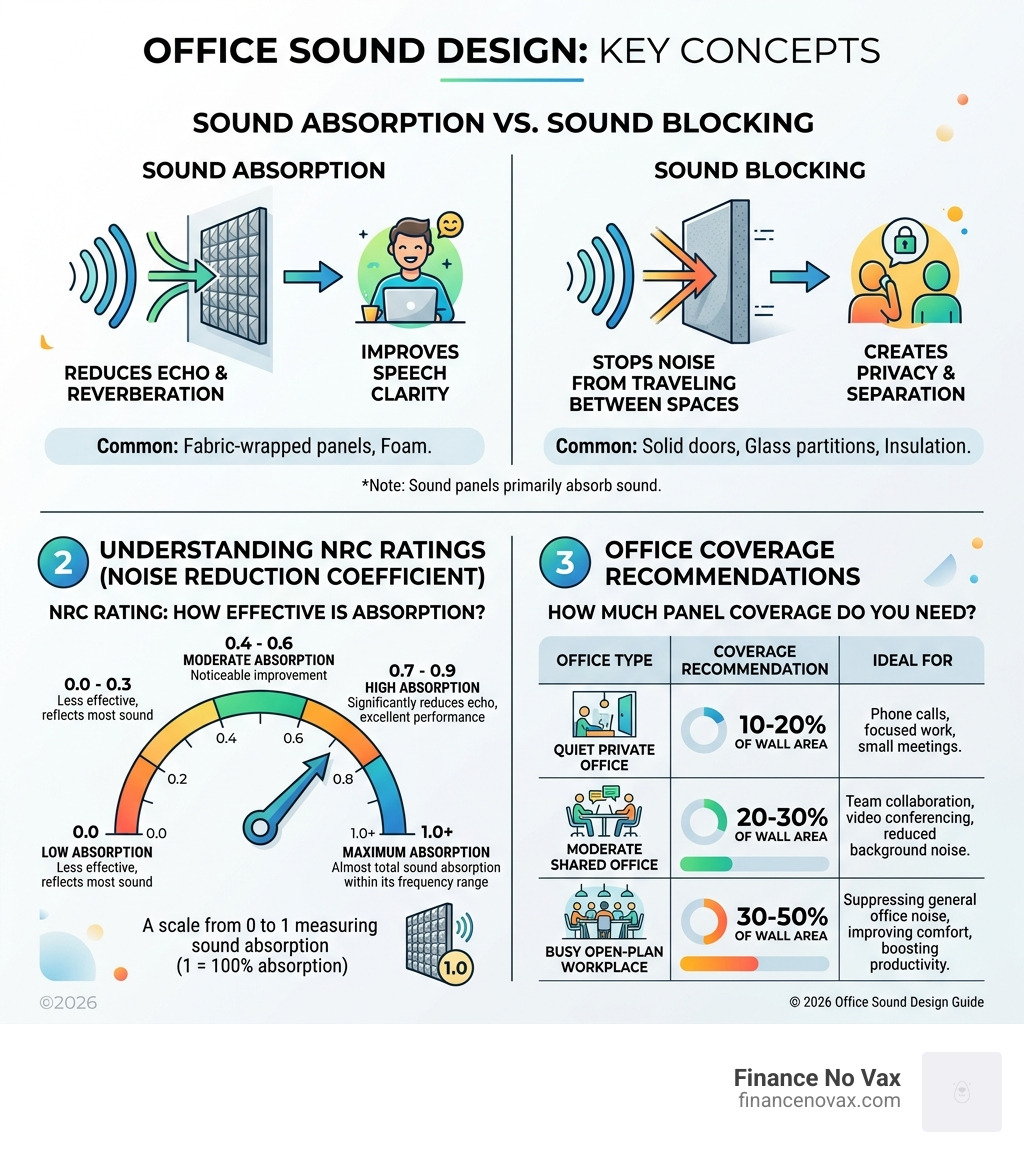
Quick look at sound panels for office:
How Sound Panels for Office Work to Boost Productivity
To understand why your office feels so loud, we have to look at how sound behaves. When you speak or type, sound waves travel until they hit a surface. In a typical modern office filled with glass, gypsum walls, and concrete, those waves bounce back. This is called reflection, and it leads to that “cavernous” echo that makes it hard to concentrate.
Sound panels for office use work by trapping that acoustic energy. Instead of letting the sound wave bounce back into the room, the porous material of the panel allows the wave to enter. Once inside, the fibers of the panel vibrate, converting the acoustic energy into a tiny amount of kinetic energy and, eventually, heat. It sounds like science fiction, but it’s just physics!
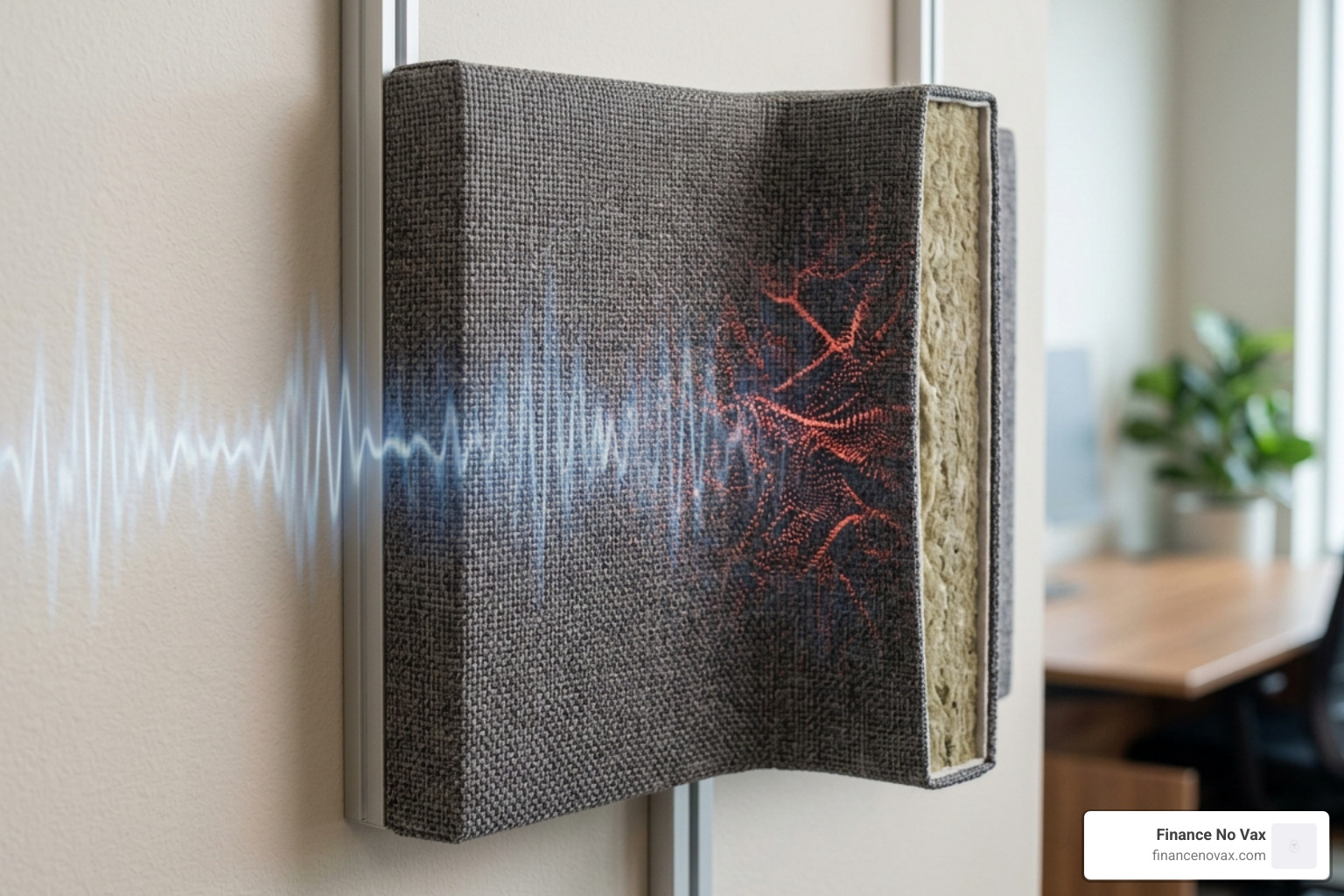
Understanding NRC Ratings and Reverb Time
When shopping for panels, you’ll see a number called the NRC (Noise Reduction Coefficient). This is a scale from 0 to 1. A panel with an NRC of 0.85 absorbs 80% of the sound that hits it. For a productive workspace, we generally aim to reduce the “reverb time”—the time it takes for a sound to fade away—to between 0.5 and 0.7 seconds. Anything higher, and speech starts to sound muddy and distracting.
By improving speech intelligibility, you aren’t just making the room quieter; you’re making it easier for the brain to process information. For a deeper dive into the science, check out everything you need to know about office acoustic panels and see how these treatments fit into broader office soundproofing solutions for a productive workplace.
Popular Types of Sound Panels for Office Environments
Not all panels are created equal. Depending on whether you’re treating a high-end boardroom or a home-based call center, your choice of material matters.
- Fabric-Wrapped Panels: These are the gold standard for professional offices. They usually feature a rigid core made of mineral wool or glass wool, wrapped in acoustically transparent fabric. They offer high NRC ratings (often 0.90 or higher) and look like high-end wall art.
- Acoustic Foam: This is the most budget-friendly option. It’s lightweight and often features a wedge or pyramid pattern. While great for home offices, it’s less durable and has lower fire resistance than professional-grade materials.
- Polyester Felt: A rising star in April 2026 office design. These panels are often made from recycled plastic bottles (up to 50% post-consumer content). They are slim, can be cut into intricate shapes, and come in vibrant colors.
- Glass Wool and Mineral Wool: These are high-performance materials used in heavy-duty absorption. They are excellent for larger spaces but must be properly encapsulated in fabric.
For those looking to combine style and function, options like the 3D Cubes Acoustic Wall Panel by UPLIFT Desk add a geometric texture to the room while absorbing 80% of background noise. If you prefer a softer look, the Circular Acoustic Wall Panel by UPLIFT Desk provides excellent coverage without the sharp corners of traditional panels. For those setting up a dedicated recording or podcasting space within their office, we recommend looking at studio acoustic panel sets for serious sound dampening.
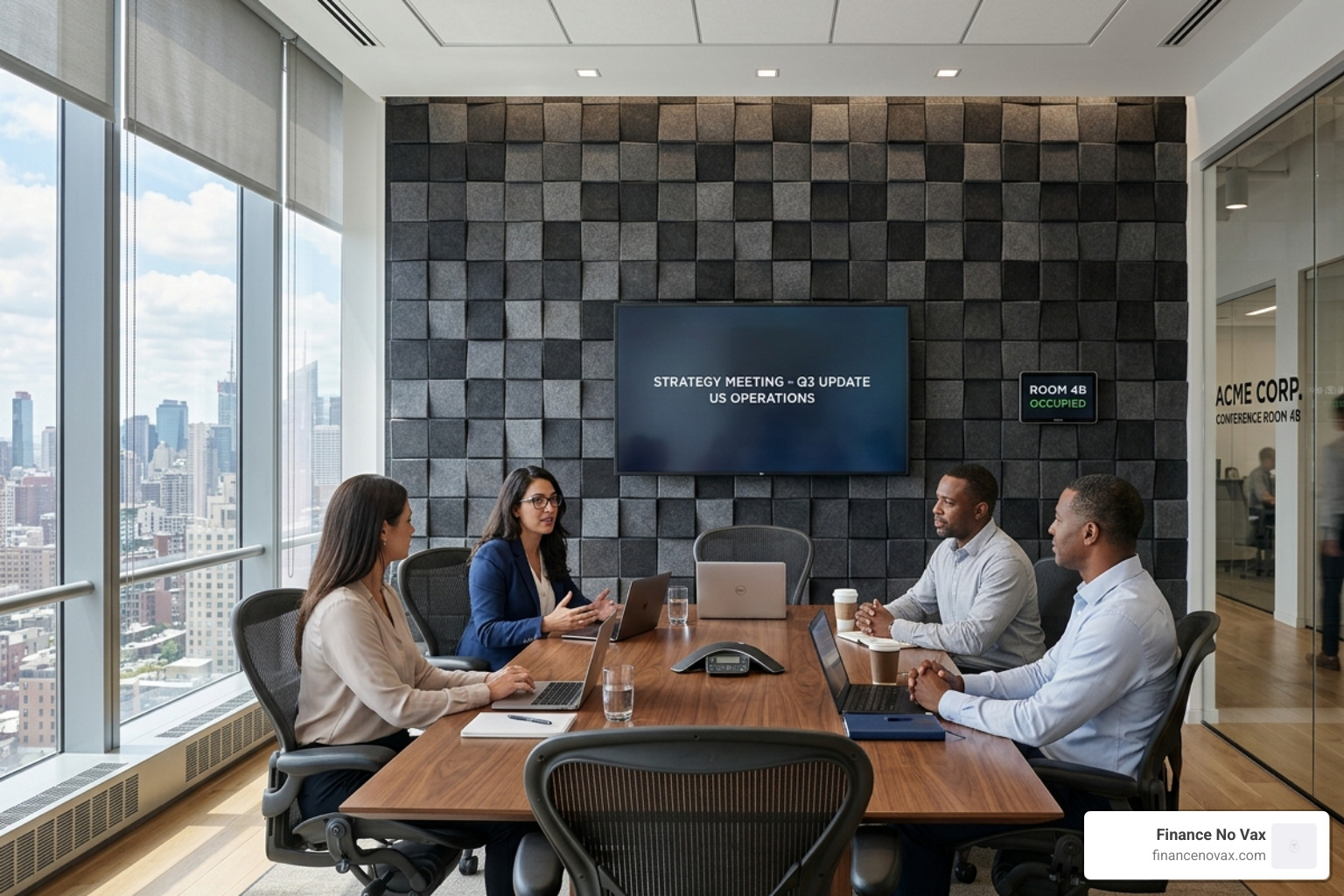
Freestanding and Modular Sound Panels for Office Privacy
In an open-plan office, wall panels might not be enough. This is where freestanding and modular panels shine. These portable partitions allow us to define spaces and create “zones” without building permanent walls.
Modular systems like the EchoDeco Villa Wall use universal hinges to create flexible configurations. They provide both acoustic absorption and visual privacy, which is essential for reducing the “fishbowl” effect in modern workplaces. If the noise level is still too high for confidential calls, you might consider top-rated meeting pods and phone booths as a more robust alternative.
Decorative and Art-Focused Sound Panels for Office Decor
Gone are the days when acoustic treatment meant ugly gray foam. Today, you can get panels that double as custom art or even bulletin boards. Since many acoustic fabrics are “tackable,” you can pin notes and photos directly onto your rectangular wall panels. This dual-purpose design is perfect for smaller desks where space is at a premium. You can find more creative ideas in our guide on home office desk soundproofing tools.
How to Select and Install the Best Acoustic Treatment
Choosing the right sound panels for office use involves more than just picking a color. You need to consider the “Three Fs”: Function, Fit, and Fire Safety.
- Function: Are you trying to stop an echo in a conference room or block the sound of a printer? High-performance panels made from 6 lb glass wool are better for heavy-duty absorption.
- Fit: Measure your wall space. A few small panels won’t do much in a 1,000-square-foot room.
- Fire Ratings: In commercial buildings, safety is non-negotiable. Always look for Class A or Class 1 fire-rated materials. These have been tested for low flame spread and smoke development.
Installation is surprisingly straightforward. Most wall panels use “impaling clips”—small metal plates with spikes that you screw into the wall, allowing you to simply press the panel into place. For a less permanent solution, heavy-duty adhesive strips or Z-clips work well. If you want to do it yourself, we have a step-by-step guide on how to install acoustic wall panels like a sound engineer.
For very large spaces (up to 10,000 sq ft), professional packages like the Broadway Control Cube and Broadband Absorber sets provide a comprehensive solution that includes all the mounting hardware needed for a massive installation.
Calculating Coverage for Your Sound Panels for Office Space
The biggest mistake people make is under-treating their space. One or two panels in a large room is like trying to dry a flooded basement with a single paper towel.
| Office Type | Recommended Wall Coverage | Recommended Ceiling Coverage |
|---|---|---|
| Standard Private Office | 15% – 20% | Optional |
| Conference/Meeting Room | 20% – 25% | 25% (Clouds/Baffles) |
| Open Plan / Call Center | 25% – 30% | 35% + Baffles |
| Home Office | 15% | Optional |
Placement Strategy:
- Reflection Points: Place panels where sound hits first—usually at “face level” (3 to 6 feet from the floor) on the walls directly opposite where people sit.
- Ceiling Clouds: In rooms with high ceilings, hanging “clouds” or baffles is incredibly effective because both sides of the panel are exposed to sound waves, doubling the absorption surface.
- Symmetry: Try to distribute panels evenly across the room rather than bunching them all on one wall.
For those working from home, calculating coverage is a bit simpler, as you can focus on the area immediately around your desk. Check out the definitive guide to a soundproof home office setup for more tailored advice.
Frequently Asked Questions about Office Soundproofing
Do acoustic panels block noise from other rooms?
This is the most common misconception. Acoustic panels are for absorption, not blocking. They stop the “echo” inside your room, but they won’t stop your neighbor’s loud music from coming through the wall. To block sound, you need mass and “transmission loss” products like top-rated acoustic doors or specialized wall barriers.
Are sound panels for office use worth the investment?
Absolutely. The ROI (Return on Investment) comes in the form of reduced stress and higher focus. When employees don’t have to fight against background noise, they finish tasks faster and with fewer errors. In an era where workplace wellness is a priority, acoustic comfort is just as important as ergonomic chairs. If you’re looking for total silence, you might even consider soundproof booths for your home office.
What is the best material for office sound absorption?
For general office use, fabric-wrapped mineral wool offers the best balance of performance and aesthetics. However, if you are looking for sustainability, recycled polyester felt is an excellent choice. For high-moisture areas or specific industrial looks, melamine foam (like WILLTEC) is Class 1 fire-rated and highly effective. You can compare more options in our article on top soundproof office treatments.
Conclusion
Creating a quiet, productive environment doesn’t have to be an expensive headache. By strategically placing sound panels for office use, we can transform a chaotic echo chamber into a sanctuary of focus. Whether you opt for sleek 3D wall art, portable privacy dividers, or high-performance ceiling baffles, the result is the same: a workplace where you can actually hear yourself think.
At Finance No Vax, we believe that workplace wellness starts with the environment. Investing in acoustic comfort is an investment in your team’s mental health and your company’s bottom line. Ready to silence the noise? Start by assessing your room’s reflection points today!
For more tips on optimizing your workspace, visit us at https://financenovax.com/.
