
Curtains That Block Out Light and Noise for the Ultimate Bedroom
Why Soundproof Blackout Curtains Are the Smartest Upgrade for Your Bedroom (or Home Office)
Soundproof blackout curtains are thick, multi-layer window treatments designed to do two jobs at once: block outside noise and eliminate light. They’re one of the most practical and affordable ways to create a quieter, darker space — whether that’s a bedroom, nursery, or home office.
Quick answer: What do soundproof blackout curtains do?
| Feature | What to Expect |
|---|---|
| Noise reduction | 5–21 dB depending on material and fit |
| Light blocking | 90%–100% blackout |
| Thermal insulation | Up to 9–12°F temperature difference |
| Best materials | Velvet, linen, heavyweight polyester |
| Installation | Grommet, rod pocket, pinch pleat |
| Price range | ~$30 to $200+ per panel |
If you work from home, you already know the problem. Traffic rumble bleeds through your windows. A neighbor’s lawnmower kills your focus. Afternoon sunlight turns your monitor into a mirror.
Standard curtains don’t fix this. They’re too thin and too short to create a real seal.
Soundproof blackout curtains are different. The best ones use multiple dense layers — including sound-absorbing felt and specialized barrier materials — to muffle noise and block every photon of light. Some products tested in independent reviews reduced sound by up to 10 decibels, while premium made-to-measure options claim up to 21 dB of noise reduction.
They also help with energy bills by insulating your windows against heat and cold. That’s three problems solved with one product.
Below, we’ll walk you through exactly how they work, what to look for, how to measure and install them correctly, and how to keep them performing well over time.
Soundproof blackout curtains terms to learn:
Understanding the Science of Soundproof Blackout Curtains
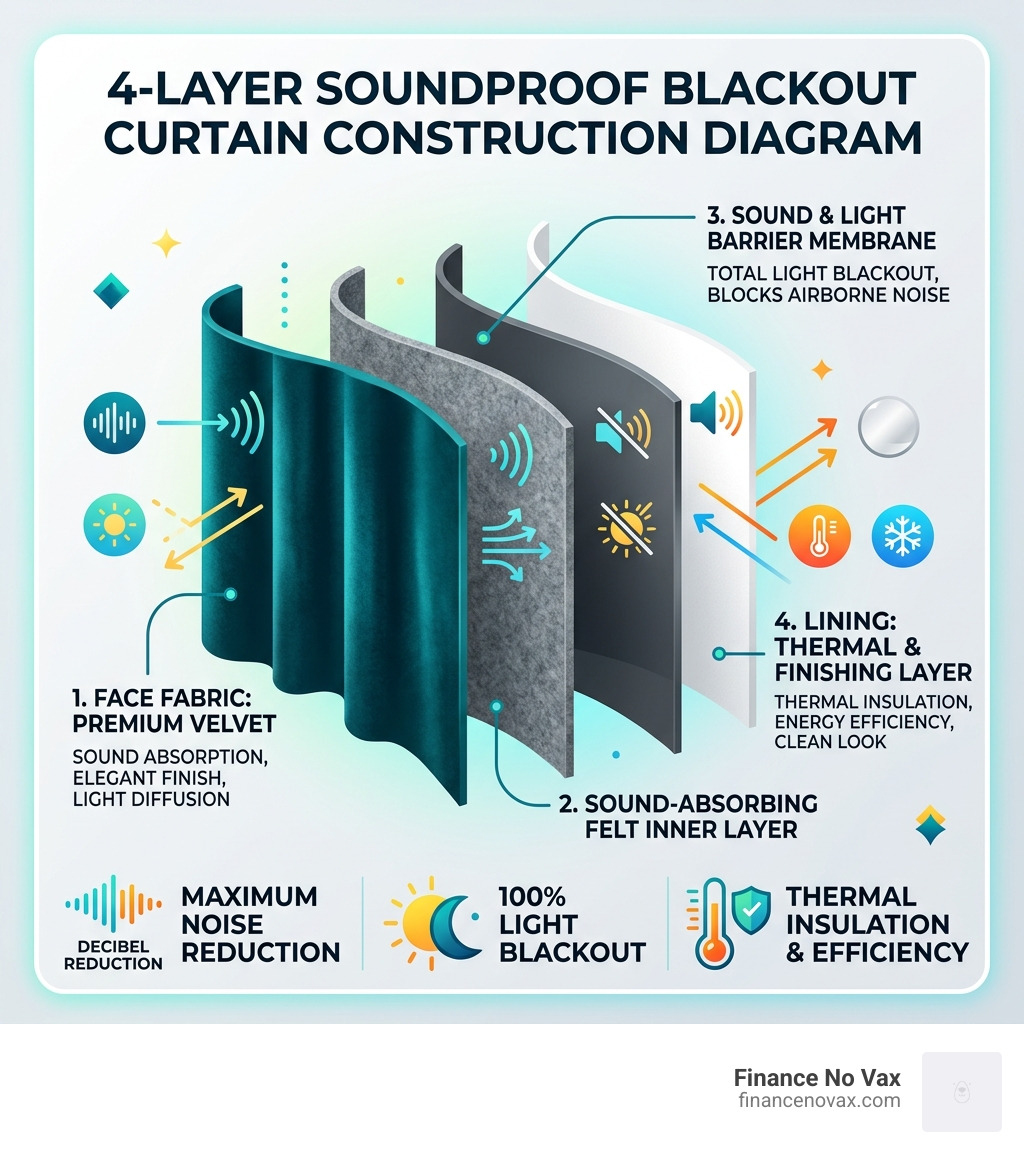
When we talk about “soundproofing” a window with fabric, we aren’t suggesting that a piece of cloth can turn your bedroom into a vacuum-sealed NASA chamber. However, as of April 2026, the technology behind these textiles has advanced significantly. Modern soundproof blackout curtains are engineering marvels that utilize a 4-layer construction to tackle different types of noise.
The secret lies in the density and the specific arrangement of materials. A typical high-performance curtain, like the Moonlit 4 Layers Heavyweight Soundproof Thermal 100% Blackout Velvet C , features a face fabric, a sound-absorbing sponge felt, a specialized barrier layer, and a final lining.
The sponge felt is particularly effective at dampening echoes and mid-frequency sounds, while the barrier layer — often made from melt-blown fabric similar to what is used in high-grade protective masks — acts as a micro-barrier against drafts and high-pitched traffic hiss. In the industry, we look at the Sound Transmission Class (STC) and the sound absorption index. A high-quality lining can have a sound absorption index of 0.88, which is considered exceptional for residential window treatments.
By combining these layers, these curtains can achieve a decibel reduction of up to 15 to 21 dB. To put that in perspective, a 10 dB reduction is often perceived by the human ear as a 50% decrease in loudness. While they won’t stop the structural vibration of a jackhammer outside your door, they will turn the annoying “vroom” of passing cars into a distant, ignorable murmur. For more tips on making your living space a sanctuary, check out our guide on how to silence your apartment with these top window solutions.
How to Select the Right Materials for Acoustic Performance
Not all fabrics are created equal when it comes to blocking sound. If you’ve ever tried to quiet a room by hanging a thin cotton sheet, you know that weight matters. For the best acoustic performance, we recommend looking for materials with high density, measured in grams per square meter (g/m2).

Here are the heavy hitters in soundproof blackout curtains:
- Luxury Velvet: Velvet is naturally dense and fibrous, making it a champion at sound absorption. Options like the Quinn 4 Layers OEKO Heavyweight Soundproof Thermal 100% Blackout Velve often weigh around 935g/m2. The “fuzz” on velvet helps trap sound waves before they can bounce around your room.
- Heavyweight Linen-Look Polyester: If you prefer a more organic, textured aesthetic, linen-look curtains offer a sophisticated vibe without the maintenance of real flax. The Florence 4 Layers OEKO Heavyweight Soundproof Thermal 100% Blackout Wo provides a weight of 905g/m2 and uses a woven texture that looks like high-end linen but performs like a high-tech shield.
- Industrial-Grade Polyester: Some of the most effective curtains, like the Matilda 99% Blackout Soundproof Thermal Custom Curtain | Dolcewe , boast an ultra-thick 1200g/m2 density. This level of mass is essential for blocking lower-frequency noises like the rumble of a bus or a train.
When choosing your material, “more is more.” A curtain that weighs 8 pounds will always outperform a 2-pound alternative. If you’re curious about other ways to reinforce your windows, you might find our article on how to block outside noise with window panels helpful.
Step-by-Step: Measuring and Installing for Maximum Silence
The most expensive soundproof blackout curtains in the world won’t work if they are installed incorrectly. Noise is like water; it will find any gap or “leak” and pour right through. To get that elusive 100% blackout and 21 dB reduction, you need to create a tight seal around the entire window frame.
Choosing Your Header Style
The “header” is how the curtain attaches to the rod. Some styles are better for noise than others.
| Header Style | Soundproofing Effectiveness | Why? |
|---|---|---|
| Rod Pocket | High | Creates the tightest seal at the top; no gaps for light or sound. |
| Back Tab | High | Similar to rod pocket, it pulls the fabric close to the rod. |
| Pinch Pleat | Medium-High | Great for a tailored look; use with a wraparound rod for best results. |
| Grommet | Medium | The metal rings leave small gaps where light and sound can “leak” through. |
The Golden Rules of Installation
- The 2x Fullness Rule: Never buy curtains that are exactly the width of your window. For proper sound absorption, the fabric needs to have folds and undulations. We recommend a width that is at least 2 times (2x) the width of your rod.
- The Overlap Rule: Extend your curtain rod 4 to 12 inches beyond the window frame on each side. This prevents sound from wrapping around the edges of the fabric.
- The Height Rule: Mount your rod 4 to 8 inches above the window frame. Better yet, go floor-to-ceiling to eliminate gaps entirely.
- Heavy-Duty Hardware: Because these curtains can weigh 10 pounds or more per panel, standard tension rods won’t cut it. Use a sturdy rod and ensure it is secured into wall studs or used with heavy-duty anchors.
For those looking for even more ways to dampen the racket, our DIY guide to soundproof window inserts offers some great supplementary solutions.
Measuring Your Windows for Soundproof Blackout Curtains
Measuring for custom curtains can feel intimidating, but it’s the only way to ensure a perfect fit. Here is our simple process:
- Width: Measure the width of your curtain rod (not the window). Multiply that number by 2 for “fullness.” If you have a 50-inch rod, you want 100 inches of total curtain width.
- Length (The Drop): Decide where you want the curtains to end.
- Hover: About 1 inch above the floor. This is a clean, modern look and makes vacuuming easier.
- Puddle: About 3 inches of extra fabric resting on the floor. This is the best option for soundproofing because it creates a literal seal at the bottom of the window, preventing noise from “leaking” under the curtain.
- Stacking Width: When the curtains are open, the fabric will take up space on the sides. This is usually about 20% of the ordered width. If you want to see your entire window when the curtains are open, make sure your rod extends far enough past the frame.
Custom options like the Zoe 4 Layers Linen Look Heavyweight Soundproof Thermal 100% Blackout C allow you to specify these measurements down to the inch, ensuring you don’t have a “plastic curtain” look but rather a high-end, designer finish.
Maintenance Tips for Multi-Layered Window Treatments
Because soundproof blackout curtains are made of multiple layers and specialized materials, you can’t just toss them in the wash with your jeans. Proper care ensures the internal acoustic layers don’t bunch up or lose their effectiveness.
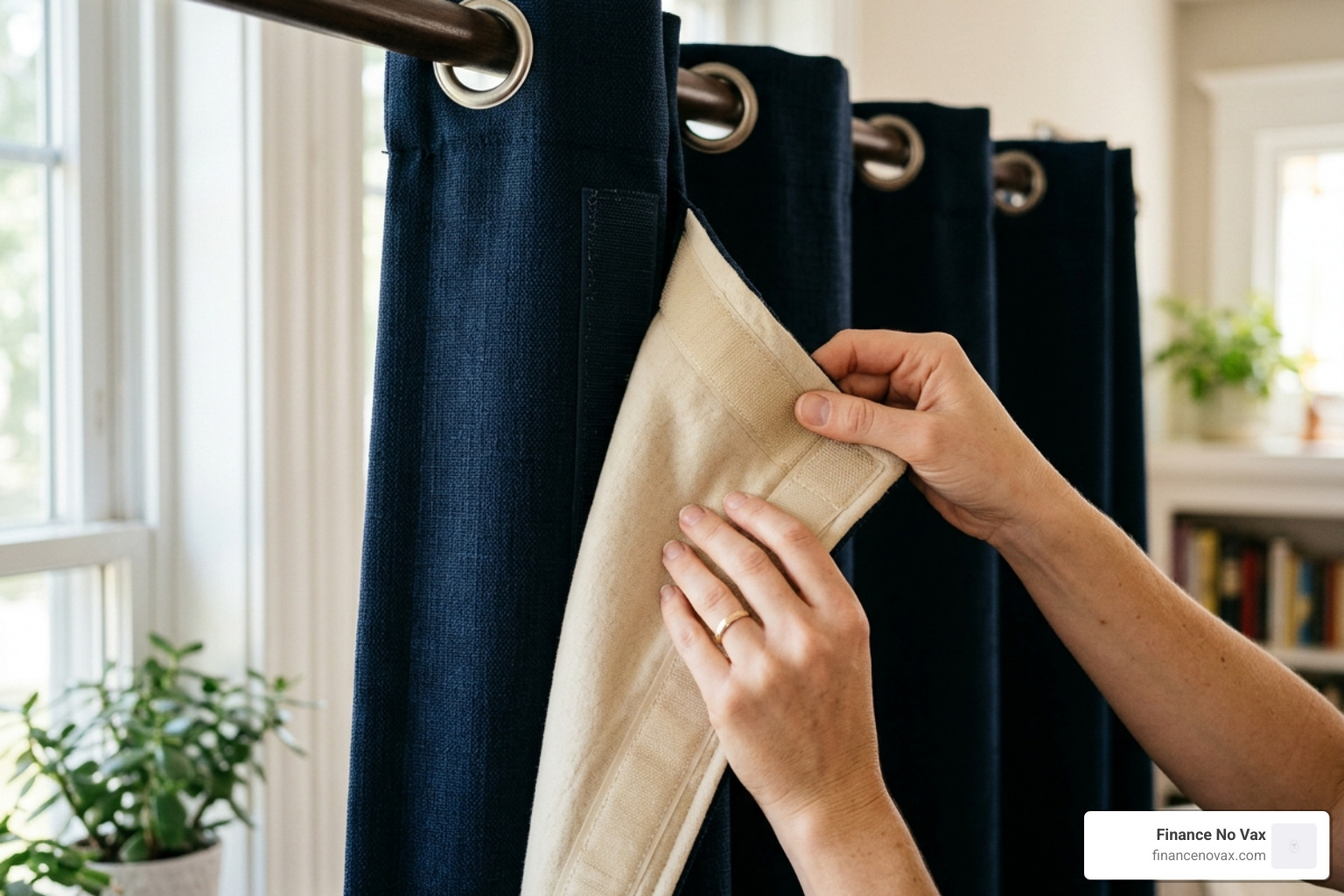
- Detachable Liners: Many premium curtains, such as the Kensington 4 Layers OEKO Heavyweight Soundproof Thermal 100% Blackout , feature a detachable felt liner. Always remove this liner before washing the face fabric. The felt is the “engine” of the soundproofing and can be damaged by heavy agitation.
- Washing: Use a gentle cycle with cold water and a mild detergent. Avoid bleach at all costs, as it can break down the fibers of the blackout and thermal layers.
- Drying: Air drying is always the safest bet. If you must use a dryer, use the lowest heat setting possible. High heat can melt the specialized barrier layers or cause the fabric to shrink unevenly.
- Wrinkle Removal: Instead of a traditional iron, we recommend using a low-heat garment steamer while the curtains are hanging. This allows you to smooth out the fabric without putting direct pressure on the internal layers.
- Daily Maintenance: A quick vacuum with a soft brush attachment once a month will keep dust and allergens from settling into the heavy fabric.
If you’re using more temporary setups, you might want to read about how to block the blah with temporary window sound blockers.
Frequently Asked Questions about Soundproof Blackout Curtains
We get a lot of questions about whether these curtains are actually worth the investment. Here are the facts based on our research and testing as of April 2026.
Can Soundproof Blackout Curtains Completely Eliminate Noise?
The short answer is: No. No fabric can completely silence a drum set next door or the vibration of a subway train. Soundproof blackout curtains are designed for “airborne” noise — things like voices, sirens, and wind. They are excellent at reducing ambient noise and muffling the “sharpness” of outside sounds.
Think of them as a “mute button” for your windows rather than a “delete button.” They also significantly reduce echoes within a room, which is why they are a favorite for home theaters and recording studios. If you’re serious about creating a silent home, you can combine curtains with other noise reduction window treatments for a layered defense.
What is the Best Header Style for Noise Blocking?
As mentioned earlier, the Rod Pocket or Back Tab styles are the gold standards for noise reduction. These styles allow the fabric to sit flush against the curtain rod, eliminating the “light leaks” and “noise leaks” that occur with grommets or rings. By creating a tighter seal at the top of the window, you ensure that sound waves can’t simply drift over the top of the treatment. For more insights, see our guide on finding peace with noise cancelling window treatments.
Do they really help with energy bills?
Yes! The same 4-layer barrier that blocks sound also acts as a powerful thermal insulator. In testing, these curtains have shown a temperature difference of up to 9 to 12 degrees Fahrenheit near the window. By trapping a layer of air between the curtain and the glass, they keep your home warmer in the winter and cooler in the summer, reducing the strain on your HVAC system.
Are they safe for nurseries?
Absolutely. Many of the top-rated curtains are OEKO-TEX certified, meaning they are free from harmful chemicals and “factory smells.” Some even include an air-purifying layer that acts as a micro-barrier against external dust and allergens.
Conclusion
In April 2026, the quest for a perfect night’s sleep doesn’t have to involve expensive construction or moving to the countryside. By choosing the right soundproof blackout curtains, you can transform any room into a serene sanctuary. Whether you opt for the luxury of velvet or the clean look of linen, the key is to prioritize weight, density, and a proper seal.
Investing in high-quality window treatments is an investment in your well-being. From restorative sleep to improved concentration in your home office, the benefits of acoustic comfort are hard to overstate. We hope this guide helps you find the perfect balance of style and silence for your home. For more advice on creating the ultimate quiet environment, visit us at Finance No Vax.
