
Shhh! Everything You Need to Know About Sound Deadening Paint
Does Sound Reducing Paint Actually Work? Here’s What You Need to Know
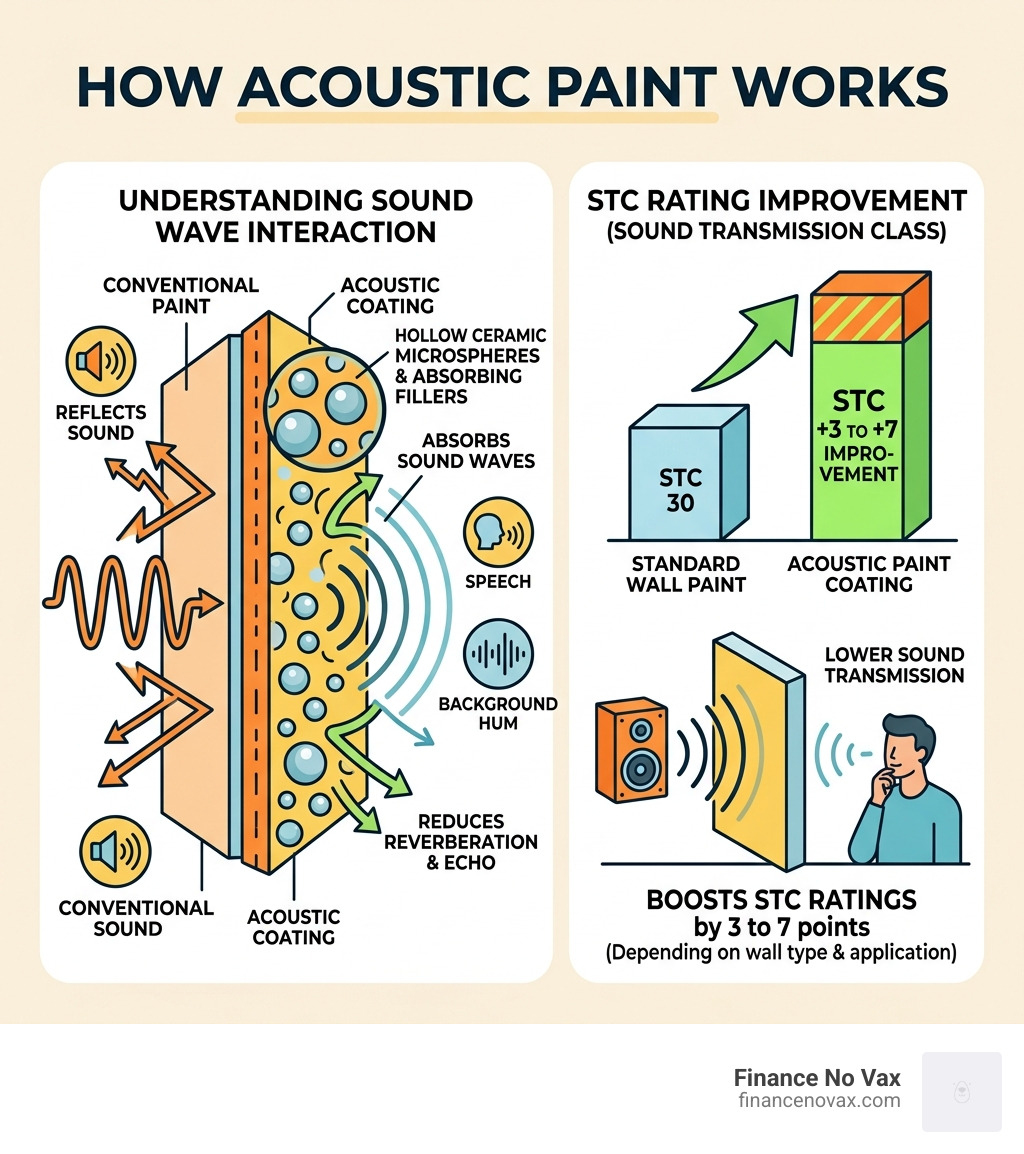
Sound reducing paint is a thick, specially formulated coating that absorbs sound waves and reduces echo within a room. It won’t block all noise from neighbors or traffic, but it can meaningfully cut down on reverberation and background noise inside your space.
Quick answer: What does sound reducing paint do?
- Reduces echo and reverberation inside a room by absorbing sound waves
- Lowers sound transmission and reflection by up to 30% using hollow ceramic microspheres and sound-absorbing fillers
- Improves STC ratings by 3 to 7 points depending on wall construction and number of coats applied
- Best for: mid-range frequencies like speech, background hum, and ringing in metal surfaces
- Not ideal for: blocking loud external noise like traffic, loud neighbors, or bass-heavy sound
If you work from home, you’ve probably noticed how much a noisy environment chips away at your focus. A barking dog down the hall, voices carrying through thin walls, or the hollow echo of an empty room — it all adds up. Sound reducing paint offers a low-effort, relatively affordable way to take the edge off that noise without major renovation.
It’s not magic. But applied correctly, it’s a legitimate tool in your acoustic toolkit.
Sound reducing paint terms explained:
The Science Behind Sound Reducing Paint
To understand how a simple liquid can quiet a room, we have to look at the microscopic level. Standard paint is designed for color and protection, but sound reducing paint is engineered for physics. By the time we reach April 2026, the technology behind these coatings has become incredibly sophisticated, moving far beyond just “thick paint.”
At its core, this paint relies on a process called viscoelastic conversion. When sound waves (which are essentially mechanical vibrations) hit a surface coated with acoustic paint, the material doesn’t just bounce the sound back or let it pass through. Instead, the specialized polymers in the paint convert that mechanical energy into tiny amounts of thermal energy (heat). This heat is so low-grade you’ll never feel it, but the result is a significant drop in noise.
Most high-performance acoustic coatings are water-based latex formulas. They are packed with hollow ceramic microspheres and sound-absorbing resins. These aren’t your average fillers; they are high-performance acoustic polymers designed to create a “resilient” layer on your wall that acts as a buffer against noise.
How Sound Reducing Paint Uses Ceramic Microspheres
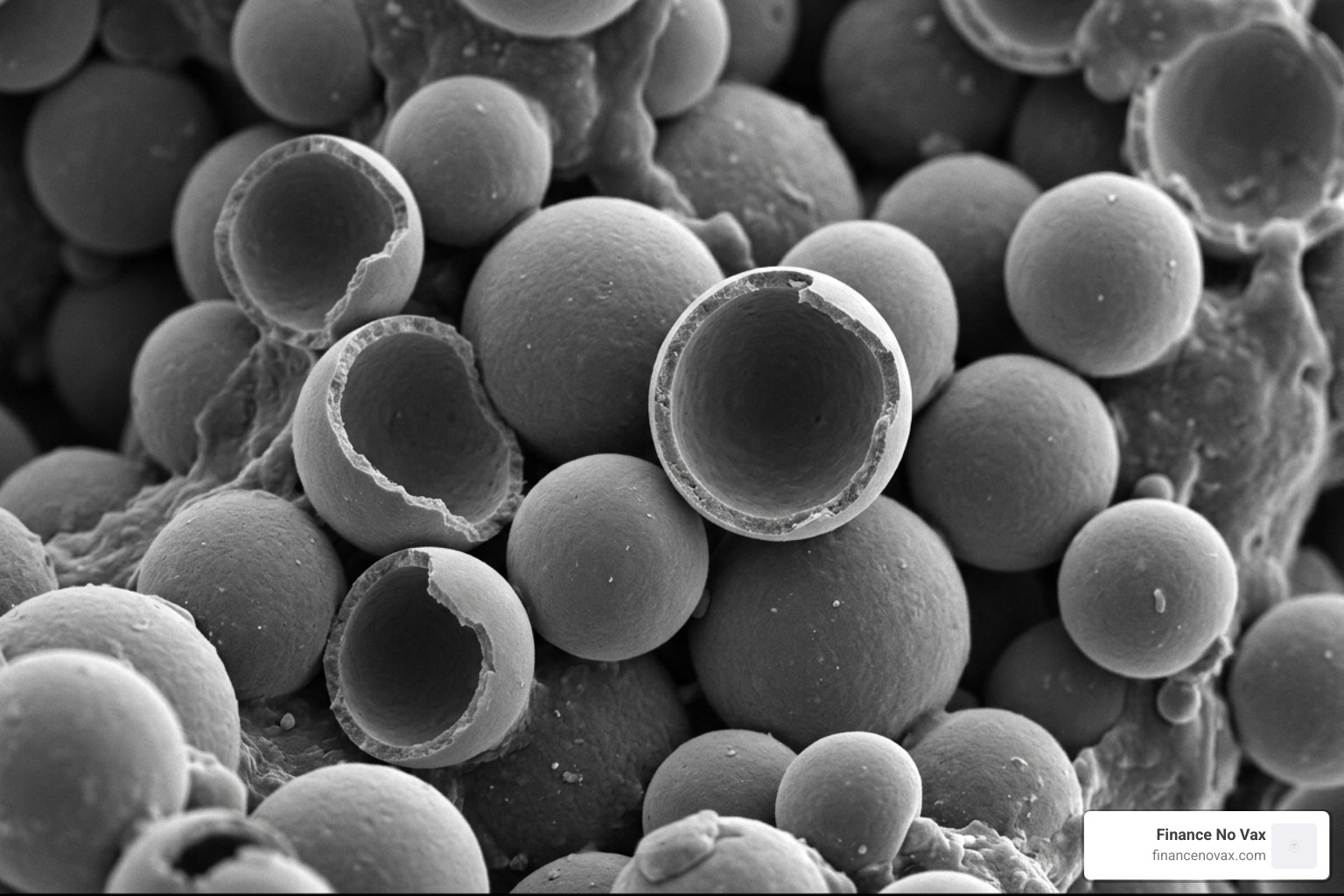
Think of these ceramic microspheres as tiny “vacuum centers.” These microscopic air pockets, sometimes referred to as Thermacels, act like a sound sponge. Just as a thicker sponge can hold more water, a thicker application of these microspheres can absorb more sound.
When sound waves enter the paint layer, they encounter these hollow spheres. The vacuum inside the sphere creates a barrier that sound struggles to cross, forcing the energy to dissipate within the paint’s structure. By combining these spheres with specialized acoustic additives and dense pigment fillers, the paint creates a microscopic landscape of air pockets that trap and muffle sound. This is why we always emphasize that the density and thickness of the application are the most important factors for success.
Understanding the Performance Profile of Sound Reducing Paint
It is important to manage expectations: sound reducing paint is most effective against mid-range frequencies. This includes the typical range of human speech, the hum of a computer fan, or the clatter of a keyboard. It works by improving the wall density and, in some cases, providing a slight decoupling effect for surface vibrations.
By reducing the “bounce” of sound off hard surfaces, these coatings improve speech intelligibility. This makes them a fantastic choice for home offices or conference rooms where you need voices to sound crisp rather than echoey. For a deeper dive into how these coatings change the feel of a room, check out our guide on how to Turn Down The Volume With Acoustic Wall Paint/.
Performance Realities and STC Ratings
When we talk about professional soundproofing, we use the STC (Sound Transmission Class) rating. This is a laboratory-certified measure of how well a partition stops sound from traveling through it. A standard interior wall usually has an STC of around 30 to 33.
Independent lab testing, including tests performed to ASTM E90-09 standards, shows that high-quality sound reducing paint can increase the STC rating of a wall by 3 to 7 points. While a 3-point shift is the minimum required for the human ear to notice a difference, a 7-point jump is quite significant for a liquid application.
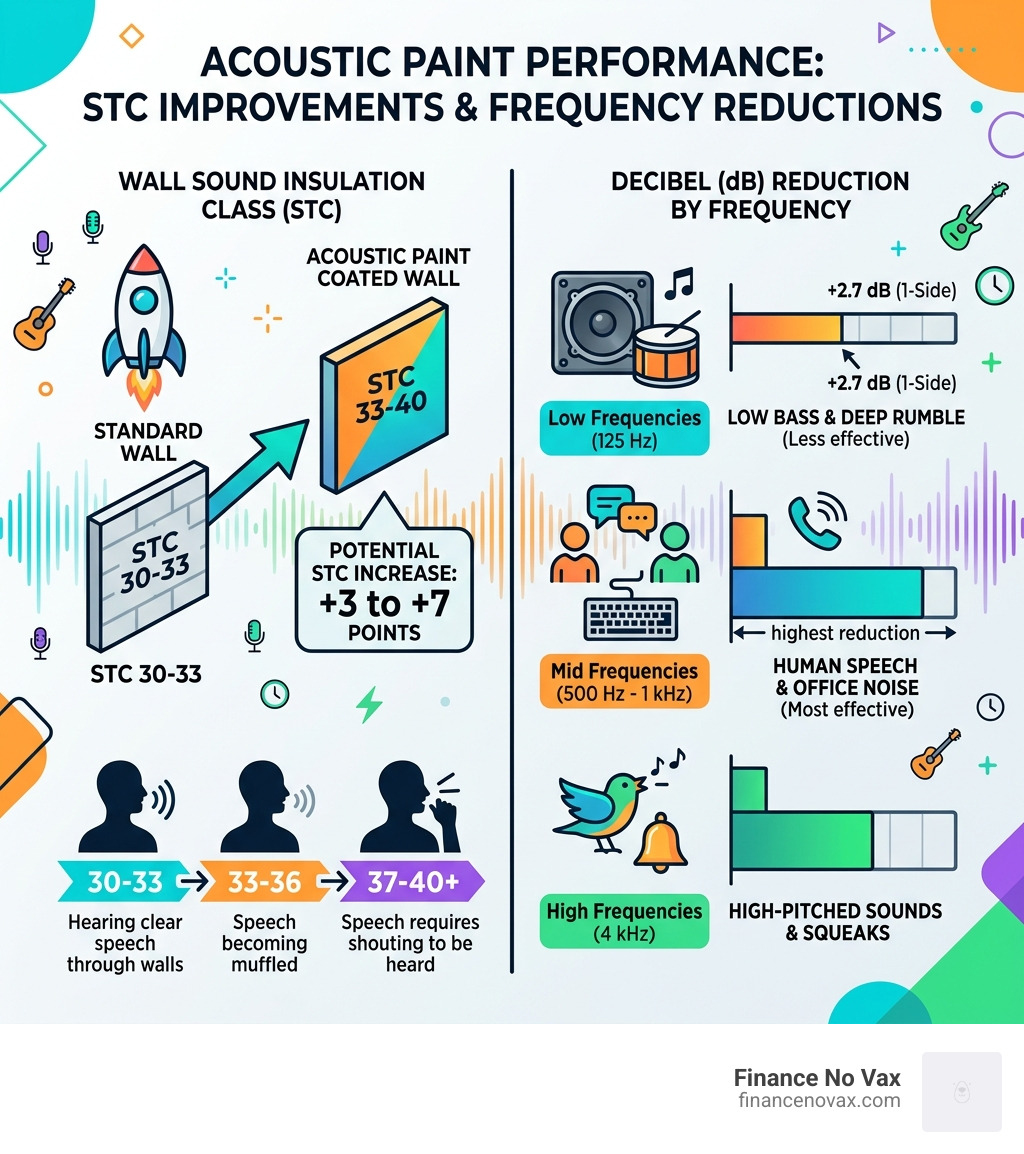
Here is a breakdown of what the data tells us about real-world effectiveness:
| Frequency (Hz) | Improvement (1 Side Coated) | Improvement (2 Sides Coated) |
|---|---|---|
| 125 Hz | +2.7 dB | +2.8 dB |
| 1000 Hz | +2.5 dB | +3.1 dB |
| 4000 Hz | +2.5 dB | +5.0 dB |
| 6300 Hz | +2.2 dB | +4.9 dB |
As you can see, the effectiveness often doubles if you coat both sides of a partition wall. Some specialized industrial products even claim a 50 dB reduction at 100 Hz in specific 1/3 octave bands (tested under TS 140-4 Standards). Generally, you can expect a 30% reduction in sound reflection, which drastically diminishes that “empty hallway” echo.
Application and Coverage Guide
Applying sound reducing paint is not exactly like slapping a coat of eggshell on your bedroom wall. Because the paint is “heavy-bodied”—meaning it’s very thick and full of solids—it requires specific tools and techniques to work effectively.

Preparation and Tools
First, the surface must be clean, dry, and free of any grease or loose debris. If you are painting over old, yellowed acoustical tiles, you must seal them first with pigmented shellac. Without this, the tiles will soak up the moisture from the paint and could actually disintegrate.
For the application itself, you have two main choices:
- Airless Sprayer: This is the preferred method for professional results. We recommend using a 317 tip at a pressure of 1800-2400 psi. This ensures an even, thick membrane without clogging the equipment.
- Roller: If you’re going the DIY route, use a heavy-duty roller with a 3/4″ to 1-3/4″ nap. You want a thick nap to hold a large volume of paint, as you should not spread this paint as thin as regular latex.
The Two-Step Process
Many of the best systems use a two-step approach:
- Base Coat: This is often the “resilient” layer. It creates the nano-membranes that handle the bulk of the sound absorption. We recommend two coats of the base.
- Finish Coat: This is the “mass-building” layer. It provides the final STC boost and gives you a paintable surface. Again, two coats are ideal.
Drying, Curing, and Coverage
Expect a 20-40 minute drying time between coats, though this can vary based on humidity. While the paint might be dry to the touch quickly, the full polymer cure usually takes 24 to 48 hours.
In terms of coverage, sound reducing paint goes quickly because it is applied so thick. One gallon typically covers 40 to 100 square feet for two coats. To achieve the necessary 25-35 mils of dry thickness (about the thickness of a credit card), you really have to be generous with the product. For more on choosing the right product for your square footage, see our article on Acoustic Coating For Walls Benefits And Best Buys/.
Why Choose Sound Reducing Paint for Your Space
You might be wondering: “Why not just hang acoustic panels?” While panels are great, sound reducing paint offers a seamless, aesthetic solution that doesn’t change the look of your room.
Ideal Use Cases
- Home Media Rooms & Studios: It creates a “sound sponge” effect that eliminates echoes and distortions, making it feel like a professional recording environment.
- Hospitals and Schools: These environments often have hard, sterile surfaces that create deafening echoes. Acoustic paint muffles the “clatter” of hallways.
- Metal Structures: If you have metal studs, ductwork, or machinery housings, this paint is excellent for dampening ringing and tinning noises. It converts those metallic vibrations into heat before they can become airborne sound.
- Hiding Defects: Because the paint is so thick and has a slight texture, it’s remarkably good at hiding drywall joints, dings, and minor dents.
Aesthetic Integration
Unlike bulky foam wedges, you can tint most sound-deadening paints to light pastel colors or muted shades. While you generally can’t get deep, dark colors due to the high pigment and microsphere content, you can easily match a neutral interior design. It’s a “hidden” soundproofing solution.
Frequently Asked Questions about Noise Control Coatings
Can sound reducing paint be painted over or tinted?
Yes, but with caveats. Most acoustic paints can be tinted locally at your paint store to light pastel shades. We recommend using half the usual amount of tint initially to see how the color develops.
As for painting over it, you can apply a standard latex topcoat if you want a specific color or sheen. However, keep in mind that adding too many layers of heavy, non-acoustic paint on top might slightly reduce the sound-absorbing properties of the microspheres underneath.
Does it work on exterior noise like traffic or neighbors?
This is the most common misconception. Sound reducing paint is primarily designed for interior sound absorption and reducing echo. It is excellent at stopping structure-borne vibrations (like a humming machine) and mid-range airborne noise (like speech).
However, it will not “block” the roar of a freeway or the heavy thumping of a neighbor’s subwoofer. Those sounds require significant mass (like mass-loaded vinyl) or decoupling the wall itself. Think of the paint as a tool to make the inside of your room quieter and clearer, rather than a shield against the outside world.
Is soundproof paint environmentally friendly and safe?
Most modern formulas are very safe. They are typically water-based, non-toxic, and low-VOC, meaning they don’t have that harsh chemical smell that lingers for weeks.
Safety-wise, these products often carry a Class A Fire Retardant rating. For example, some tested coatings show a Flame Spread of 15 and Smoke Developed rating of 10, making them compliant with strict building codes for hospitals and schools. Many are also resistant to mold and mildew, which is a big plus if you’re applying them in basements or older buildings.
Conclusion
At Finance No Vax, we believe that your environment directly impacts your well-being. Investing in sound reducing paint is a smart, long-term move for anyone looking to reclaim their peace and quiet. While it isn’t a “magic bullet” that will silence the world, it is a scientifically proven way to dampen vibrations, kill echoes, and make your home or office feel significantly more solid and serene.
Whether you are looking for a professional-grade spray application or a DIY roller project, the key is in the preparation and the thickness of the coats. When you’re ready to take the next step in your acoustic journey, we’re here to help.
