
Silence is Golden: Your DIY Acoustic Paint Project
Your Room Is Loud — Here’s What a DIY Acoustic Paint Project Can Actually Do
A DIY acoustic paint project involves applying a specially formulated paint — loaded with ceramic microspheres or sound-absorbing particles — to your walls to reduce echo and improve sound clarity in a room.
Quick answer: How to do a DIY acoustic paint project
- Choose your acoustic paint — look for products with ceramic microspheres designed to absorb sound energy
- Prepare your walls — clean, patch holes, and apply primer
- Stir the paint thoroughly — the heavy particles settle fast
- Apply 2–3 thick coats using a heavy-nap roller, allowing full drying between coats
- Test results with a clap test or SPL meter app before and after
Ever sat at your home desk trying to focus while voices, footsteps, and noise bounce off every hard surface around you? That hollow, echoey feeling isn’t just annoying — it kills concentration.
Hard walls reflect sound like a mirror reflects light. Every echo you hear is a sound wave that bounced instead of being absorbed.
Acoustic paint is one of the most low-effort, low-profile ways to fight back. You don’t need to build frames, buy insulation, or rearrange your furniture. You just paint.
That said, it’s important to be honest: acoustic paint is not a magic fix. It works best for reducing flutter echo and high-frequency reflections — not for blocking noise from a neighbor’s TV. Understanding what it can and can’t do will help you use it wisely.
This guide walks you through everything — from the science behind how it works, to step-by-step application, to how it stacks up against DIY panels made from Rockwool or foam.
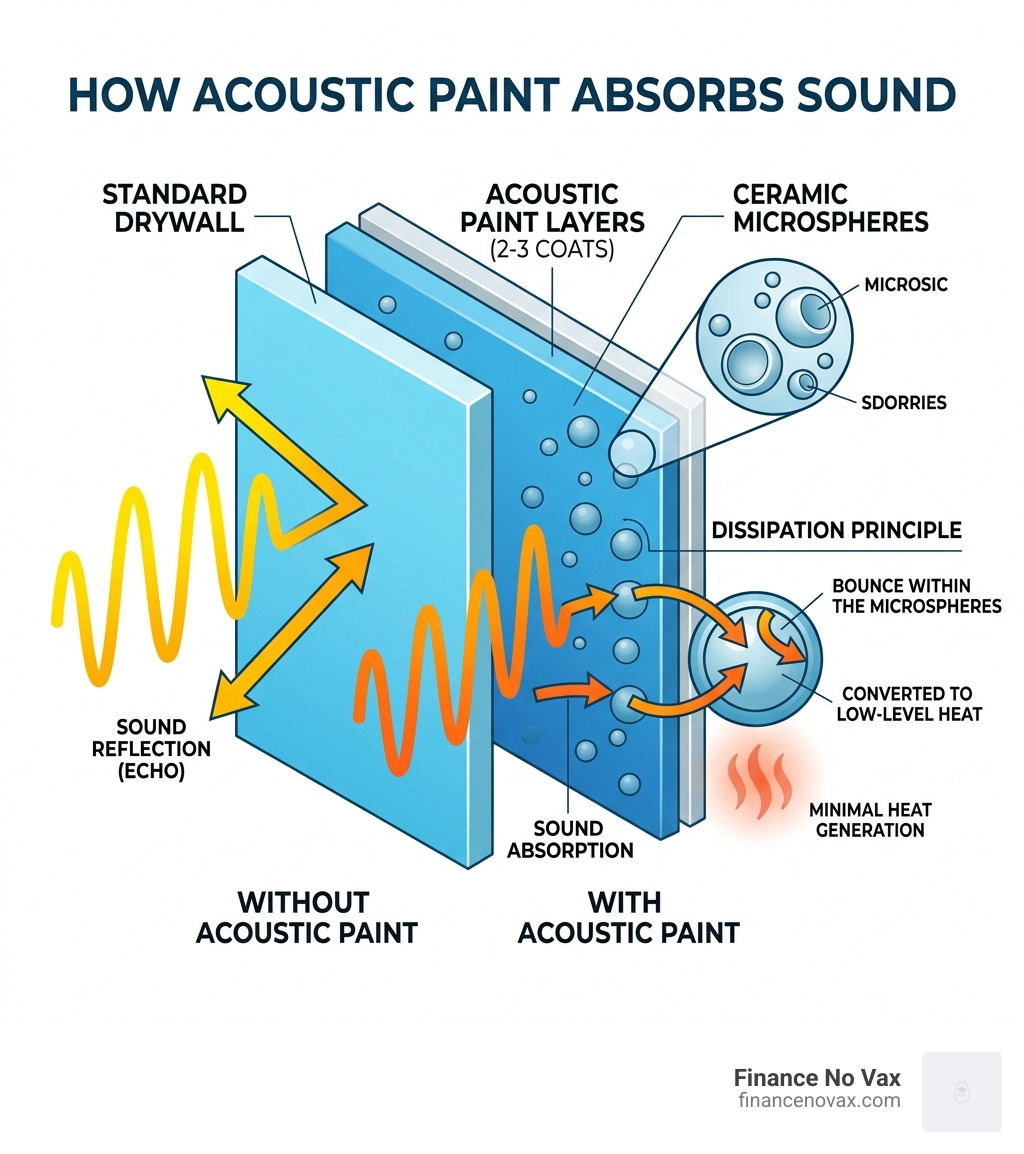
Quick look at diy acoustic paint project:
The Science of Sound: How Acoustic Paint Works
When we talk about a diy acoustic paint project, we aren’t just talking about thick, goopy paint. There is actual physics at play here. Traditional paint creates a hard, flat surface that sound waves love to bounce off of. Acoustic paint, however, is engineered with “ceramic microspheres” and vacuum-filled particles.
Think of these microspheres as tiny, microscopic sponges. When a sound wave hits the wall, instead of bouncing back immediately (creating that annoying flutter echo), the energy is trapped within the texture of the paint. This friction converts a small portion of that sound energy into heat. While it won’t make your wall hot to the touch, it significantly reduces the “brightness” of a room’s acoustics.
By using acoustic wall paint, we are essentially changing the texture of the wall on a molecular level to soften the environment. This is particularly effective for mid-to-high frequency sounds—think of the “pinging” sound of a keyboard or the shrillness of a conference call speaker. For more on the fundamentals, check out The Ultimate Guide To Soundproofing Your Walls.
Understanding NRC vs. STC
In acoustics, two acronyms rule the roost: NRC and STC. Understanding these is vital for any diy acoustic paint project.
- NRC (Noise Reduction Coefficient): This measures how much sound a surface absorbs. It ranges from 0 (perfect reflection) to 1 (perfect absorption). Most acoustic paints have an NRC rating between 0.15 and 0.20 per coat. While that seems small compared to a Rockwool panel (which can hit 1.0), every bit helps in a room with four bare walls.
- STC (Sound Transmission Class): This measures how much sound passes through a wall. This is where many people get confused. Paint adds very little mass to a wall, so its STC rating is negligible. If your goal is to stop hearing your neighbor’s heavy metal music, paint alone won’t do it. You need mass and decoupling for that.
If you are new to these terms, our Category/Soundproofing Basics section has plenty of deep dives to get you up to speed.
Planning Your DIY Acoustic Paint Project
Before you crack open a gallon, you need a plan. A diy acoustic paint project is 70% preparation and 30% application. If you rush the prep, you’ll end up with a bumpy, ineffective mess.
First, identify your target areas. In a home office or theater, you want to treat the “first reflection points”—the spots on the wall where sound travels directly from the source (like your speakers or your mouth) and hits the wall. Identifying these spots is a great way to maximize your budget.
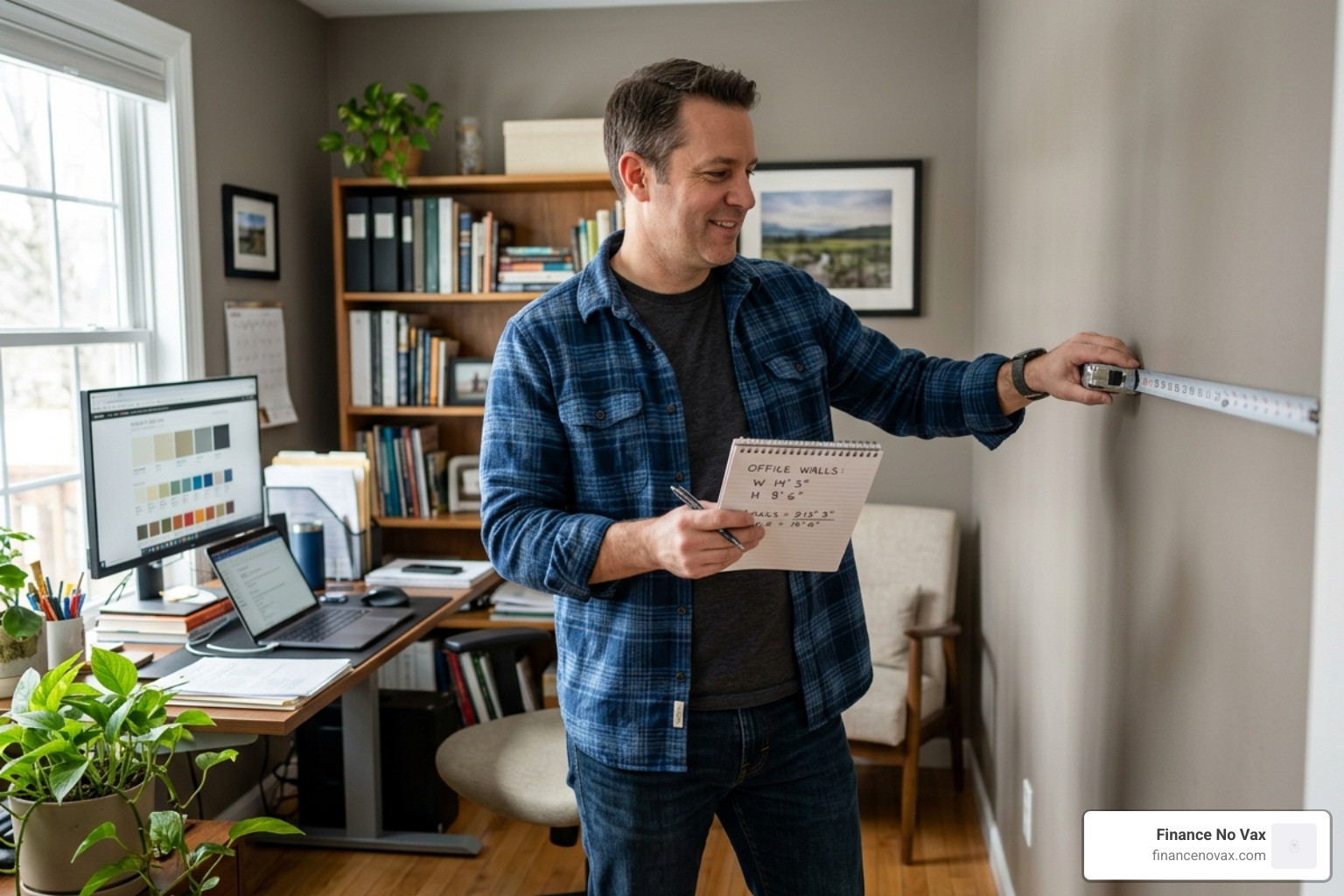
Essential Materials for Your DIY Acoustic Paint Project
To get the job done right, you’ll need more than just a standard brush. Here is our recommended kit:
- Acoustic Paint: Ensure it specifies sound-dampening properties or ceramic microsphere technology.
- Heavy-Nap Roller (1/2″ to 3/4″): You need a thick roller to handle the heavy, textured consistency of the paint.
- High-Quality Primer: Don’t skip this. Acoustic paint is heavy; it needs a good “grip” on the wall.
- Power Stirring Attachment: These paints settle quickly. A hand stick won’t cut it; use a drill-mounted mixer.
- Painter’s Tape and Drop Cloths: Because this paint is thick, it tends to splatter more than standard latex.
For more ideas on setting up your space, see Quiet Please Diy Soundproofing Ideas For Your Workspace and browse our Category/Diy Solutions for more inspiration.
Calculating Coverage and Costs
A common mistake in a diy acoustic paint project is underestimating how much paint you need. Because acoustic paint is thicker and more porous, its coverage is lower than standard paint.
- Typical Coverage: 150–200 square feet per gallon (standard paint is usually 350–400).
- Number of Coats: You need at least two, but three is the “sweet spot” for performance.
- Cost: Expect to pay $60–$100 per gallon for high-quality acoustic coatings.
If you are treating a 10′ x 12′ room (about 350 square feet of wall space after windows/doors), you will likely need 4–5 gallons for a proper three-coat application. This puts your project cost around $300–$500. Compare this to building your own acoustic panels, which can cost under $20 per panel but requires much more labor and tools.
Step-by-Step Application Guide for Maximum Dampening
Now for the fun part. Applying the paint is a bit different than a standard bedroom refresh. You are essentially “building” a sound barrier on your wall.
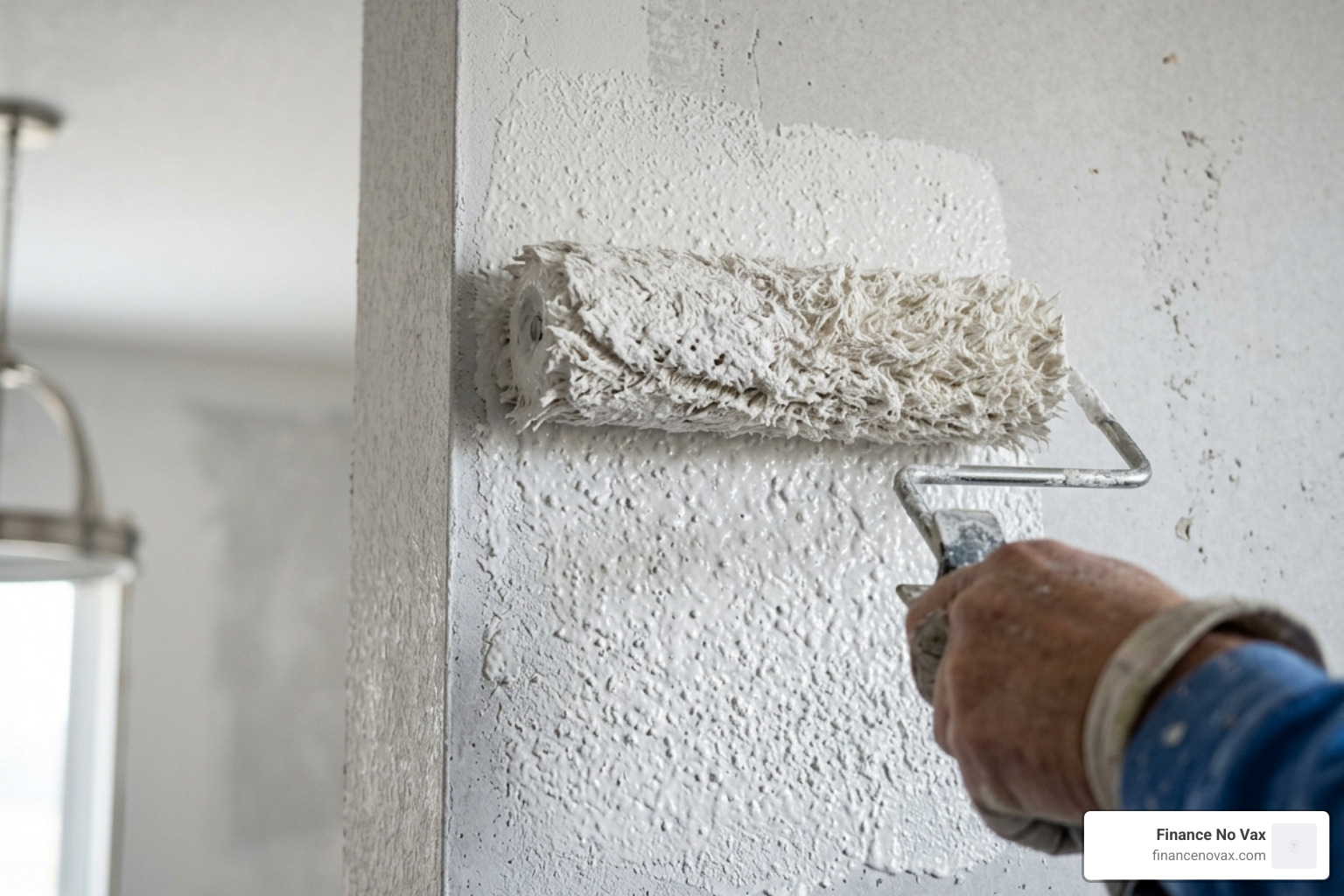
- Clean and Patch: Wipe down walls to remove dust. Use a lightweight spackle to fill any holes. Even small cracks can leak sound (though paint won’t fix structural leaks).
- Masking: Use high-quality tape. Because you’ll be applying thick coats, cheap tape might bleed or get stuck under the heavy paint film.
- Priming: Apply a dedicated primer. This ensures the acoustic particles stay suspended on the surface rather than soaking unevenly into the drywall.
For a deeper look at wall preparation, our Diy Soundproof Panels For Walls A Step By Step Guide offers great tips on surface prep that apply here as well.
Applying the First Coat
When you open the can, you’ll notice the paint looks like thick oatmeal or heavy cream. Stir it for at least 3-5 minutes using your drill attachment. The “magic” particles settle at the bottom during shipping.
Apply the paint in “V” or “W” patterns, then back-roll to ensure even distribution. Don’t try to stretch the paint too far. You want a thick, consistent layer. Let it dry for at least 4–6 hours (check the manufacturer’s label, as some require 24 hours).
Layering for Performance
The performance of your diy acoustic paint project scales with thickness. One coat does almost nothing. Two coats start to take the “edge” off the room. Three coats create the textured density required to actually trap sound waves.
- Texture Build-up: Don’t be alarmed if the wall looks slightly textured. This increased surface area is actually better for breaking up sound reflections.
- Curing: Acoustic paint can take up to 30 days to fully “cure” and reach its maximum density. You might notice the sound quality improving gradually over the first month.
Performance Comparison: Paint vs. Traditional Panels
How does a diy acoustic paint project stack up against other methods? It’s a question of trade-offs.
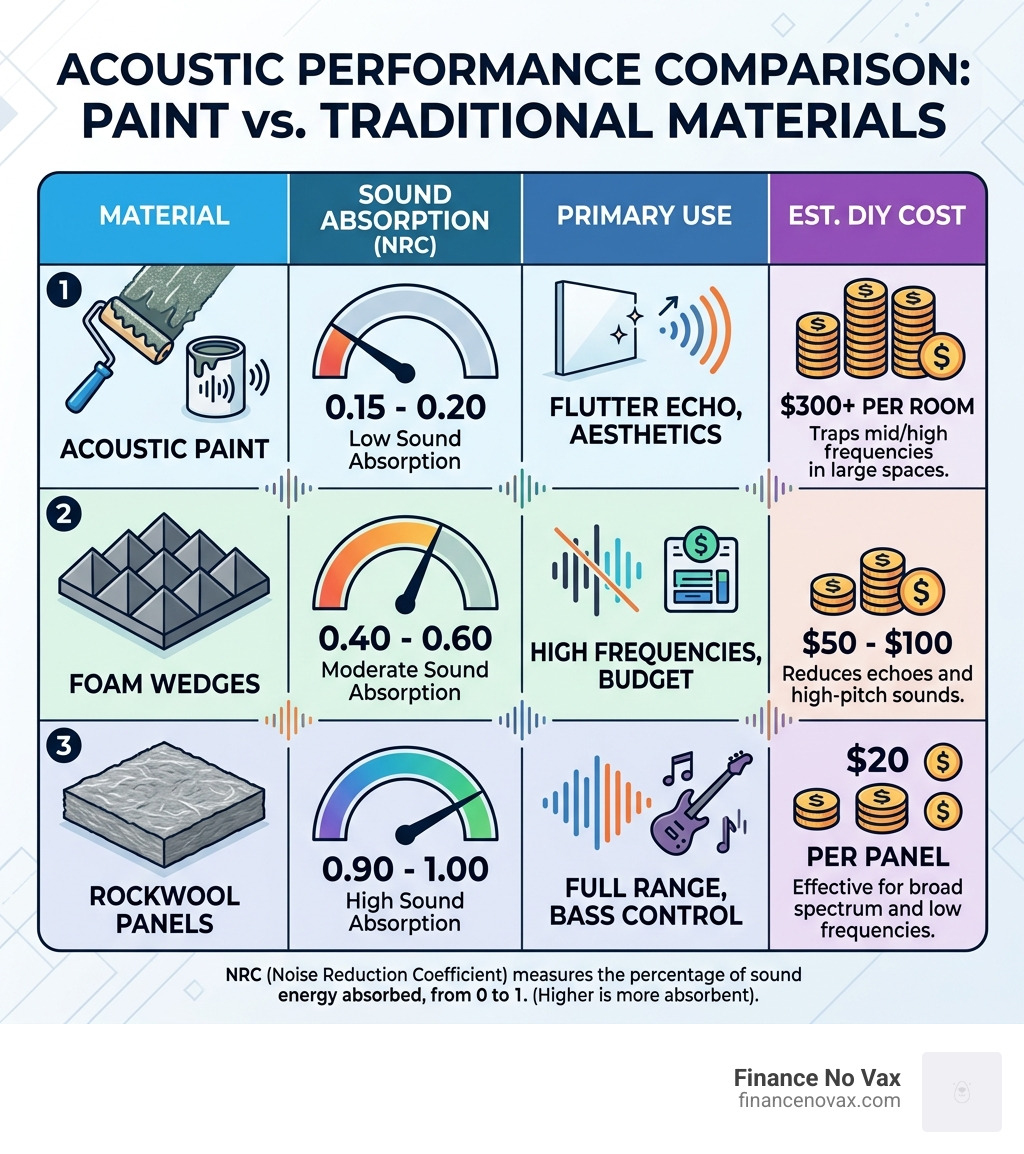
| Material | NRC Rating | Best For | DIY Cost |
|---|---|---|---|
| Acoustic Paint | 0.15 – 0.20 | Flutter echo, aesthetics | $300+ per room |
| Foam Wedges | 0.40 – 0.60 | High frequencies, budget | $50 – $100 |
| Rockwool Panels | 0.90 – 1.00 | Full range, bass control | $20 per panel |
As the data shows, DIY acoustic panels under $20 are vastly superior for pure sound absorption. However, they take up physical space and change the look of the room. Acoustic paint is the “stealth” option. For more on budget options, see The Ultimate Guide To Budget Friendly Soundproofing Panels And Foam.
When to Choose Paint Over Panels
We recommend a diy acoustic paint project when:
- Aesthetics are Priority: You want a normal-looking living room or office without “studio” vibes.
- Small Spaces: In tiny closets or narrow hallways, 2-4 inch thick panels make the space feel claustrophobic.
- High-Frequency Issues: You mainly want to stop the “ringing” sound of a room.
- Rental Constraints: Paint is easier to cover up later than dozens of screw holes from heavy panels.
Measuring Success After Your DIY Acoustic Paint Project
How do you know if it worked? You can use the “Clap Test.” Stand in the center of the room and clap loudly. Listen for the “zing” or echo. After three coats of paint, that zing should be significantly shorter and “darker” in tone.
For a more scientific approach, download an SPL (Sound Pressure Level) meter app. Record a steady tone (like white noise) before and after the project. While the decibel level might not drop drastically, the “reverb time” (how long the sound lingers) should show a measurable decrease.
Frequently Asked Questions about Acoustic Paint
Safety precautions; ventilation; VOC levels
Is acoustic paint safe? Generally, yes. Most modern acoustic paints are water-based and have low VOC (Volatile Organic Compounds) levels. However, because the paint is so thick, it can off-gas more than standard paint during the drying phase.
- Ventilation: Keep windows open and use fans.
- PPE: Wear a mask if you are sensitive to paint fumes, and always wear eye protection when rolling ceilings to avoid heavy splatters.
Can I use acoustic paint with other treatments?
Absolutely. In fact, a diy acoustic paint project works best as part of a “hybrid” system. You might paint all the walls to reduce general echo, then place a few decorative acoustic panels at the primary reflection points. This gives you the best of both worlds: a clean look with professional-grade performance.
Does acoustic paint block noise from neighbors?
We have to be clear: No. Acoustic paint is an absorber, not a blocker. It stops sound from bouncing inside your room. It does almost nothing to stop sound from coming through the wall from the other side. For that, you need to look into The Ultimate Guide To Soundproofing Your Walls which covers mass-loaded vinyl and structural decoupling.
What are common mistakes to avoid?
- Thinning the Paint: Never add water to acoustic paint unless the manufacturer specifically says so. You are diluting the microspheres that do the work.
- Skipping the Stirrer: If you don’t use a drill mixer, the first half of your wall will have no microspheres, and the last half will be an unspreadable paste.
- One-Coat Wonders: Expecting results from a single coat is the number one reason for project disappointment.
Conclusion
At Finance No Vax, we believe that your environment dictates your productivity and peace of mind. A diy acoustic paint project is a fantastic entry-level step into home improvement and acoustics. It offers a unique blend of aesthetic subtlety and functional echo reduction that traditional panels simply can’t match.
While it won’t turn your garage into a silent vacuum, it will turn a “bright,” clattery room into a soft, focused sanctuary. Remember to prep thoroughly, stir aggressively, and layer generously. Once you’ve finished your final coat and the room settles into its new, dampened state, you’ll find that silence really is golden.
Ready to take the next step in your home transformation? Check out more info about soundproofing services and explore our other DIY guides to keep your home quiet, comfortable, and uniquely yours.
