
Why Sound Blocking Drywall Systems Can Transform Your Home Office
Sound blocking drywall systems are specially engineered wall panels that reduce noise transmission between rooms far more effectively than standard drywall.
Here’s a quick overview of your best options:
| System | Best For | STC Range |
|---|---|---|
| QuietRock 510 | Budget-friendly residential use | 52-55 |
| QuietRock 525 | Multi-family and commercial walls | 49-70 |
| QuietRock 530 | High-performance + fire/shear rating | 52-74 |
| QuietRock 545 | Home theaters, studios, low-frequency noise | 60-80 |
| SoundBreak XP | New construction, ceilings, remodels | Varies by assembly |
| SilentFX QuickCut | Commercial, multifamily, easy install | Varies by assembly |
| SOUNDSTOP Fiberboard | Budget add-on layer behind drywall | STC 23 (additive) |
If you work from home, noise is more than an annoyance — it’s a productivity killer. Conversations bleeding through walls, a TV in the next room, traffic outside — it all adds up.
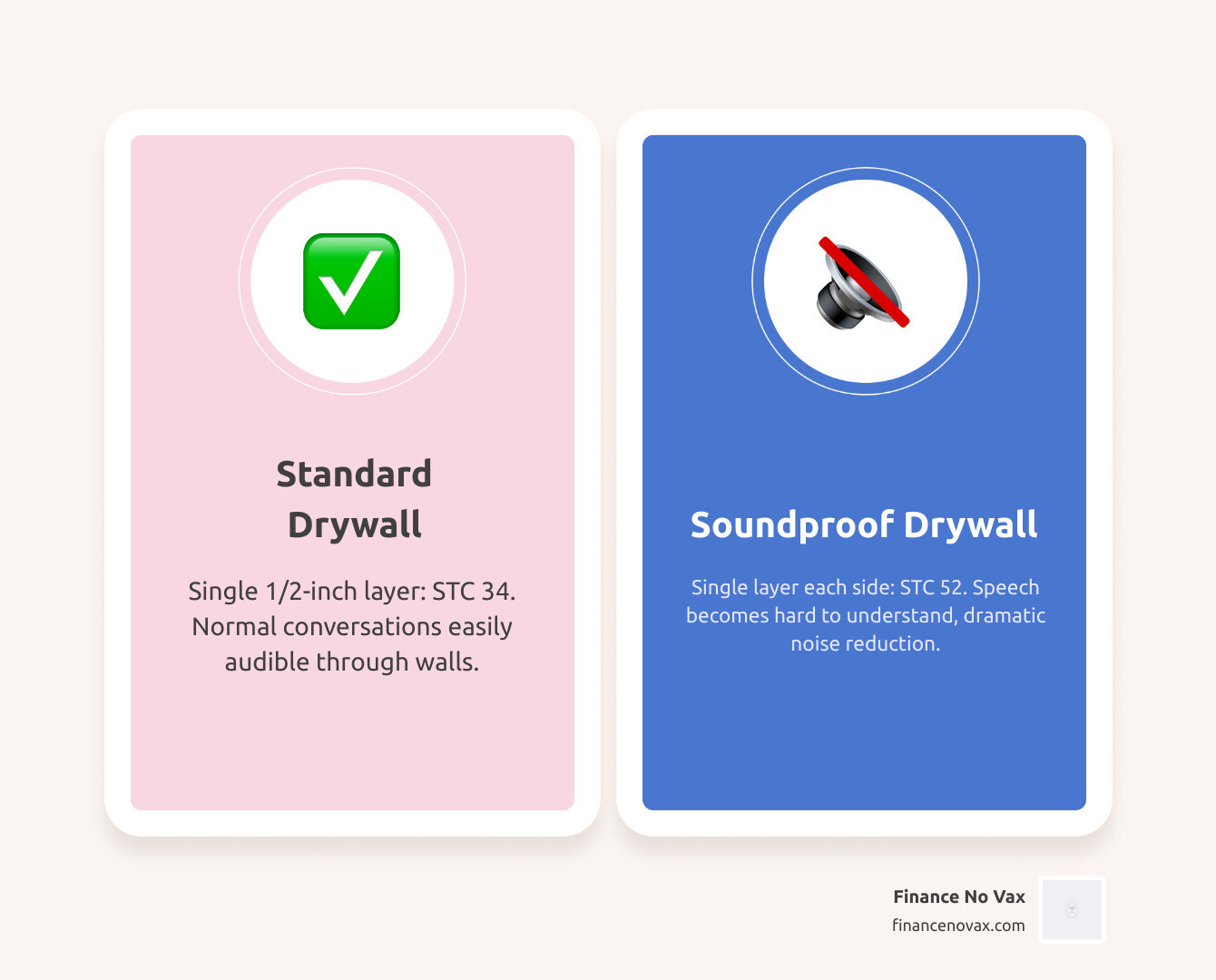
Standard drywall does almost nothing to stop it. A single layer of regular 1/2-inch drywall rates just STC 34, meaning a normal conversation next door is clearly audible.
Soundproof drywall works differently. It uses a viscoelastic polymer layer sandwiched between gypsum sheets. That layer converts sound energy into tiny amounts of heat through molecular friction — stopping noise before it reaches your ears.
The result? A single layer of soundproof drywall on each side of a wall can hit STC 52 — a dramatic jump that makes speech difficult to understand through the wall rather than clearly audible.
And unlike older methods like resilient channels or double-stud walls, modern sound blocking drywall installs just like regular drywall. No special tools. No extra framing. Less labor.
Sound blocking drywall systems helpful reading:
Top Brands and Types of Sound Blocking Drywall Systems
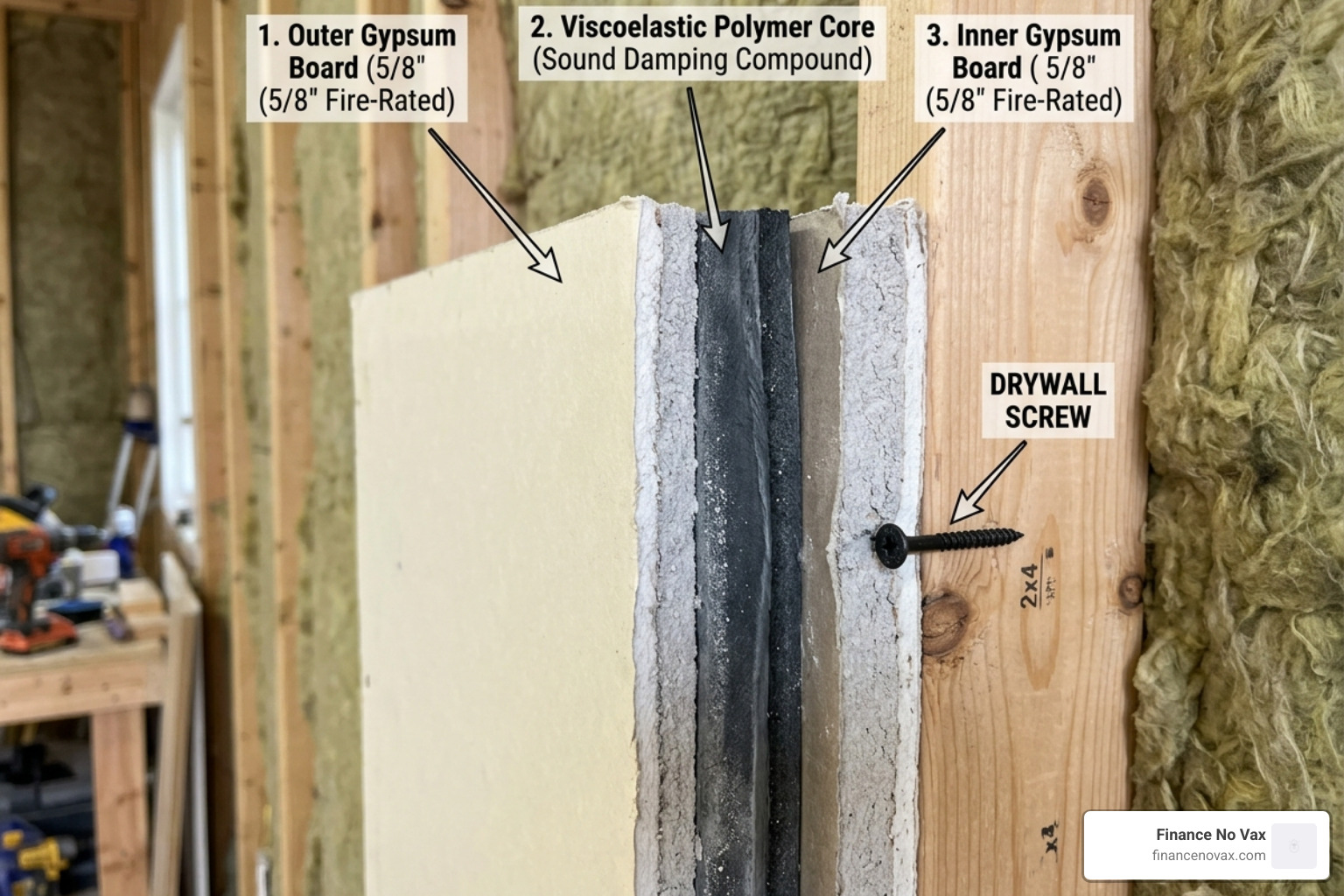
When we look at the market in April 2026, the technology behind sound blocking drywall systems has matured significantly. The primary mechanism used is “constrained layer damping.” This involves a multi-layer design where a sound-damping viscoelastic polymer is sandwiched between two layers of high-density gypsum.
Unlike standard drywall, which relies purely on mass to block sound, these engineered panels use physics to dissipate vibration. We often recommend Residential Sound Control solutions because they offer a high STC rating without the massive footprint of building double walls. If you are just starting your journey, The Ultimate Guide To Soundproofing Your Walls is a fantastic resource to understand the broader context of these systems.
There are three major players you will encounter:
- QuietRock (by PABCO Gypsum): The pioneer in the field. They offer everything from the entry-level QuietRock 500 (1/2-inch thick) to the massive QuietRock 545 designed for professional studios.
- SoundBreak XP (by National Gypsum/PURPLE): Known for its purple paper, this product combines sound damping with moisture, mold, and mildew resistance. It’s a favorite for bathrooms and basements.
- SilentFX QuickCut (by CertainTeed): This system is praised by contractors for its “QuickCut” technology, which allows the board to be scored and snapped much more like traditional drywall, saving significant time on the job site.
The Role of STC Ratings in Sound Blocking Drywall Systems
To choose the right system, we have to talk about STC (Sound Transmission Class). This is a numerical rating of how well a building partition attenuates airborne sound. In acoustics, every 10-point increase in STC represents a perceived halving of the noise.
Standard 2×4 wood stud walls with 1/2-inch drywall on both sides typically land at an STC 34. By simply swapping that for a single layer of soundproof drywall on each side, we can reach an STC 52. At this level, you might hear a faint murmur if someone is shouting next door, but normal speech becomes completely unintelligible. For those needing even higher performance, the QuietRock 545 Product Datasheet shows assemblies reaching up to STC 80, which is essentially “bank vault” levels of silence.
High-Performance Options for Home Theaters and Studios
If you are building a home theater or a recording studio, your biggest enemy isn’t just “noise”—it’s low-frequency vibration (the “thump-thump” of a bass guitar or a movie explosion). Standard soundproofing often fails here because low-frequency waves are long and powerful.
This is where heavy-hitters like QuietRock 545 come into play. It is 1-3/8 inches thick and weighs a whopping 6.25 lbs per square foot. It is specifically engineered for broad frequency control, effectively mitigating those tricky low frequencies that standard panels miss. To get the most out of these panels, we suggest pairing them with specialized insulation; check out our thoughts on Rockwool Or Bust Finding The Best Insulation For Your Studio Walls to see how the right “stuffing” inside the wall enhances the drywall’s performance.
Specialized Solutions for Commercial and Healthcare Use
In commercial settings, sound blocking drywall systems have to do more than just be quiet. In hospitals, for example, patient privacy (HIPAA compliance) is critical, but the walls also need to resist impact from gurneys.
Products like SilentFX® QuickCut™ Drywall | CertainTeed offer high-density cores that provide abuse resistance alongside acoustic damping. Furthermore, for government or high-security tech offices, there is QuietRock 530RF. This “superpanel” provides high STC ratings while incorporating radio frequency (RF) shielding to prevent electronic eavesdropping. It’s a 5/8-inch Type X fire-rated panel that does the work of three different products at once.
Comparing Soundproof Drywall to Alternative Methods
We often get asked: “Can’t I just use two layers of regular drywall?” The answer is yes, but it’s rarely the best way. To match the performance of one layer of QuietRock 510, you would need multiple layers of standard gypsum, which eats up your floor space and doubles your labor costs.
Here is how sound blocking drywall systems stack up against other popular methods:
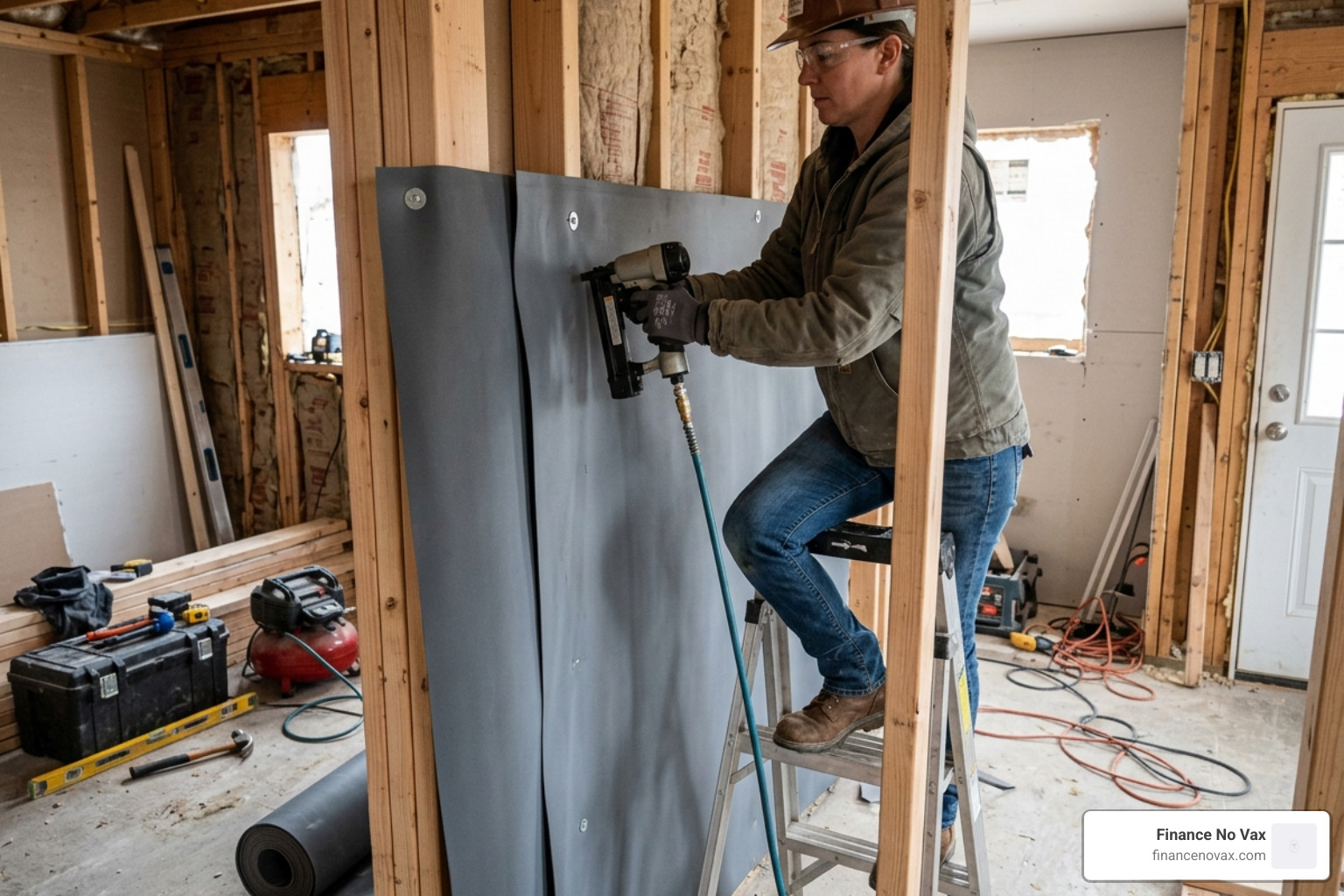
- Mass-Loaded Vinyl (MLV): This is a heavy, flexible material you staple to studs before hanging drywall. It’s effective but very heavy and difficult to install alone.
- Green Glue Noiseproofing Compound: This is a liquid damping glue you apply between two sheets of standard drywall. It works on the same principle as soundproof drywall but requires you to “build” the damping layer on-site. It’s a great budget option; you can read more in our guide Stick It To Your Noisy Neighbors With Green Glue Noiseproofing Compound.
- Resilient Channels: These are metal rails that “decouple” the drywall from the studs. They are highly effective but very easy to “short-circuit” if a single screw hits a stud, which ruins the soundproofing.
- SOUNDSTOP Fiberboard: This is a cost-effective 1/2-inch wood fiberboard. While it only has an STC 23 on its own, it acts as a great “break” when installed behind standard drywall.
For those looking for the ultimate level of isolation, we recommend exploring a “room within a room” concept. Double Wall Soundproofing Is The Secret To A Silent Home explains how physical separation is the only way to achieve near-total silence.
Cost-Effectiveness and Total Installed Value
At first glance, soundproof drywall looks expensive. QuietRock 510 might cost around $52 per sheet, while standard drywall is closer to $20. However, we have to look at the total installed cost.
If you use standard drywall to reach high STC ratings, you need:
- More sheets of drywall.
- More tubes of adhesive.
- Double or triple the labor time for hanging, taping, and finishing.
- Loss of square footage (extra layers can add 1-2 inches to every wall).
In a commercial project or a tight urban apartment, the extra floor space saved by using a single high-performance panel can literally be worth thousands of dollars. For more tips on managing your budget, see Silence On A Shoestring 5 Ways To Soundproof Your Walls For Less.
Installation Best Practices for Maximum Performance
Even the most expensive sound blocking drywall systems will fail if installed poorly. Sound is like water; it will find the smallest hole and pour through it. This is known as “flanking.”
One of the best ways to ensure performance is using a system like isoTRAX. This sound isolation system uses rails and visco-elastic pads to offset the drywall from the studs, achieving STC ratings between 52 and 61. When installing the panels themselves, we always recommend staggering the joints. This means the seams of your soundproof drywall should not line up with the seams of any underlying layers or the studs on the opposite side of the wall.
For a deep dive into professional techniques, check out our guide on How To Install Acoustic Wall Panels Like A Sound Engineer.
Sealing the Gaps in Sound Blocking Drywall Systems
The most common mistake we see is neglecting the perimeters. You must leave a 1/4-inch gap around the entire edge of your drywall (where it meets the floor, ceiling, and adjacent walls). This gap is then filled with acoustic sealant, such as QuietSeal Pro.
Why the gap? If the drywall touches the floor or ceiling directly, vibrations can travel through the “hard” connection. The sealant remains flexible, creating a “soft” joint that blocks air and sound while allowing for structural movement. Additionally, don’t forget electrical boxes! These are literal holes in your sound barrier. We recommend using QuietPutty (acoustic putty pads) to wrap the back of electrical boxes before the drywall goes up. This simple step can prevent your outlets from becoming “noise leaks.”
Frequently Asked Questions about Soundproof Drywall
Can I install soundproof drywall over existing walls?
Yes! This is a very popular “retrofit” application. You don’t necessarily need to tear down your old walls. You can apply a layer of soundproof drywall directly over the existing surface. For the best results, we suggest using SoundBreak XP Retrofit, which is a thinner (5/16-inch) version of the board designed specifically for this purpose. It saves space while providing the damping you need. Just remember to use longer screws to reach the studs and apply acoustic sealant to the new perimeter.
Is soundproof drywall fire-resistant and mold-resistant?
Most high-end sound blocking drywall systems are built on a “Type X” core. Type X is the industry standard for fire-rated drywall, designed to withstand fire for at least one hour in a standard assembly. Additionally, brands like SoundBreak XP are engineered to achieve the highest possible score (10 out of 10) on mold tests (ASTM D3273). This makes them safe for use in multi-family buildings where fire codes are strict and in humid environments like basements.
Does soundproof drywall work for ceilings?
It does, but with a few caveats. Ceilings often suffer from “impact noise” (footsteps from above), which is different from airborne noise (talking). While soundproof drywall helps, it often needs to be paired with a decoupling system like isoTRAX or resilient clips to stop the “drum effect” of someone walking upstairs. Also, be aware that panels like QuietRock 545 are extremely heavy (over 200 lbs per sheet). Installing these on a ceiling requires a professional crew and specialized lifts.
Conclusion
At Finance No Vax, we believe that a quiet home is a healthy home. Investing in sound blocking drywall systems is one of the few home improvements that provides an immediate, tangible upgrade to your quality of life.
Beyond the silence, these systems are a “green” choice. Most modern panels, like those from CertainTeed or PABCO, feature 100% recycled paper faces and contribute to LEED certification credits for acoustic performance and indoor air quality (GREENGUARD Gold). Whether you are building a sanctuary for sleep or a high-octane home cinema, choosing the right drywall system is the foundation of your success.
Ready to take the next step in your acoustic journey? Explore more info about DIY solutions to see how you can start silencing your space today!
