
Stop the Echo with These Top Wall Foam Coverings
Why Acoustic Foam Panels for Walls Make Your Home Office Actually Usable
Acoustic foam panels for walls are the fastest, most affordable way to cut echo and reverberation in a home office, studio, or any room with hard surfaces.
Here are the top options to consider in 2026:
| Product | Type | NRC | Best For |
|---|---|---|---|
| VEVOR 80-Pack (12x12x1″) | Pyramid foam | ~0.35 | Budget coverage |
| Sonic Acoustics 2″ Sound Foam | Wedge foam | 0.92 | Home studios |
| ATS Tackable Panel (24x36x2″) | Fabric-wrapped | 1.05 | Offices, home theaters |
| Acoustimac DMD-411 | Fabric-wrapped | ~1.00 | Recording, speech clarity |
| GIK FlexRange® Panel | Fiberglass-wrapped | 1.05 | Broadband absorption |
| GIK Amplitude™ Panel | Hybrid absorption/diffusion | ~1.05 | Studios, listening rooms |
If you work from home, you already know the problem. Every video call, every voice memo, every focused work session gets sabotaged by sound bouncing off bare walls, hard floors, and glass windows. That hollow, echoey quality isn’t just annoying — it makes speech harder to understand and adds low-level stress to your day.
The fix doesn’t have to be expensive or complicated.
Foam panels and fabric-wrapped alternatives mount directly to your walls and stop sound from bouncing around inside your room. They won’t block noise coming in from outside — that’s a different problem requiring a different solution — but they will make your space dramatically quieter and cleaner sounding.
This guide compares the best acoustic foam panels for walls available right now, covering everything from budget foam tiles to high-performance fabric-wrapped panels, so you can pick the right option for your space and budget.
Acoustic foam panels for walls terms made easy:
Understanding Acoustic Foam Panels for Walls vs. Soundproofing
One of the biggest misconceptions we encounter is the idea that putting foam on a wall will stop your neighbor’s dog from barking or keep your loud music from bothering the person in the next room. We hate to be the bearers of bad news, but acoustic foam panels for walls are not designed to block sound.
To understand why, we have to look at the difference between blocking and absorption.
Sound is like water; if air can get through, sound can get through. Traditional soundproofing (blocking) requires mass and density—think heavy layers of drywall or Mass Loaded Vinyl. On the other hand, absorption is about managing the sound that is already inside the room.
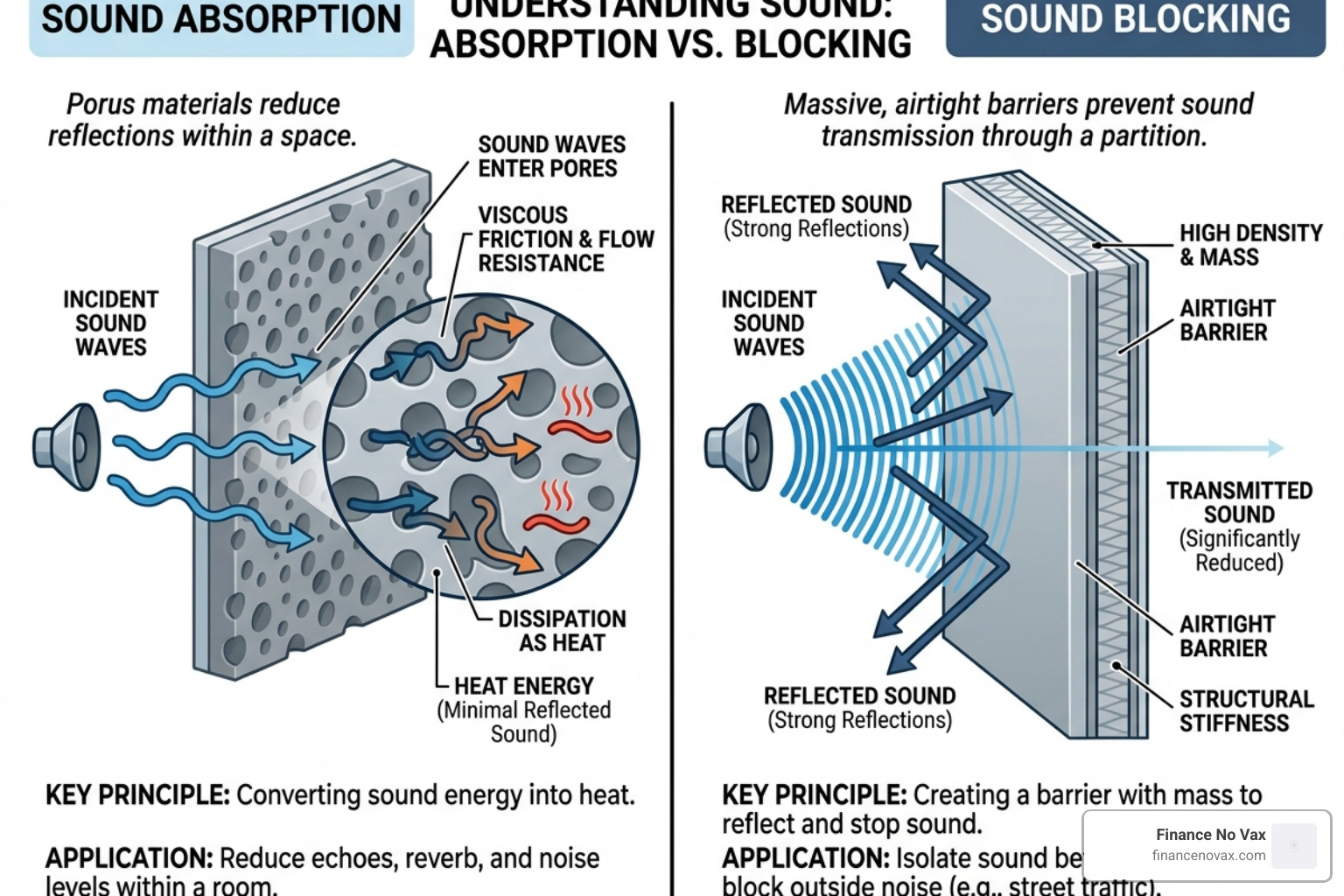
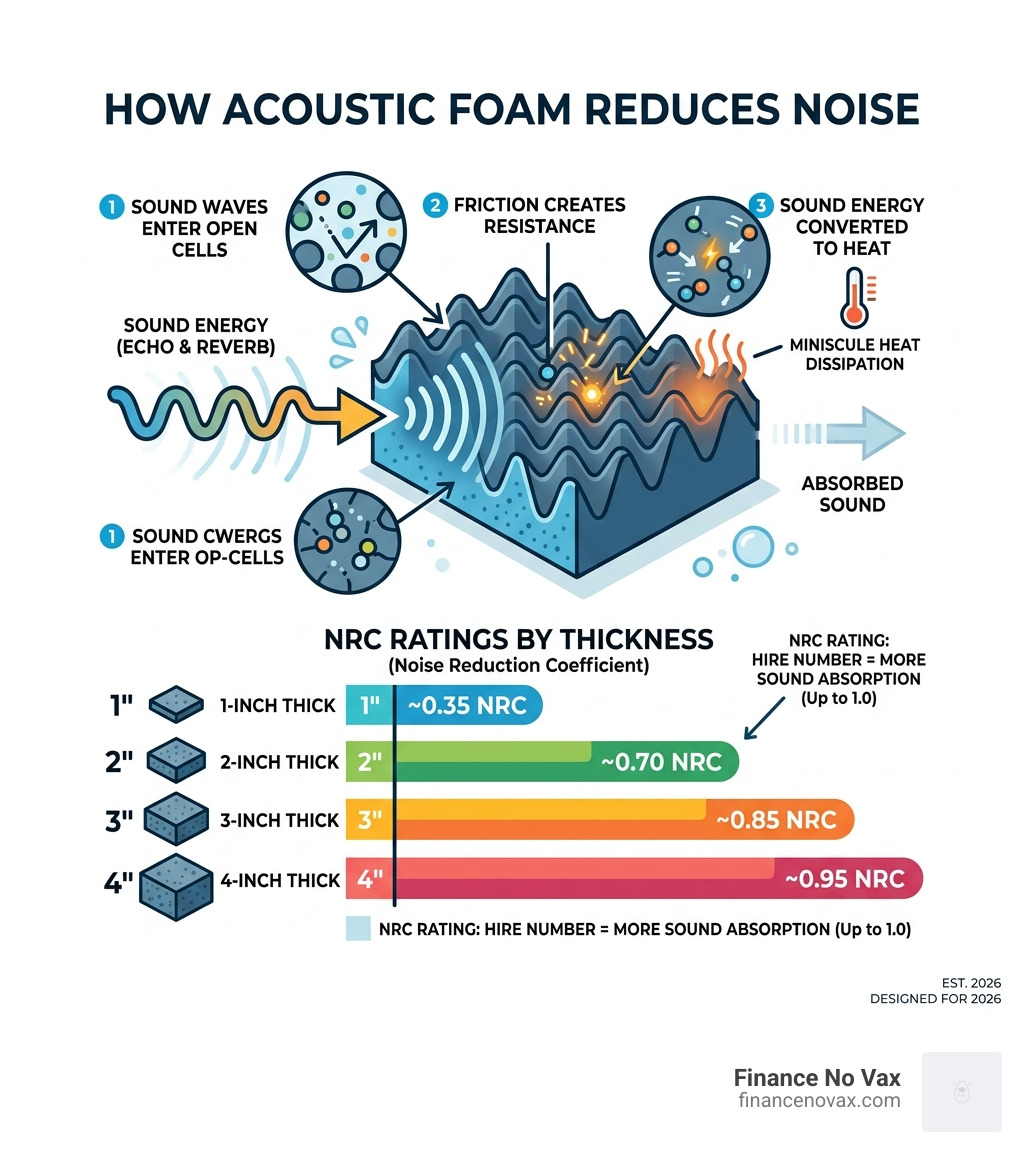
When sound waves hit a hard surface like a bare wall, they bounce back, creating flutter echoes and reverberation. Acoustic foam is made of porous materials, usually polyurethane or melamine. As sound waves enter the open-cell structure of the foam, the friction converts the sound’s kinetic energy into a tiny amount of heat. This “traps” the sound, preventing it from bouncing back into the room.
Using Everything You Need To Know About Office Acoustic Panels can help you realize that while these panels won’t give you Wall To Wall Silence Why You Need Noise Cancelling Wall Foam, they will make your voice sound richer and clearer on a microphone by removing that “bathroom” echo.
Top Types of Acoustic Foam Panels for Walls
When you start shopping for acoustic foam panels for walls, the sheer variety of shapes can be overwhelming. Do you need wedges? Pyramids? Egg-crates? While they all serve the same basic purpose, their performance varies based on their surface area and thickness.
Most standard foam is made from polyurethane, which is lightweight and affordable. However, in 2026, we are seeing more high-end applications using melamine foam (like the SONEX brand), which is naturally fire-resistant and contains no fibers.
If you are looking for a massive amount of coverage on a tight budget, options like the Acoustic Foam Panels, 80 Pack 12 x 12 x 1 in. High Density Soundproof Wall Panels Acoustic Panels Polyurethane Black are popular for treating large sections of wall space. For those needing a bit more “oomph” in their sound control, the Sonic Acoustics | Superior 2 Inch Sound Foam offers a higher NRC rating of 0.92, making it a favorite for home recording enthusiasts.
Here is a quick look at how thickness affects performance (measured in Noise Reduction Coefficient, or NRC):
| Thickness | Typical NRC Rating | Primary Use Case |
|---|---|---|
| 1-inch | 0.35 | Mid-to-high frequency control; flutter echo |
| 2-inch | 0.45 – 0.92 | Small-to-medium rooms; general vocal work |
| 3-inch | 0.50 | All-around absorption for any room size |
| 4-inch | 0.65 | Low-frequency wave control; home theaters |
Pyramid vs. Wedge Acoustic Foam Panels for Walls
The two most common profiles are pyramid and wedge. The choice between them isn’t just about aesthetics—it’s about how they handle sound.
Pyramid foam is unique because it passes through the manufacturing machine twice. This makes it slightly more expensive to produce, but it results in a visually pleasing, symmetrical look. Because of its shape, it provides a better diffusion rate than wedge foam. Diffusion helps to scatter sound waves rather than just absorbing them, which can keep a room from sounding “dead” or unnaturally quiet.
However, because the pyramid shape removes more mass from the foam block, it typically offers only about 76% of the absorption power of wedge foam of the same thickness.
Wedge foam, on the other hand, is the workhorse of the studio world. It provides more surface area for sound to enter the foam, making it excellent for stopping standing waves. If you’re building your first setup, checking out The Best Studio Acoustic Foam Tiles And Panel Sets For Every Budget can help you decide which profile fits your goals. And don’t feel like you’re stuck with “studio black”—you can Stop The Echo With These Top Rated White Acoustic Foam Tiles to keep your office looking bright and professional.
High-Performance Fabric-Wrapped and Melamine Alternatives
As we move into 2026, many people are moving away from the “foam look” in favor of more sophisticated, furniture-quality treatments. These panels often use a rigid core—like mineral wool or fiberglass—wrapped in acoustically transparent fabric.
One standout is the ATS Tackable Acoustic Panel – 24 x 36 x 2. These panels are designed using the golden ratio for visually pleasing proportions and feature a 1.05 NRC rating. Because they have a high-density mineral wool core and a wood backing, they can even double as a bulletin board, making them perfect for a stylish home office.
For those with limited space, the DMD 411 Sound Panel | Acoustic Wall Panel for Noise Reduction offers a slim profile (only 12 inches wide) that fits into tight corners or between furniture. If you’re a serious audiophile, the FlexRange® Acoustic Panel | GIK Acoustics uses a patented two-frame system with a built-in air gap to improve low-frequency absorption without adding extra bulk to your walls.
Finally, if you want the ultimate balance of style and science, the Amplitude™ Acoustic Panel | GIK Acoustics acts as both an absorber and a diffuser. It uses a hybrid design that reduces echo without over-absorbing high frequencies, preserving the natural “air” in your room. If you’re on a budget but want this look, you can always try to Stitch In Silence With These Budget Fabric Panels for a DIY alternative.
Strategic Placement and Installation for Maximum Performance
You can buy the most expensive acoustic foam panels for walls in the world, but if you stick them in the wrong place, they won’t do much. Strategic placement is the secret sauce of acoustic treatment.
In a standard rectangular room, your priority should be the “first reflection points.” These are the spots on the walls where sound from your speakers (or your voice) hits first before bouncing to your ears. You can find these by having a friend slide a mirror along the wall while you sit in your normal working position; wherever you see the speaker in the mirror is a reflection point that needs a panel.
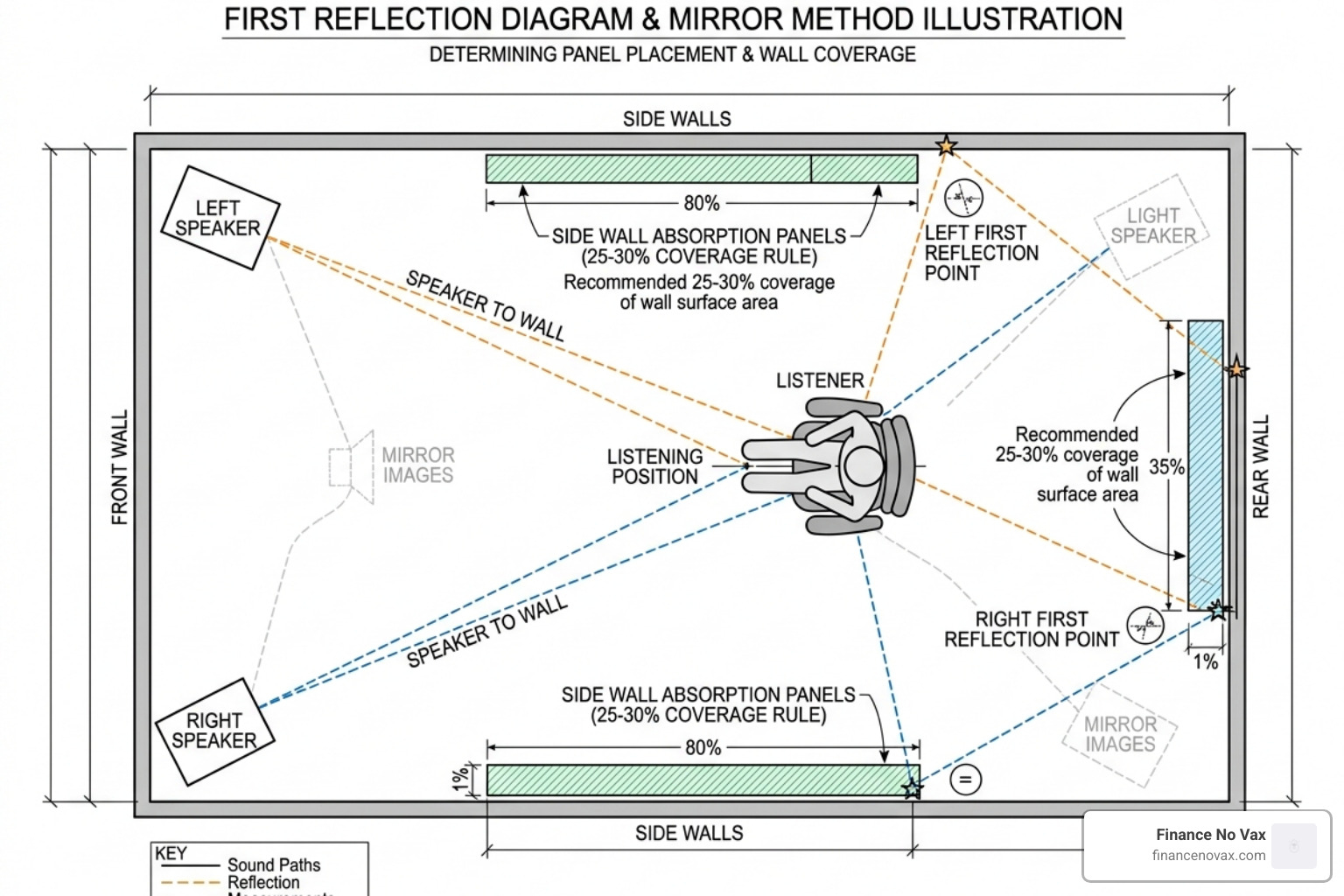
A good rule of thumb is to aim for 25% to 30% coverage of all hard surfaces. You don’t need to cover every square inch! Spacing panels out evenly is often more effective than clustering them all in one spot.
When it comes to putting them up, you have several options:
- Adhesives: Spray adhesives or foam-specific tapes are great for permanent installations. Just be careful—removing these can often take the paint off your drywall.
- Z-Clips or Impaling Clips: These are better for heavier fabric-wrapped panels. They allow you to “hang” the panel like a picture frame.
- Mechanical Fasteners: If you are renting, consider mounting your foam to a thin piece of plywood or cardboard first, then hanging that using command strips.
If you’re feeling handy, our Diy Soundproof Panels For Walls A Step By Step Guide can walk you through the process. For more professional tips, check out How To Install Acoustic Wall Panels Like A Sound Engineer or the Master Your Studio Sound With This Acoustic Foam Installation Guide.
Pro Tip: If your foam arrives vacuum-sealed, don’t panic if it looks like flat pancakes. You can let them air dry for 48 hours, or for faster results, soak them in water, wring them out, and pop them in the dryer for 20 minutes. They will puff right up to their full 2-inch glory. Learn more in The Ultimate Guide To Taming Echoes With Wall And Ceiling Panels.
Frequently Asked Questions about Wall Foam
Are acoustic foam panels for walls fire-rated?
This is a critical safety question. Most professional-grade acoustic foam is treated to be flame retardant, meaning it will self-extinguish if a flame is removed. Look for products that meet ASTM E84 Class A or California 117 specifications.
Cheap, unrated foam can be a significant fire hazard, as it can produce toxic smoke and act as an accelerant. We always recommend that you Dont Get Foamed By Low Quality Cheap Acoustic Panels and double-check the safety standards before buying, especially for public spaces like schools or churches.
How many acoustic foam panels for walls do I need?
As we mentioned, 25-30% coverage is the sweet spot for most rooms. If you have a 10×10 room, that’s about 400 square feet of wall and ceiling surface. You’d want to treat roughly 100 to 120 square feet.
If you’re treating a living room, you might need less to maintain a “homely” feel—check out Echo Echo Gone A Guide To Living Room Acoustic Panels for specific advice. If you have high ceilings or very large walls, you might consider The Big Picture Of Sound Control With Oversized Acoustic Wall Panels to cover more ground with fewer individual pieces.
Can acoustic foam panels for walls be used for soundproofing?
To reiterate: No, they are for absorption, not blocking. If your goal is to Sleep Tight With These High Density Wall Noise Cancelling Panels, you need materials designed for “transmission loss,” like heavy rubber mats or thick fiberglass.
Foam is great for Cheap And Chic Affordable Soundproof Panels For Your Apartment if your goal is to stop your own voice from echoing, but it won’t stop the person in the next room from hearing you.
Conclusion
At Finance No Vax, we believe that your environment dictates your productivity. Investing in acoustic foam panels for walls isn’t just about making your room look like a “pro studio”—it’s about creating a space where you can communicate clearly and work without the fatigue of constant background echo.
Whether you go with budget-friendly foam tiles or high-end fabric-wrapped panels, the improvement in sound quality is one of the best ROIs you can get for your home setup. Ready to take control of your acoustics? Start by learning How To Master Your Space With Acoustic Panel Solutions or browse More info about acoustic materials to find the perfect fit for your walls.
