
Why Sound Foam Panels Are the MVP of Home Studios
Why Sound Foam Panels Belong in Every Home Studio
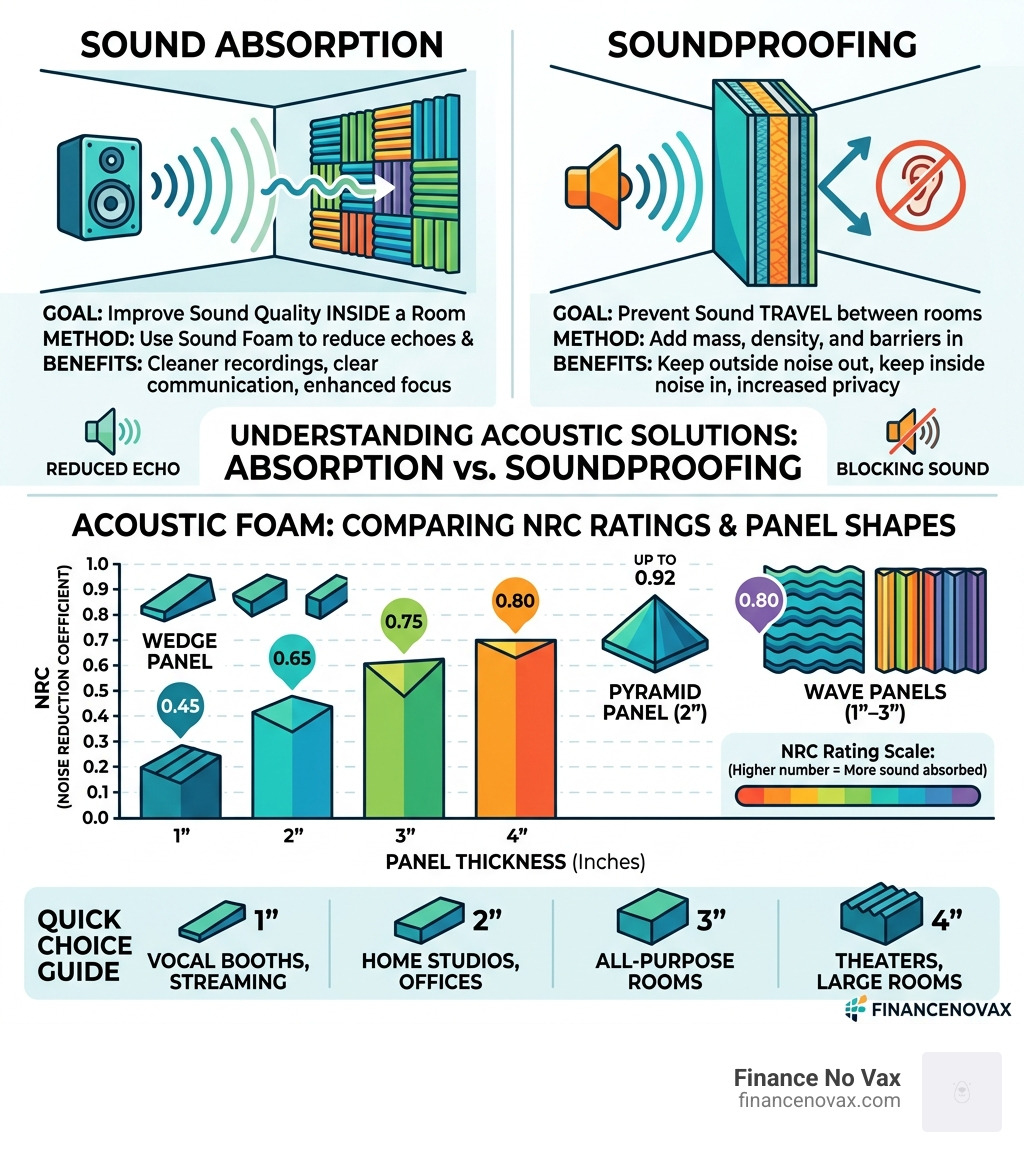
Sound foam panels are acoustic treatment tiles made from open-cell polyurethane foam that absorb sound energy inside a room — reducing echo, reverberation, and flutter echo so your recordings (or your focus) sound cleaner and clearer.
Here’s a quick comparison of the most common options to help you choose fast:
| Panel Type | Thickness | Best For | NRC Rating |
|---|---|---|---|
| Wedge | 1″ | Vocal booths, streaming | 0.45 |
| Wedge | 2″ | Home studios, offices | 0.65 |
| Wedge | 3″ | All-purpose rooms | 0.75 |
| Wedge | 4″ | Theaters, large rooms | 0.80 |
| Pyramid | 2″ | Studios, home theaters | Up to 0.92 |
| Wave | 1″–3″ | Live rooms, listening rooms | 0.80 |
NRC (Noise Reduction Coefficient) runs from 0 to 1 — the higher the number, the more sound the panel absorbs.
If you work from home and deal with echo, reverb, or noise bleeding into your calls and recordings, sound foam panels are one of the fastest and most affordable fixes available. They don’t require construction. They don’t need a professional installer. And they make a real, noticeable difference — even in a small room.
But not all panels are equal. Thickness, shape, density, and material all affect how well they perform — and whether they handle low frequencies, high frequencies, or both.
This guide breaks down the top options so you can pick the right panels for your space without wasting money on the wrong ones.
Quick look at sound foam panels:
Understanding How Sound Foam Panels Improve Acoustics
When we talk about improving the “sound” of a room, we’re usually fighting three main enemies: echo, reverberation, and standing waves. If you’ve ever moved into a new apartment and noticed how your voice bounces off the bare walls, you’ve met these villains firsthand. In a home studio, that bounce-back is a nightmare for microphones.
The Science of Open-Cell Polyurethane Foam
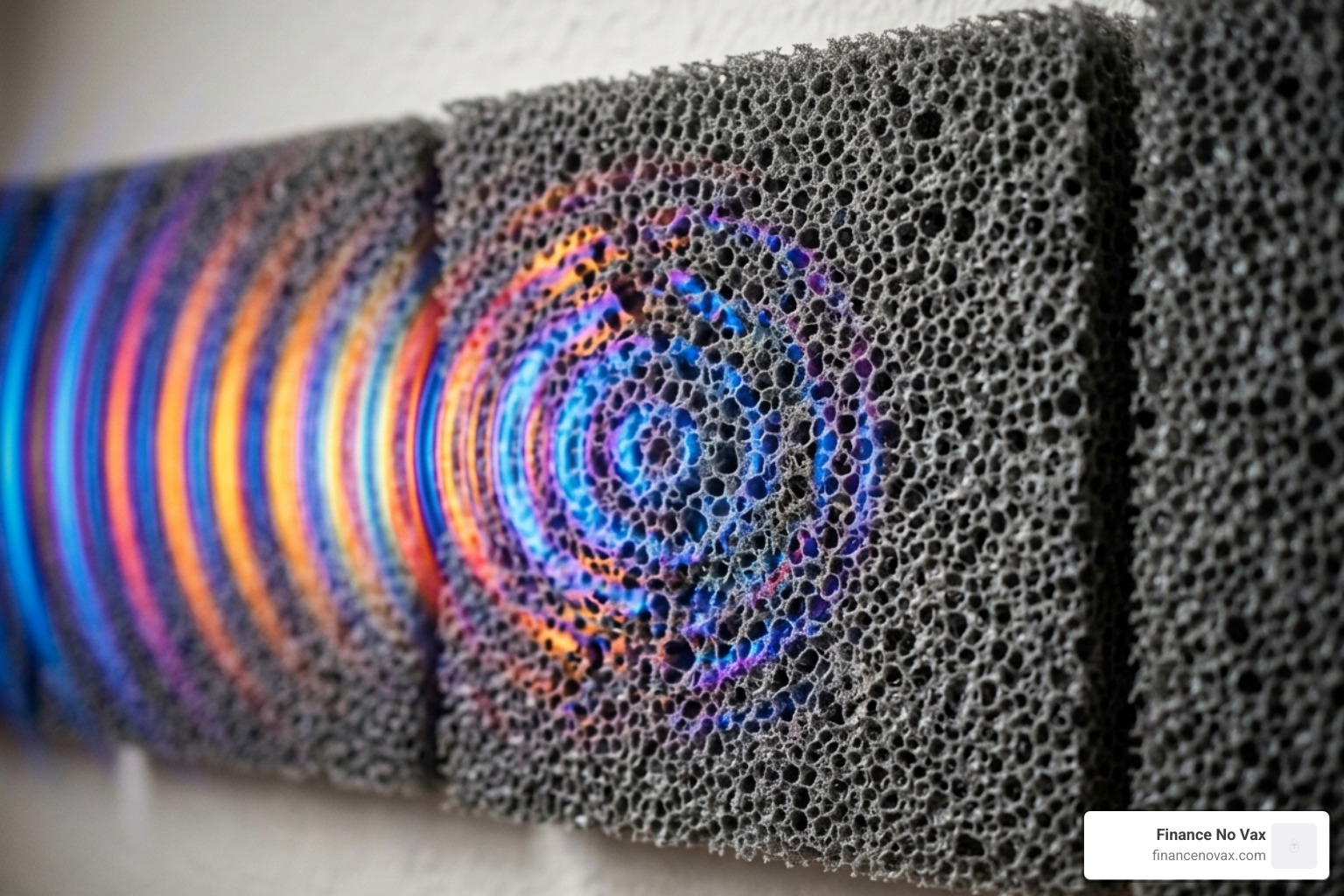
Most sound foam panels are made from polyurethane foam. But it’s not just any foam; it’s “open-cell” foam. Imagine a sponge. If you look closely, it’s full of tiny, interconnected pockets. When sound waves hit this surface, they don’t just bounce back like a rubber ball hitting a concrete wall. Instead, the sound energy enters these tiny cells.
As the sound vibrates through the foam, the friction between the air molecules and the foam cell walls converts that sound energy into a tiny amount of heat. This process is called absorption. By “soaking up” the sound, we prevent it from reflecting back into the room. This is Why Studio Foam Insulation Is The Secret To Professional Audio/—it creates a “dead” space where the microphone only hears your voice, not the ghost of your voice bouncing off the drywall.
Decoding the NRC Rating
In acoustics, we use the Noise Reduction Coefficient (NRC) to measure how effective a material is at absorbing sound. An NRC of 0.00 means the material reflects everything (like a mirror), while an NRC of 1.00 means it absorbs 100% of the sound that hits it.
As of April 2026, high-quality panels like the Sonic Acoustics | Superior 2 Inch Sound Foam boast NRC ratings as high as 0.92. This means they are incredibly efficient at taming mid-to-high frequency reflections.
Taming Flutter Echo and Standing Waves
Have you ever clapped your hands in a small, rectangular room and heard a metallic “pinging” sound? That’s flutter echo. It happens when sound bounces rapidly between two parallel hard surfaces. Sound foam panels break up these flat surfaces.
Similarly, standing waves occur when certain frequencies (usually lower ones) get “trapped” and reinforce themselves, creating boomy spots in the room. While standard foam is great for high-frequency absorption, thicker panels are needed to handle those tricky low-mid frequencies. If you are serious about your sound, you might want to look into Studio Acoustic Panel Sets For Serious Sound Dampening/ to cover all your bases.
Comparing Shapes and Thicknesses for Optimal Performance
Choosing the right sound foam panels isn’t just about picking a color that matches your LED lights (though we admit, charcoal and purple look pretty slick). The physical profile of the foam—whether it’s wedge, pyramid, or wave—changes how sound interacts with the surface.

Does Thickness Really Matter?
In short: Yes. The thickness of the foam determines the lowest frequency it can effectively absorb.
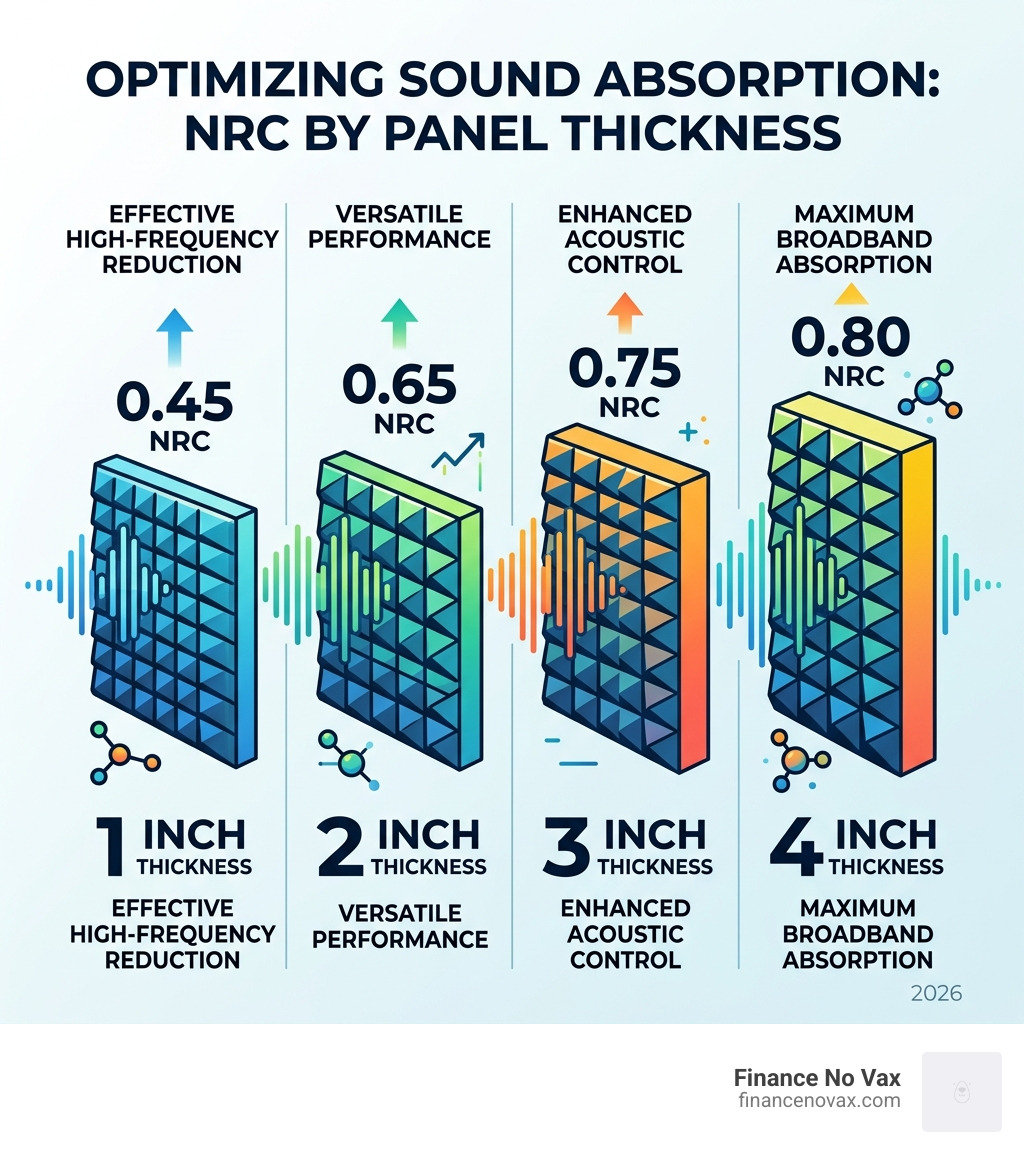
- 1-Inch Panels: Best for high frequencies. These are perfect for vocal booths where you just want to crisp up the vocals.
- 2-Inch Panels: The industry standard. They offer a balance of price and performance, handling most mid-range frequencies.
- 3-Inch to 4-Inch Panels: These are the heavy hitters. They can absorb lower frequencies and are often used in home theaters or larger rooms like gymnasiums to stop massive echoes.
When you look at options like Studiofoam® Absorption Panels | Auralex Acoustics , you’ll see they offer various thicknesses to suit different room sizes. For example, The Big Picture Of Sound Control With Oversized Acoustic Wall Panels/ explores how larger, thicker panels can provide more comprehensive coverage for professional environments.
Machine-Cut Uniformity and Density
Not all foam is created equal. High-density polyurethane—often around 30kg/m³ like the VEVOR Acoustic Foam Panels—is preferred because it maintains its shape and offers better absorption than the “fluffy” cheap stuff. Machine-cut wedges or pyramids ensure that when you line them up on a wall, the patterns match perfectly, giving your studio that professional, polished look.
For those on a budget, The Best Studio Acoustic Foam Tiles And Panel Sets For Every Budget/ provides a great breakdown of how to get the most “bang for your buck” without sacrificing too much density.
The Versatility of Wedge Sound Foam Panels
Wedge panels are the bread and butter of the acoustic world. Their design features long, raised triangular rows.
- Why they work: The angled surfaces provide more surface area for sound waves to hit compared to flat foam.
- Placement: You can alternate the direction of the wedges (horizontal vs. vertical) to create a “checkerboard” pattern. This doesn’t just look cool; it helps scatter sound in multiple directions, further reducing reflections.
If you’re looking for a clean aesthetic, you can even Stop The Echo With These Top Rated White Acoustic Foam Tiles/ to keep your room feeling bright while still sounding dead.
Specialized Designs: Pyramid and Wave Sound Foam Panels
While wedges are great, pyramid and wave designs offer unique benefits.
- Pyramid Foam: These panels have four-sided bases that taper to a point. They are excellent at scattering sound waves (diffusion) as well as absorbing them. Because they don’t “deaden” a room as aggressively as thick wedges, they are popular in home theaters where you want to keep some “life” in the audio.
- Wave Foam: Products like the Studiofoam® Wave™ feature a dynamic rise and fall (from 1” to 3”). This varied thickness handles a broader range of frequencies and looks incredibly upscale.
- Hexagon and Grid: For those who want a modern vibe, How To Master Your Space With Acoustic Panel Solutions/ highlights how different shapes can be used as decor while serving a functional purpose.
Absorption vs. Soundproofing: Which Do You Need?
This is the most common point of confusion we see. If we had a nickel for every time someone bought sound foam panels hoping to block out a noisy neighbor’s barking dog, we’d have a lot of nickels—and a lot of disappointed customers.
The Difference in a Nutshell
- Sound Absorption (Foam): This is about the quality of sound inside the room. It stops echoes. It’s like putting a rug on a hardwood floor.
- Soundproofing (Blocking): This is about stopping sound from leaving or entering a room. It requires mass and density. It’s like building a brick wall.
STC vs. NRC
We already talked about NRC for foam. For soundproofing, we use STC (Sound Transmission Class).
- A standard interior wall has an STC of about 30-33.
- A specialized soundproofing panel like SONOpan has an STC rating of 27 on its own and is designed to be installed inside the wall assembly.
- In contrast, a 2-inch foam panel has an STC rating near zero. It’s too light to stop a sound wave; the wave just passes right through the foam, through the wall, and into the next room.
If your goal is to keep the peace with your roommates, you should read Everything You Need To Know About Office Acoustic Panels/ or Wall To Wall Silence Why You Need Noise Cancelling Wall Foam/ to understand the heavy-duty materials required.
When to Use Barriers
For true soundproofing, you need “Noise STOP” technology or mass-loaded vinyl (MLV). These materials are heavy and limp, designed to soak up vibrations before they can turn the wall into a giant speaker. Some kits, like the SilveRboard Radiant Acoustic Insulation, offer an STC of 19, which is a start, but for serious silence, you’ll need to combine layers of drywall, insulation, and decoupling channels.
For a deep dive into the budget side of things, check out The Ultimate Guide To Budget Friendly Soundproofing Panels And Foam/.
Installation and Safety Standards for Home Studios
So, you’ve ordered your 80-pack of VEVOR Acoustic Foam Panels. They arrive at your door in a tiny box, vacuum-sealed and flat as a pancake. Don’t panic! This is normal.
The Expansion Process
Most budget sound foam panels are compressed for shipping. To get them to their full 2-inch glory, you have two choices:
- The Patient Way: Leave them in a ventilated room for 24–48 hours. They will naturally “inhale” air and expand.
- The Fast Way (Water Soak): Soak the panels in warm water for a minute, wring them out (gently!), and then dry them. You can use a clothes dryer on medium heat for 20 minutes or a hair dryer. This forces the cells open instantly. Just make sure they are completely dry before you stick them to the wall, or you’ll end up with mold issues.
Installation Methods
How you attach them depends on whether you care about your wall’s paint.
- Permanent: Spray adhesives like Foamtak or Tubetak Pro are the gold standard. They won’t let the foam fall off, even in high humidity.
- Rental-Friendly: Use 3M Command strips or specialized 1 in. x 12 in. x 12 in. Square Self-Adhesive Sound Absorbing Acoustic Foam Panels in Black (12-Pack) . Some users even tack the foam to a thin piece of plywood first, then hang the plywood like a picture frame.
- Pro Tip: Always clean your walls with rubbing alcohol before applying any adhesive. Dust is the enemy of “sticky.”
For a step-by-step walkthrough, our Master Your Studio Sound With This Acoustic Foam Installation Guide/ is an essential read.
Fire Safety and Health
In 2026, safety is more important than ever. Polyurethane is naturally flammable, so you must look for panels that meet fire safety standards.
- ASTM E84 Class A: This is the top rating for building materials.
- UL 94 HF-1: This is a common flammability standard for foam. Many professional panels, like the Studiofoam® DST-114™ Panels , are specifically treated to be self-extinguishing.
Also, watch out for “off-gassing.” Cheap foam can sometimes have a chemical smell (VOCs) when first unpacked. High-quality foam should be odorless and low-VOC, making it safe for small, enclosed spaces like vocal booths. If you’re worried about quality, read Dont Get Foamed By Low Quality Cheap Acoustic Panels/ to learn how to spot the fakes.
Frequently Asked Questions about Sound Foam Panels
Do sound foam panels block noise from neighbors?
As we discussed in the soundproofing section, the answer is mostly no. Sound foam panels are designed for absorption, not blocking. They might slightly reduce the sound of your own voice reaching the neighbor, but they will do almost nothing to stop their loud music from coming into your room. For that, you need mass and density. You might find better luck with Cheap And Chic Affordable Soundproof Panels For Your Apartment/ which looks at heavier options.
How many panels do I need for a small vocal booth?
For a vocal booth, you typically want “dead” sound, meaning high coverage. We recommend covering at least 50-75% of the wall surface at mouth level. This prevents any “boxiness” in your recordings. If you’re treating a larger room for mixing, you might only need 20-30% coverage, strategically placed at “first reflection points” (the spots on the wall where sound bounces directly from your speakers to your ears).
Are these panels safe for residential use in 2026?
Yes, provided you buy from reputable brands that disclose their materials. Look for “formaldehyde-free” and “low VOC” labels. If you are building a professional space, always check with your local fire marshal, as regulations for commercial buildings are much stricter than for private homes. For a safer, DIY alternative, some people choose Diy Soundproof Panels For Walls A Step By Step Guide/ using mineral wool or fiberglass, which are naturally more fire-resistant.
Conclusion
At Finance No Vax, we know that building a home studio is an investment in your craft. Whether you are a podcaster, a bedroom producer, or a remote executive tired of sounding like you’re in a cave, sound foam panels are the most effective way to upgrade your audio quality instantly.
By choosing the right thickness (usually 2-inch for most of us) and a shape that fits your style, you can transform a bouncy, echoey room into a professional-sounding space. Just remember: foam is for tone, not for silence. If you need to stop the noise, look into heavier barriers. If you need to stop the echo, get the foam.
Ready to start? Check out The Ultimate Guide To Budget Friendly Soundproofing Panels And Foam/ for our top picks this year, or explore More info about acoustic solutions to find the perfect setup for your home.
For more specific applications, don’t miss our guides on:
