
Everything You Need to Know About the Vocal Soundproof Booth
Why Sound Booth Recording Makes or Breaks Your Audio Quality
Sound booth recording is the practice of capturing audio inside an acoustically treated enclosure to reduce background noise, echo, and reverb — giving you cleaner, more professional results.
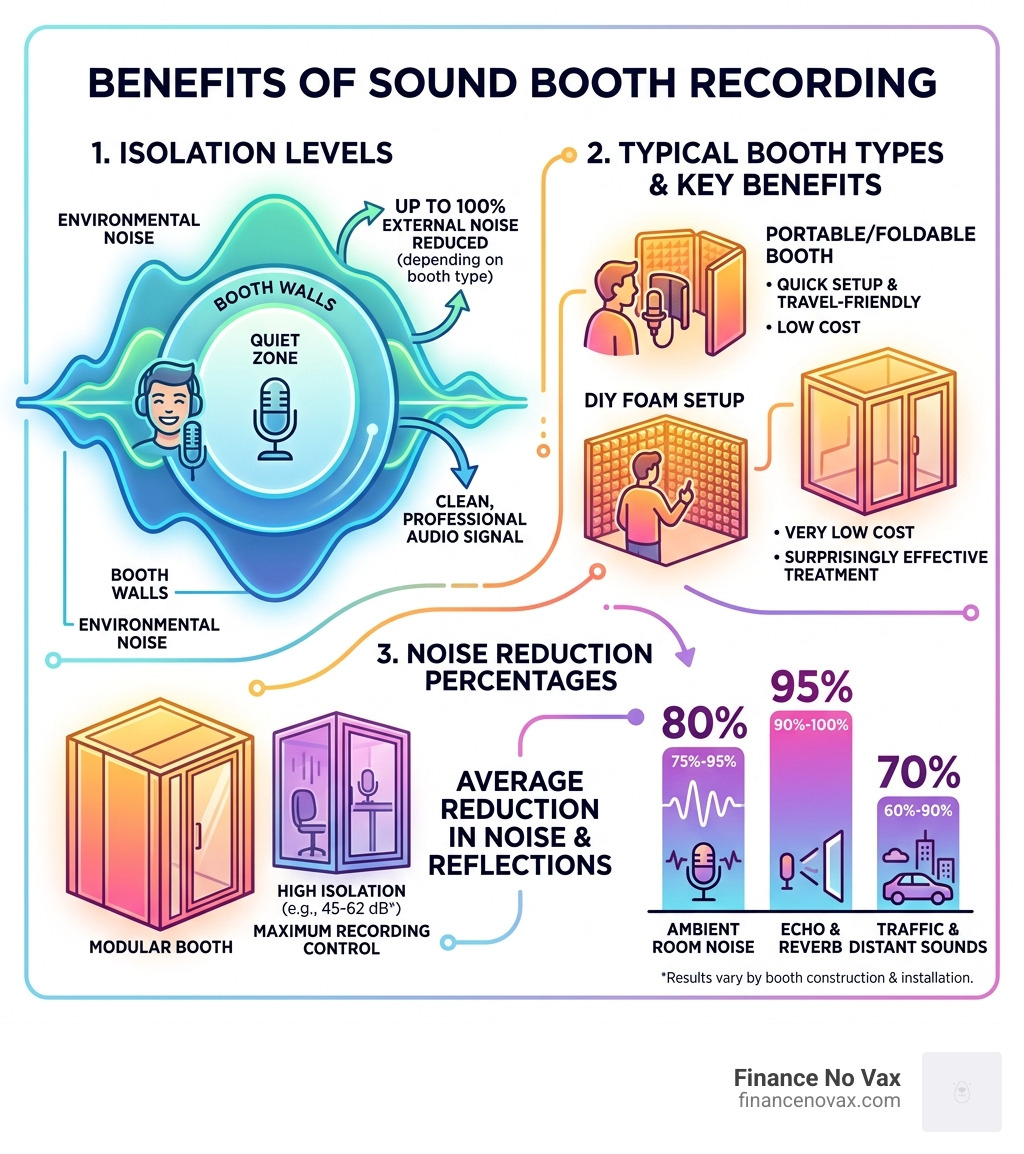
Here’s a quick overview of the main booth types and what they offer:
| Booth Type | Best For | Approx. Cost | Key Benefit |
|---|---|---|---|
| Portable/foldable | Travel, home, remote work | $100 – $1,500 | Quick setup, easy storage |
| Commercial modular | Home studio, pro use | $7,000 – $21,000+ | High isolation (45–62 dB) |
| DIY foam setup | Budget recording, e-learning | $20 – $100 | Low cost, surprisingly effective |
Whether you’re a voice actor, podcaster, remote worker, or musician, the core problem is the same: your room works against you. Hard walls reflect sound. Outside noise bleeds into your recordings. The result is audio that sounds amateur — even with expensive gear.
A sound booth solves this by creating a controlled space where your microphone only picks up you.
The good news? You don’t need a professional studio to get great results. Options range from a $20 DIY foam setup to full modular booths used by Grammy-winning artists. The right choice depends on your budget, space, and how serious your recording needs are.
Related content about sound booth recording:
The Science of Sound Booth Recording
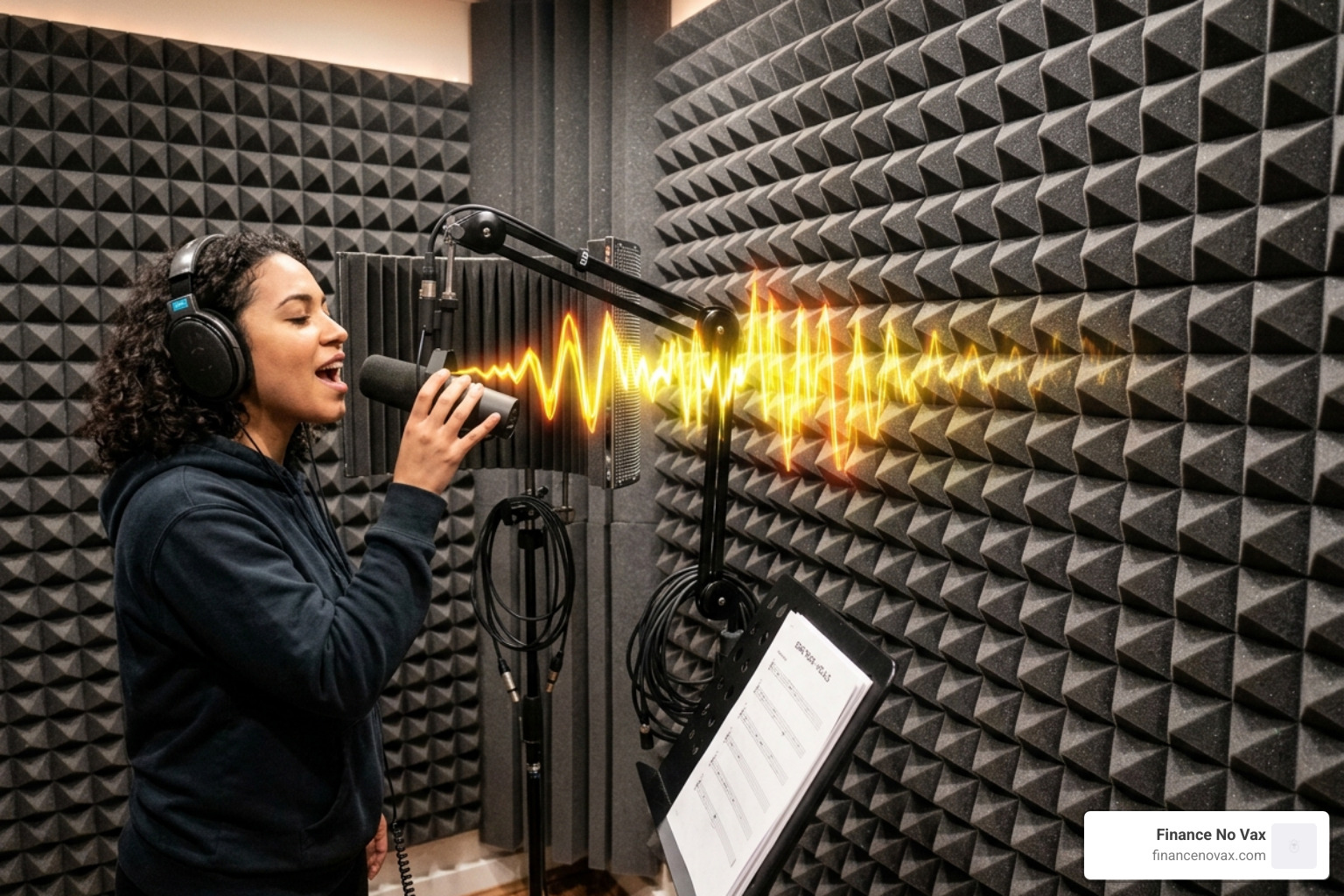
To understand why a booth is necessary, we have to look at how sound behaves in a room. When you speak or sing, sound waves travel in every direction. They hit your walls, ceiling, and floor, bouncing back into the microphone. This creates “reverb” and “echo,” which makes audio sound hollow or distant.
Decibel Reduction and Noise Control
Professional sound booth recording addresses two types of noise:
- Airborne Noise: This is sound traveling through the air, like a neighbor’s leaf blower, a barking dog, or the hum of an air conditioner.
- Impact Noise: These are vibrations traveling through the structure of the building, such as footsteps on the floor above you.
Commercial booths, like those from Studiobricks, provide patented isolation that can reach up to 62 dB, with an average reduction of 45-47 dB. For context, a 10dB increase is perceived as being twice as loud. By cutting 40+ dB, you are effectively turning a noisy office environment into a silent sanctuary. If you are setting up a workspace, check out our guide on Top Rated Soundproof Booths For Your Home Office to see how these units integrate into a residential floor plan.
Echo Prevention and Signal-to-Noise Ratio
The goal of any booth is to achieve a “dry” signal. A dry signal is audio that has zero room reflection. This is crucial because it allows you to add digital effects (like professional-grade reverb) later during the mixing process. If your raw recording already has “room sound” baked in, it is nearly impossible to remove. By using a booth that absorbs up to 80% of echo and reverb, you ensure a high signal-to-noise ratio, where your voice is clear and the background is silent.
Main Types of Vocal Booths for Professional Audio
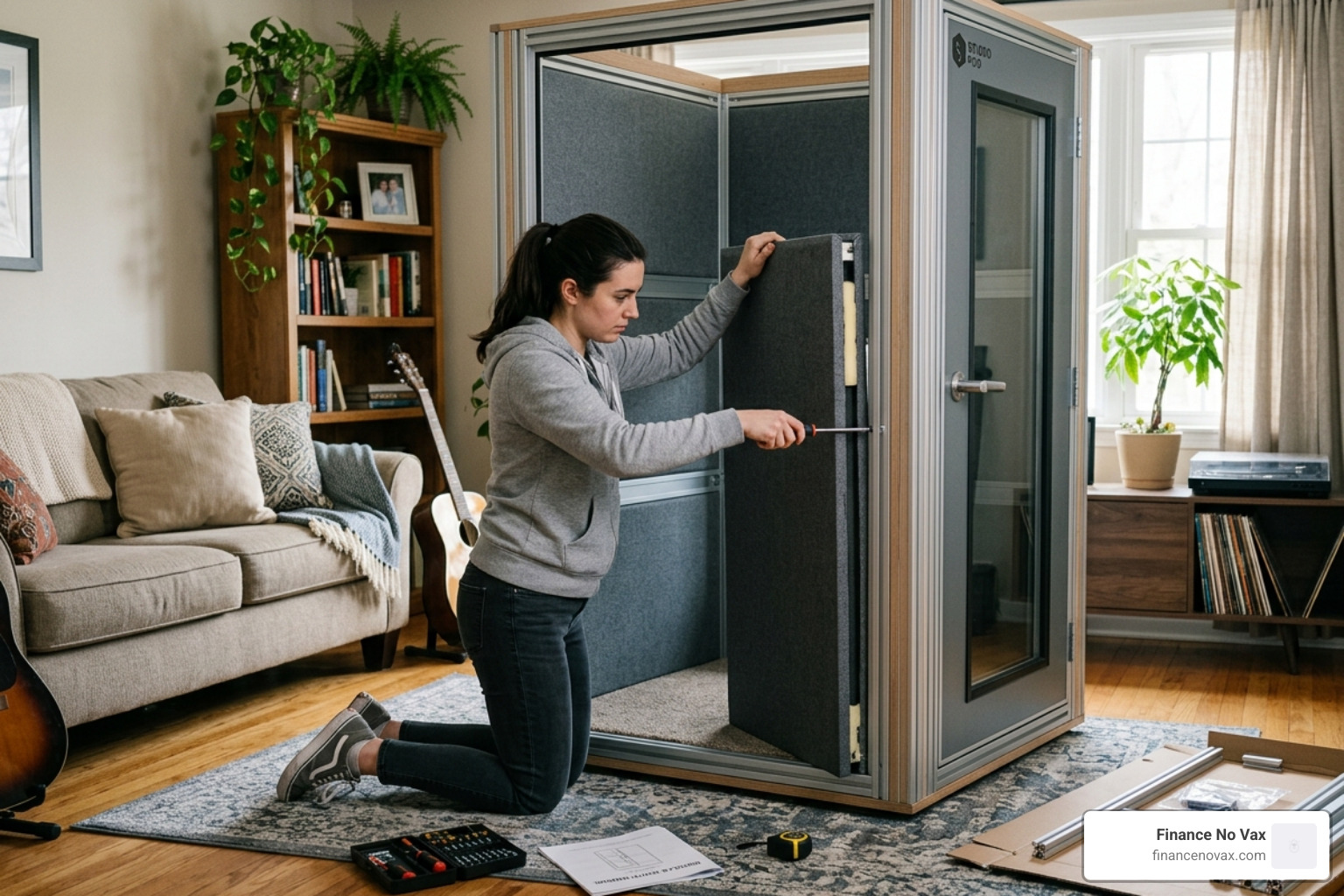
As we move into 2026, the market for sound booth recording has expanded significantly. No longer restricted to multi-million dollar studios, booths now come in flavors ranging from “closet-sized” to “living-room-sized.”
Comparing Booth Solutions
| Feature | Portable Booths | Permanent/Modular Booths | DIY Solutions |
|---|---|---|---|
| Portability | High (fits in a duffel) | Low (heavy, but moveable) | Medium |
| Isolation | 10–20 dB reduction | 45–62 dB reduction | 5–15 dB reduction |
| Price | $100 – $1,500 | $7,000 – $25,000 | $20 – $100 |
| Assembly | 5–10 minutes | 1–4 hours | Variable |
For those needing specialized isolation, such as musicians, you might explore Finding The Best Drum Isolation Booth To Save Your Marriage, which focuses on high-impact noise reduction. Alternatively, for business professionals, Top Rated Meeting Pods And Phone Booths For Modern Offices covers the sleek, glass-heavy designs used in corporate settings.
Portable Solutions for Sound Booth Recording
Portable booths have become the gold standard for voice actors on the go. Brands like Tri-Booth and Snap Studio have pioneered designs that use lightweight PVC or metal frames. These units often weigh between 16 and 40 pounds and can be packed into a travel bag.
The “secret sauce” of a portable booth isn’t just the frame; it’s the density of the blankets or panels draped over it. High-end portable units like the Snap Studio XL use 360-degree “Echo Shields” to absorb up to 80% of reflections. While they won’t stop a jackhammer outside your window, they are “kryptonite” for the minor echoes that ruin a recording. For those who don’t need a full enclosure, Studio Acoustic Panel Sets For Serious Sound Dampening can provide a middle-ground solution.
Maximizing Quality in Sound Booth Recording
Simply standing inside a booth isn’t enough; you have to optimize the internal acoustics.
- Acoustic Treatment: This involves using materials to “soak up” sound. Many booths come with acoustic foam pre-installed.
- Standing Waves: In small, square booths, sound waves can bounce between parallel walls and cancel each other out or create unpleasant “boomy” frequencies. This is why brands like VocalBooth.com use pentagonal (five-sided) designs to break up parallel surfaces.
- Bass Traps: Low frequencies tend to gather in corners. Using bass traps helps keep your voice sounding natural rather than muddy.
- Microphone Placement: Even in a booth, don’t put your mic right against a wall. Keeping it centered or slightly off-center helps avoid internal reflections.
Key Features and Specifications for 2026 Studios
If you are shopping for a booth in 2026, there are several technical specifications you need to understand to ensure you are getting your money’s worth.
STC and NRC Ratings
- STC (Sound Transmission Class): This rating tells you how well a booth stops sound from entering or leaving. A higher number is better. A standard wall is about STC 33; a professional booth should be STC 45 or higher.
- NRC (Noise Reduction Coefficient): This measures how much sound the inside materials absorb. It ranges from 0 to 1. A rating of 0.95 means the material absorbs 95% of the sound that hits it.
Ventilation and Air Quality
One of the biggest complaints about older sound booths was that they became “sweat boxes” within minutes. Modern units from companies like WhisperRoom now feature 10-speed silent ventilation systems. These systems use baffled ducts to move air in and out without letting noise leak through. Furthermore, look for booths that guarantee 0% emissions and certified indoor air quality, ensuring you aren’t breathing in chemical fumes from cheap adhesives while you record.
Modern Amenities
In 2026, a booth is more than just four walls. Many now include:
- Multicolor LED Lighting: Dimmable lights that don’t emit a “buzz” or hum.
- Cable Passages: Slotted rubber plugs that allow you to run XLR and USB cables into the booth without breaking the sound seal.
- Modularity: The ability to start with a single-wall booth and “upgrade” to a double-wall system later if your environment gets noisier.
DIY vs. Commercial Sound Booth Solutions
Is it worth spending thousands of dollars, or can you build one yourself? The answer depends on your “noise floor” requirements.
The $20 DIY Miracle
Research from Articulate shows that you can achieve surprisingly professional results for about $20 to $40. By using four 18-inch foam seat cushions ($5-$10 each) and duct-taping them into a box around your microphone, you can eliminate the majority of room echo.
The “monitor trick” is also popular: use your computer monitor as the back wall of your “booth.” While glass/plastic reflects sound, having your script right in front of you increases your functional efficiency. You can mitigate the reflection by draping a heavy towel over the monitor (leaving just the script visible). For more on budget materials, see our list of The Best Studio Acoustic Foam Tiles And Panel Sets For Every Budget.
The Case for Commercial Investment
While a DIY setup helps with echo, it does almost nothing for sound isolation. If your neighbor is mowing the lawn, the foam cushions won’t help.
- Commercial booths use mass-loaded vinyl, double-pane safety glass, and heavy solid-wood or metal frames to physically block sound.
- Durability: A DIY foam box will degrade and collect dust. A modular booth like a WhisperRoom or Studiobricks is a lifetime investment that maintains its resale value.
- Aesthetics: If you are hosting a video podcast or taking client meetings, a professional booth looks significantly better than a pile of seat cushions.
If you decide to build a more permanent structure, you’ll need to research Rockwool Or Bust Finding The Best Insulation For Your Studio Walls to ensure you are using the right density of material.
Frequently Asked Questions about Vocal Booths
Can a sound booth completely soundproof a room?
“Soundproof” is a strong word. In physics, nothing is 100% soundproof. However, a high-end, double-walled modular booth can reduce noise so significantly (up to 62 dB) that even a loud conversation happening right outside the booth will be completely inaudible to the microphone inside. For most home users, a booth doesn’t soundproof the room, but it soundproofs the microphone.
How much noise reduction can I expect from a portable model?
Portable models like Snap Studio or Arrowzoom primarily focus on acoustic treatment (reducing echo) rather than isolation (blocking outside noise). You can expect these booths to reduce ambient room noise by about 50% and echo by 80%. They are perfect for quiet neighborhoods but won’t save you from a construction site next door.
What size booth is best for a home studio setup?
For a single voice actor or podcaster, a 4′ x 4′ booth (like the WhisperRoom MDL 4848) is the industry standard. It provides enough room for a chair, a mic stand, and a small desk without taking over your entire spare bedroom. If you are recording drums or multiple people, you will need to look at larger units, such as the 7’10” x 9’10” models, which can weigh over 2,000 lbs.
Conclusion
Mastering sound booth recording is the single most effective way to level up your audio production. Whether you choose a travel-ready portable booth, a DIY foam setup for e-learning, or a professional-grade modular studio, the goal remains the same: total control over your acoustic environment.
At Finance No Vax, we believe that professional audio standards should be accessible to everyone, from the hobbyist podcaster to the Grammy-winning producer. By understanding the science of decibel reduction and the importance of dry signal capture, you can make an informed investment that will serve your career for years to come.
Ready to transform your sound? Explore our detailed guides on Acoustic Foam Installation or browse our top picks for Soundproof Home Office Booths. Your audience—and your ears—will thank you.
For more information on studio builds and professional audio gear, visit us at https://financenovax.com/.
