Leaves & Stems
How to Draw Curled and Folded Leaves
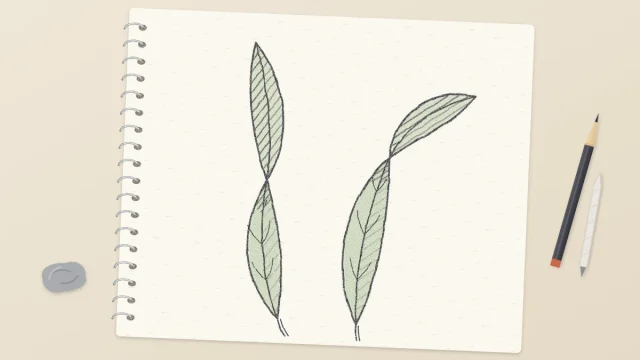
Use the ribbon method to draw leaves that twist, fold and curl: a flowing midrib, two edge lines that cross where the leaf turns over, and a darker underside.
Learn to Draw Beautiful Flowers Step by Step
30 tutorials published
Use the ribbon method to draw leaves that twist, fold and curl: a flowing midrib, two edge lines that cross where the leaf turns over, and a darker underside.
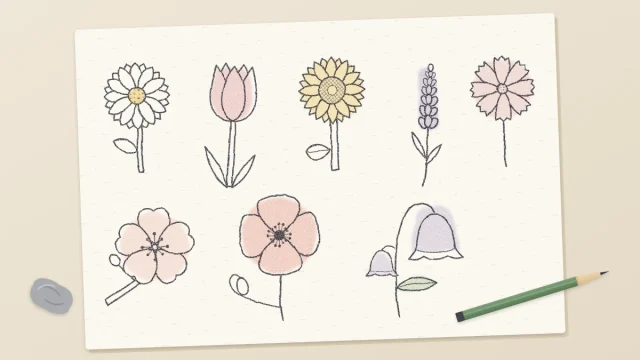
Seven common flowers and the leaves that belong to them, from strap-like tulip leaves to toothed rose leaflets, with a comparison table and a way to observe any plant.
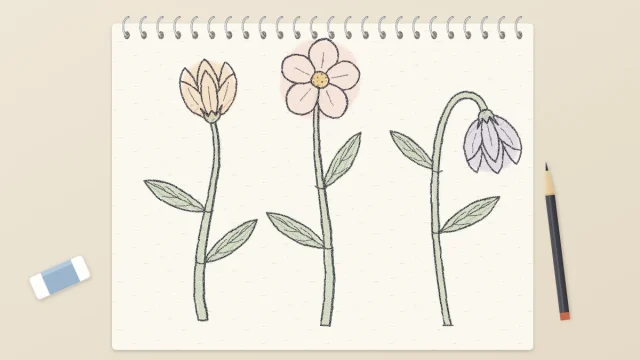
Draw stems from one light gesture curve, thicken them so they widen toward the base, and join the head with a small cup or swelling so the flower stops floating.
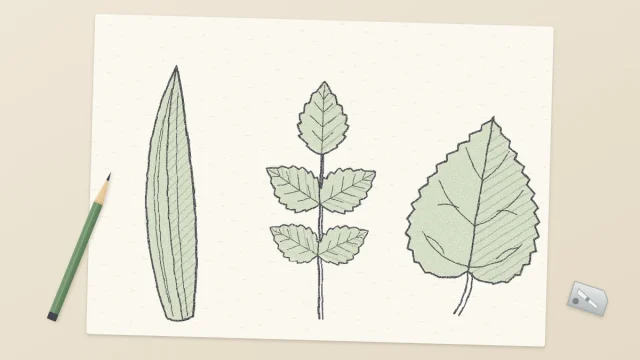
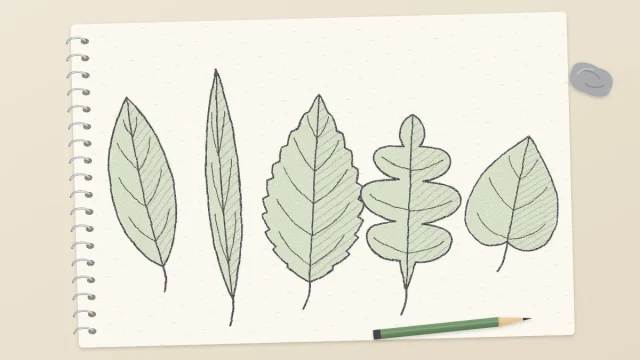
Build a leaf from a curved midrib, add an outline with two slightly different halves, branch the veins, choose an edge and shade one half so it has form.
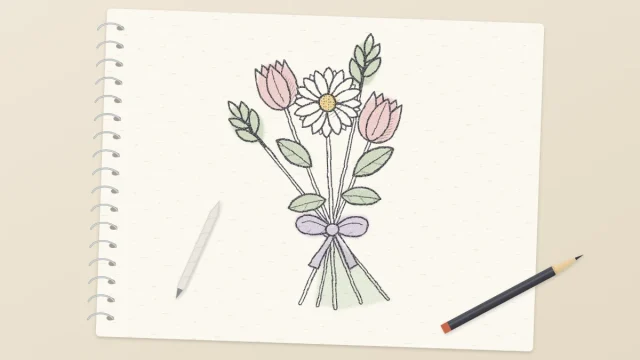
Plan a hand-tied bouquet with a few circles and one tie point, then draw the front flowers, tuck the rest behind and finish with leaves and a ribbon.
Twelve small flowers you can sketch in a few minutes each, with the construction shape to start from and the one detail that makes each flower recognizable.
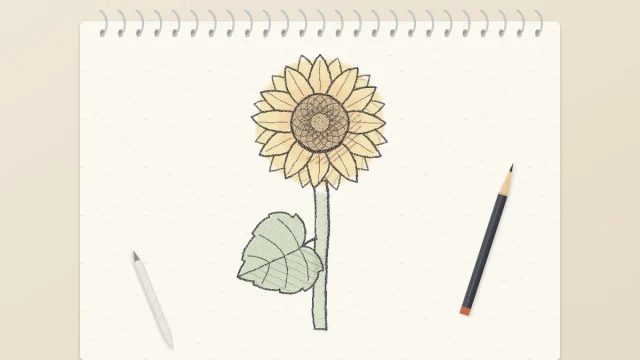
Draw a sunflower from two circles: a large center disc, two rows of pointed petals, a seed pattern made from crossing curves, a thick stem and heart-shaped leaves.
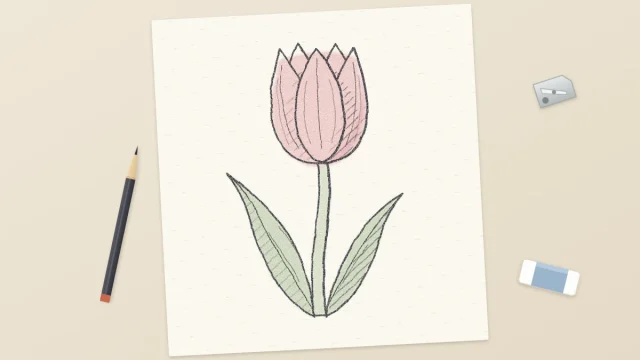
Build a tulip from an egg shape on a center line: a tall front petal, a petal wrapped around each side, back tips peeking out, then a smooth stem and long strap-like leaves.
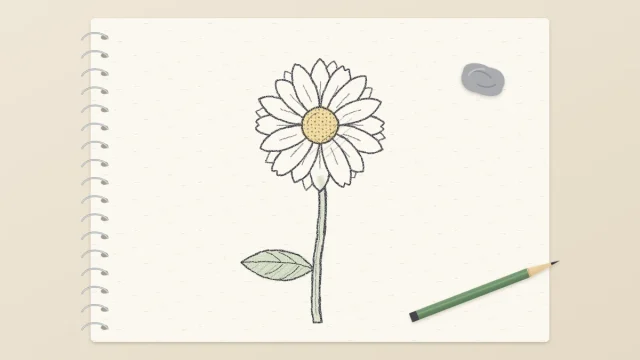
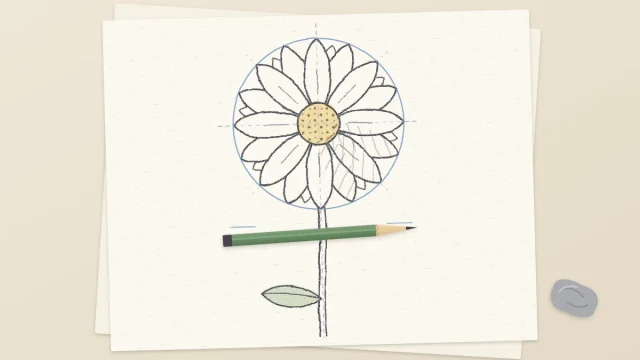
Draw a daisy from two light circles: place four petals, fill the gaps, add a second layer, dot the center and finish with a slender stem and leaf. Includes a tilted variation.
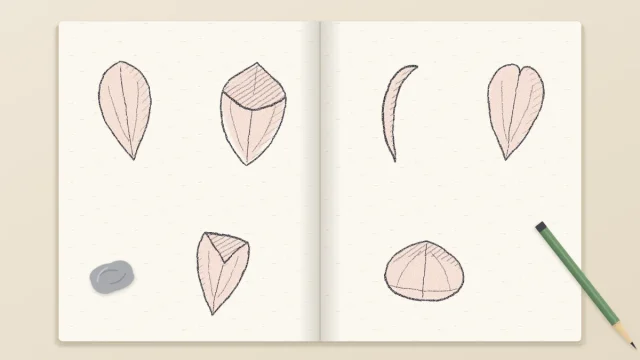
Four petal poses built on one idea, a simple outline on a center line: flat, cupped, curled at the tip and overlapping, plus foreshortened petals and three tip shapes.
How to measure a flower before you draw it: compare the center with a petal, mark the outer limit, space petals like a clock face and adjust the guides when the flower tilts.
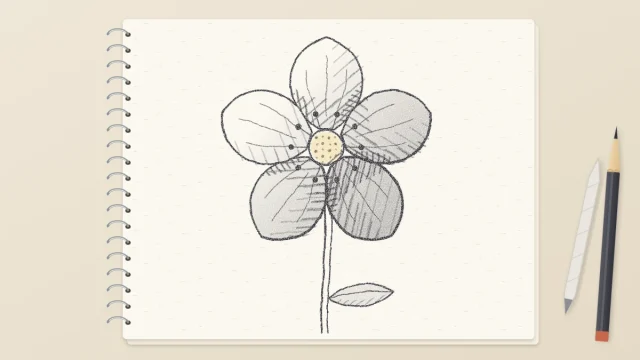
A five-step method for shading flowers in pencil: choose one light direction, build a value scale, hatch along each petal, darken the overlaps and keep the highlights clean.